
REVIEW · SARAJEVO SIEGE HISTORY TOURS
ROSES OF SARAJEVO (Official WAR + CITY tour)- Story of a Survivor
Sarajevo history can sound far away, until it has a voice. This tour strings together the Siege of 1992-95 with survivor-led storytelling and major on-the-ground sites across Sarajevo, so you leave with a mental map instead of just dates.
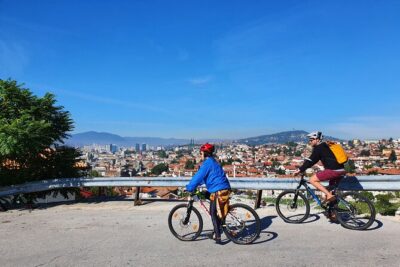
I particularly like how the route is built to teach you. You start with the city’s setting, then you work toward the Tunnel of Hope, and later you see key war front lines, political landmarks, and neighborhoods in one continuous loop.
One thing to consider: this is emotionally heavy. You will be shown minefields, war damage, and memorials, and the schedule packs a lot into about 4 hours 15 minutes, plus the Tunnel of Hope Museum has an extra €10 entrance fee.
In This Review
- Key things that make this tour worth your time
- The route makes the Siege make sense, from Sacred Heart Cathedral outward
- Tunnel of Hope day, plus a steady build-up of context
- What you should know about the Tunnel stop
- Roses of Sarajevo, WWII reminders, and today’s political reality from the street
- Sniper Alley, Holiday Inn, and the war-journalist angle
- Austro-Hungarian, bullet holes, and the defensive logic of Satellite Hill
- Olympic village and architecture, plus Oslobodenje at the edge of the timeline
- Butmirska cesta survival path, then Dobrinja childhood on the frontline
- East Sarajevo in Republika Srpska: differences and ethnic diversity explained
- Trebević Vidikovac panoramas, sniper zones I and II, and SunnyLand
- Olympic bobsleigh and luge track, then the mahala lifestyle loop
- Urijan Dedina viewpoint, Jewish Cemetery, and Vrbanja bridges
- Skenderija, Austro-Hungarian Neo-gothic architecture, and Ashkenazi synagogue life
- Latin Bridge, Hotel Saray, and City Hall area shaped by fires
- Yellow Fortress panorama and Ottoman Sarajevo
- Price, time, and tickets you need to plan for
- Who this tour is best for, and who should think twice
- Should you book Roses of Sarajevo?
- FAQ
- How long is the Roses of Sarajevo (Official War + City tour)?
- What is the price of the tour?
- Is the Tunnel of Hope Museum ticket included?
- What language is the tour offered in?
- How large are the groups?
- Where does the tour start and end?
- Which stops include tickets and which are marked free?
- Can I cancel for a refund?
- Is there anything besides walking, like a video stop?
Key things that make this tour worth your time
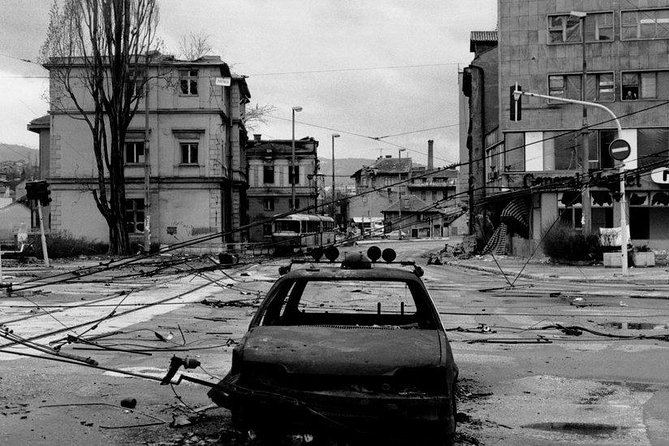
- A survivor host guides the whole experience, turning sites into lived reality.
- Tunnel of Hope on foot, after seeing war context, minefields, and museum rooms.
- Sniper Alley and Trebević viewpoints, explained with concrete details you can look at.
- East Sarajevo and Republika Srpska differences, plus war murals and cultural contrast.
- Major Sarajevo landmarks on the same day, including the Latin Bridge and City Hall area.
- Small groups, capped at 15 with a guide limit of 8, which keeps questions possible.
Further siege history tours in Sarajevo
- Fall of Yugoslavia, Sarajevo War Tour with Tunnel of Hope Museum and Frontlines
★ 5.0 · 1,314 reviews - ROSES OF SARAJEVO (Official WAR + CITY tour)- Story of a Survivor
★ 5.0 · 770 reviews - Tunnel Museum: Bosnian & Yugoslav Wars Tour with War Veteran
★ 5.0 · 551 reviews - Sarajevo War Tour: A Veteran’s Story of the Siege (fees included)
★ 5.0 · 326 reviews
The route makes the Siege make sense, from Sacred Heart Cathedral outward
The tour starts near Đulagina 2, Sarajevo. Early on, you get quick orientation: the Sacred Heart of Jesus Cathedral and how Sarajevo’s mix of Ottoman, Austro-Hungarian, and Yugoslav influences shaped daily life.
You also get introduced to the city nickname, Little Yugoslavia, which is not just trivia. It helps you understand what was lost during the war, and why the post-war political setup feels so complicated to outsiders and locals alike.
Tunnel of Hope day, plus a steady build-up of context
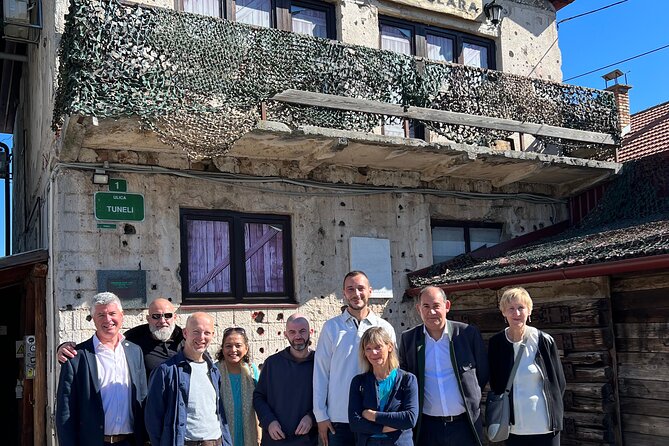
One of the smartest choices here is that the Tunnel of Hope is not treated as a one-off attraction. Before you ever walk the tunnel, you pass a set of war-related stops from the road, where the guide points out monuments and explains how Sarajevo’s history layers into the Siege period.
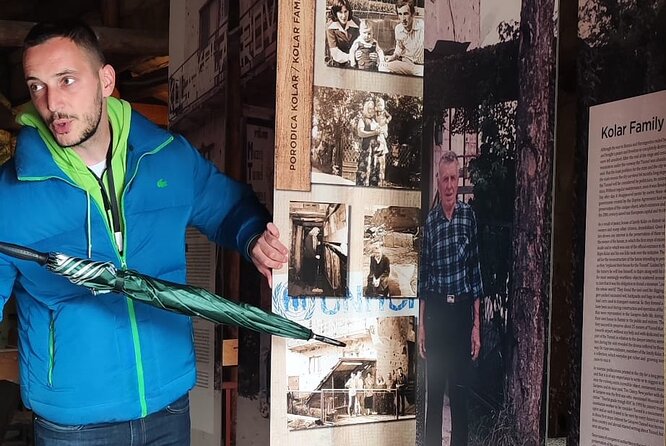
The drive includes a stop by the War house tied to the Kolar family, then a short video screening lasting about 17 minutes 44 seconds. That movie break matters because it resets your brain from street sightseeing to the reality of what families faced.
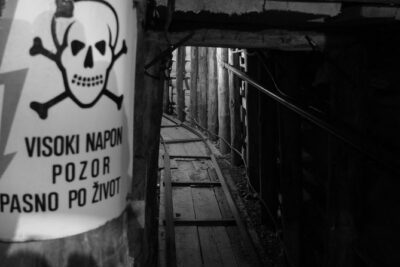
You then see minefields and head toward the Sarajevo War Museum. The tour continues through a War room and a War journal spot, and then you walk the Tunnel of Hope itself. There is a brief free time window (about 10 to 15 minutes) right after, which you can use to reorient, grab water, or process what you just experienced.
What you should know about the Tunnel stop
The Tunnel of Hope Museum entrance is not included in the base price, and it costs €10 per person. If you are trying to budget tightly, factor that in early so you are not surprised on the day.
Roses of Sarajevo, WWII reminders, and today’s political reality from the street
After the Tunnel portion, the tour shifts from the logistics of survival to the memorial language of Sarajevo. You pass a location linked to the Roses of Sarajevo concept, including references to victim numbers in 1994 and 1995. Even if you know the basics, standing near these points with context can change how you remember the timeline.
Then you get a broader political and historical sweep. You get an introduction to Yugoslavia and see a monument connected to the liberation of Sarajevo during WWII, which helps you connect earlier conflicts to later fractures.
Next comes one of the most important “learning by seeing” moments: the Presidency of Bosnia and Herzegovina. The guide explains it as one of Europe’s most complicated institutions and gives a presentation of the current political system, while you are literally in the urban environment where politics gets played out.
Other Bosnian city outings
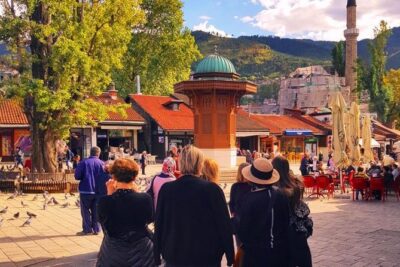
Sniper Alley, Holiday Inn, and the war-journalist angle
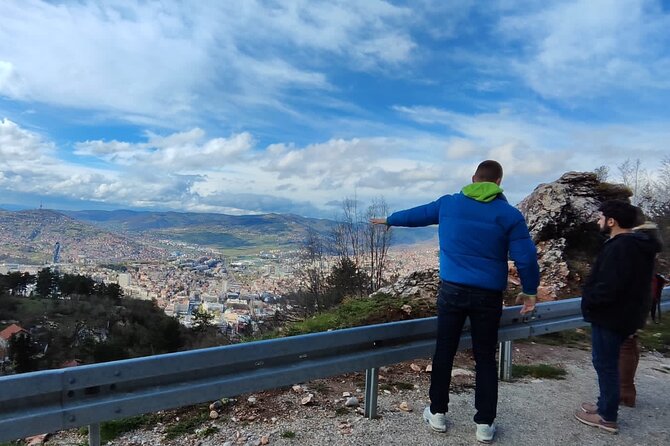
From there, the tour heads through the main and deadliest Sniper Alley areas. This is not just a viewpoint stop. The guide uses the street itself as the classroom, linking the built environment to how people survived day to day under fire.
A standout detail is the mention of the Holiday Inn hotel in Sarajevo, tied to exchanges of soldiers during the siege. You also get a connection to wartime journalism through the story angle around war journalists and that exchange process. It is a reminder that the war was fought on roads and in buildings, but it was also fought over information and legitimacy.
You then pass historic Austro-Hungarian landmarks like the National Museum area, plus a brief explanation of the Sarajevo Hagada book. If you tend to think of medieval culture and modern conflict as separate worlds, this is a good moment to realize they overlap in Sarajevo’s streets.
Austro-Hungarian, bullet holes, and the defensive logic of Satellite Hill
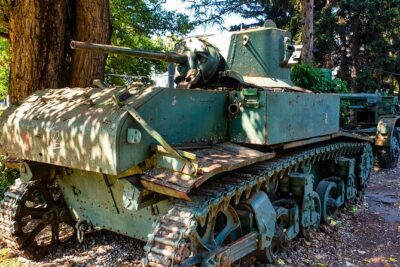
At the siege museum and sniper-alley spots, you start seeing how the city was structured for defense and attack at the same time. The route includes Satellite Hill and the core defensive zone and strategy of the Bosnian army.
Then you move into the middle part of Sarajevo, described as mostly affected during the siege. You will see visible reminders like sniper bullet holes on buildings, and the area around the three yellow towers with grenade leftovers.
There is also a specific data-based explanation: UN official statistics about grenade shots from Trebević mountain across almost four years of the siege. That kind of number can feel cold at first, but it anchors the story, so you do not picture a vague “war damage” cloud. You picture repeated impact over time.
Olympic village and architecture, plus Oslobodenje at the edge of the timeline
Just when it feels like all you are doing is absorbing damage, the tour brings in the 1984 Olympic village of Sarajevo and the communist-Yugoslavian architecture. This matters because Sarajevo’s identity was not erased in one day. People lived in these neighborhoods, went to schools, worked, and built communities until the Siege changed everything.
You also get a stop tied to Oslobodenje, the Liberation Journal. The guide’s explanation of this ex local-war journal institution adds a voice to the timeline. It shows you how information, resistance, and morale worked through media and local reporting.
Butmirska cesta survival path, then Dobrinja childhood on the frontline
The first major “step out of the van” segment is Butmirska cesta. The tour frames it as a survival path and points out a Free Bosnian territory experience area, with a short on-site time window of about 10 minutes.
Next is Dobrinja, where the survivor host takes you to a street tied to the Siege frontline. You get a quick but direct childhood perspective on what it was like to grow up before, during, and after the war in this region. This is often the part that makes people stop treating the war like a history chapter.
These two stops are short by design. They act like emotional anchor points before the tour expands to the city’s political map again.
East Sarajevo in Republika Srpska: differences and ethnic diversity explained
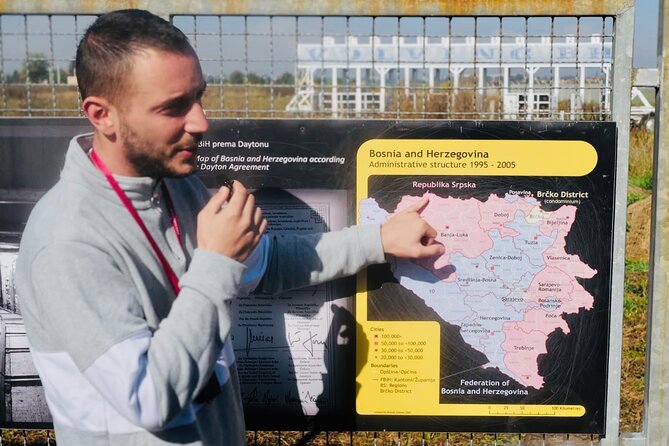
Then you shift to East Sarajevo, located in the Republika Srpska entity. The guide explains core differences between the two entities and highlights ethnic diversity in Bosnia and Herzegovina.
You also pass and discuss current war murals in East Sarajevo. These images are not decoration. They communicate how memory is lived today, what stories people keep close, and what tensions still shape everyday conversations.
This part can be uncomfortable if you only know Sarajevo as a single story. The tour’s value is that it forces you to see Bosnia as multiple layers in one country, not one simplified narrative.
Trebević Vidikovac panoramas, sniper zones I and II, and SunnyLand
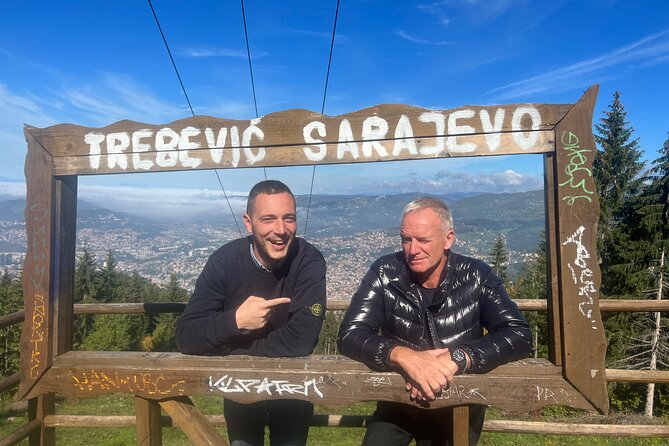
At Trebević Vidikovac, you get a panorama view of the mountain area used during the Siege. The tour includes the I and II sniper zones, with around 20 minutes on site.
On the way, the guide mentions SunnyLand, nicknamed the Bosnian Disneyland, tied to a previous 1992 to 1995 sniper zone. That name can sound odd until you remember what it means to keep trying to live, even when the environment is built for threat.
Olympic bobsleigh and luge track, then the mahala lifestyle loop
Another favorite stop for many people is the Sarajevo Olympic bobsleigh and luge track area. You have about 30 minutes here, including a marked best photo spot on the track.
The tour then continues into a hilly neighborhood, a mahal a, where you get a feel for local lifestyle. It is one of those pauses that helps the day stay human, not only historic. You see how everyday Sarajevo still shapes itself around hills, routes, and close-knit streets.
Urijan Dedina viewpoint, Jewish Cemetery, and Vrbanja bridges
Urijan Dedina is presented as one of the best viewpoints for the Sarajevo sniper alley area. That stop is short, about 10 minutes, but the point is clarity. You get a better sense of what people could see and what they feared.
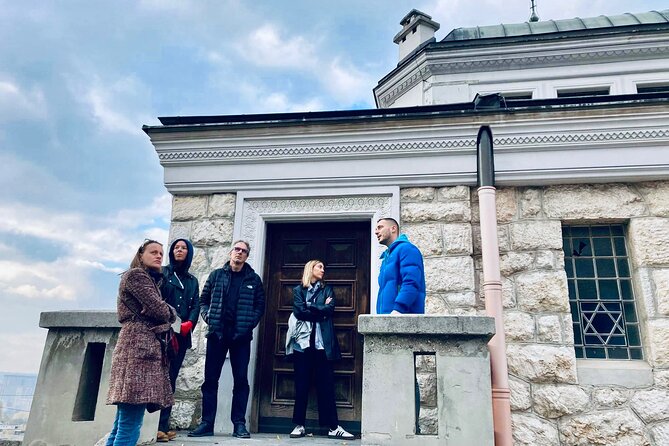
Next is the Jewish Cemetery, with old 16th century monuments and time around 25 minutes. The tour also frames Sarajevo as a European Jerusalem, explains a WWII Jewish victims monument, and visits the Jewish Synagogue.
Then you reach the Suada and Olga bridge area, connected to the Vrbanja bridge sides. You visit the left side tied to the Sarajevo Siege First Victim Bridge story, plus an area linked to the first shot building from the start of the war. On the right side, you get the Sarajevo Romeo and Juliet bridge love war story. Each side gets only a few minutes, but it is a strong way to show how war trauma and personal narratives sit side by side.
Skenderija, Austro-Hungarian Neo-gothic architecture, and Ashkenazi synagogue life
After the bridges, the tour moves to the frontline 1992 to 1995 area and the 1984 Olympic hall Skenderija. Then comes a strong visual moment: the most beautiful part of Sarajevo, Austro-Hungarian Neo-gothic architecture style.
You also get guided context about Ashkenazi Jewish society in Sarajevo and see the Ashkenazi Synagogue. This is useful because it adds depth to the places you have seen earlier, turning them from “a spot” into a sense of community history.
Latin Bridge, Hotel Saray, and City Hall area shaped by fires
One of the classic Sarajevo stops is the Latin Bridge, connected to the assassination spot of Franz Ferdinand, a flashpoint that fed into WWI. Nearby is Hotel Saray, also noted on the route.
Then you hear about a symbolic institution in Sarajevo: the City Hall, connected to the National Library area. The guide explains that it was burnt twice during the city’s history, and why that matters to understanding what Sarajevo lost beyond lives.
This segment helps you connect the Siege era to earlier European conflict patterns. It also explains how public buildings become memory containers.
Yellow Fortress panorama and Ottoman Sarajevo
The final big viewpoint is the Yellow Fortress. You get a best panorama and sunset type of moment, with about 20 minutes here.
Ottoman history is introduced during this portion, which is a nice closing move. It reminds you that Sarajevo is not only a 20th century tragedy. The city’s layers go back much further than the Siege, even if the Siege is the thread that runs through this day.
Price, time, and tickets you need to plan for
The base price is $53.21 per person, and the tour runs about 4 hours 15 minutes. It is priced like a full-day intro, but it is really a focused, high-impact half-day that covers a lot of ground by air-conditioned minivan.
You also should know what is included versus paid. Driver and guide, plus transport by air-conditioned minivan, are included. The Tunnel of Hope Museum entrance is €10 per person and not included, while the Yellow Fortress admission is marked included.
If you want the math to work in your favor, book this early in your trip. The tour sets your bearings fast, so the rest of Sarajevo starts making sense.
Who this tour is best for, and who should think twice
This tour is best if you want a Siege of Sarajevo primer that is not abstract. You will like it if you prefer learning from street-level context, viewpoints, and direct survivor perspective rather than only reading plaques.
It can feel like a lot if you are sensitive to trauma content. You will see minefields, war damage, and memorial points, and you should choose your emotional bandwidth before you go.
Should you book Roses of Sarajevo?
Yes, if your goal is to understand Sarajevo beyond postcards. The big value is that the day ties together war survival sites, political context, and key Sarajevo landmarks in one route, with a human voice doing the connecting.
Book it early, budget for the €10 Tunnel of Hope Museum ticket, and be ready for an emotional day that also includes genuine beauty in architecture and viewpoints. If you only have time for one “serious” tour in Sarajevo, this is one of the strongest options for building real understanding.
FAQ
How long is the Roses of Sarajevo (Official War + City tour)?
It lasts about 4 hours 15 minutes.
What is the price of the tour?
The price is $53.21 per person.
Is the Tunnel of Hope Museum ticket included?
No. The Tunnel of Hope Museum entrance ticket is €10.00 per person.
What language is the tour offered in?
The tour is offered in English.
How large are the groups?
The maximum group size is 15 travelers, and one guide has a maximum of 8 people.
Where does the tour start and end?
It starts at Đulagina 2, Sarajevo 71000, Bosnia and Herzegovina, and ends back at the same meeting point.
Which stops include tickets and which are marked free?
Tunnel of Hope Museum requires an entrance fee. Yellow Fortress admission is included. Many other stops are marked as admission ticket free, including Butmirska cesta, Dobrinja, Trebević Vidikovac, the bobsleigh and luge track, Urijan Dedina, the Jewish Cemetery, and the Vrbanja bridge area.
Can I cancel for a refund?
Yes, you can cancel for free up to 24 hours in advance for a full refund.
Is there anything besides walking, like a video stop?
Yes. There is an on-going movie stop shown for about 17 minutes 44 seconds during the war house segment.
More Tours Across Bosnia
The Full Bosnia Review Shelf
Sarajevo Siege History, Further Tours
Recently added to the Bosnia and Herzegovina shelf
- Walking Tour in Sarajevo★ 5.0 · 3 reviews
- Travnik, Jajce, Pliva Lakes & Mills –Medieval & Ottoman Bosnia Full Day Tour★ 5.0 · 3 reviews
- Tour of Herzegovina – From Sarajevo★ 5.0 · 3 reviews
- The Siege of Sarajevo Tour★ 5.0 · 3 reviews
- Srebrenica Genocide Tour from Sarajevo★ 4.5 · 3 reviews
- Sarajevo to Zagreb: One-Way Tour via Jajce, Travnik, Pliva Lake and Watermills★ 5.0 · 3 reviews
Sarajevo Siege History Tours, compared.
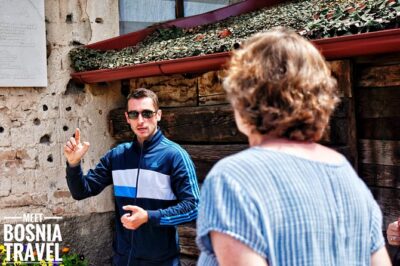 ★ 5.0Fall of Yugoslavia, Sarajevo War Tour with Tunnel of Hope Museum and FrontlinesFrom $361,314 reviews
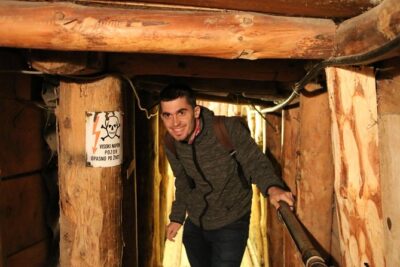 ★ 5.0Tunnel Museum: Bosnian & Yugoslav Wars Tour with War VeteranFrom $36551 reviews
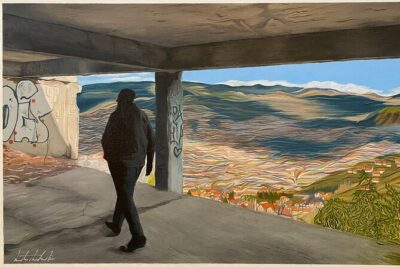 ★ 5.0Sarajevo War Tour: A Veteran’s Story of the Siege (fees included)From $48326 reviews
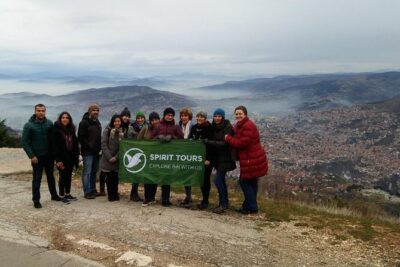 ★ 5.0Sarajevo 1425 days under the siege – War TourFrom $48170 reviews
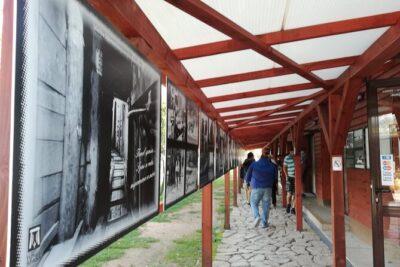 ★ 5.0Tunnel of Hope Tour – Survival and ResilienceFrom $25118 reviews
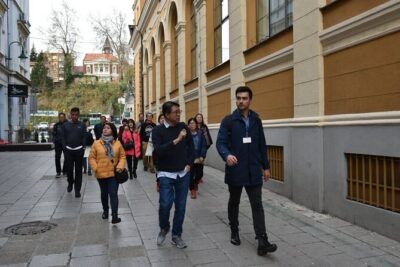 ★ 5.0Sarajevo Grand Tour: Old Town, War Tunnel, Olympic Sites & MoreFrom $4773 reviews
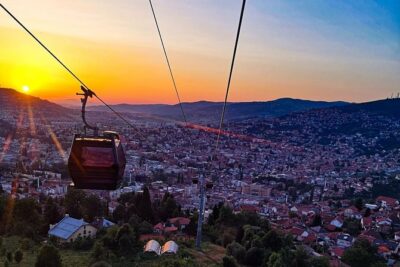 ★ 5.0War Times Experience in Sarajevo – Half Day TourFrom $3561 reviews
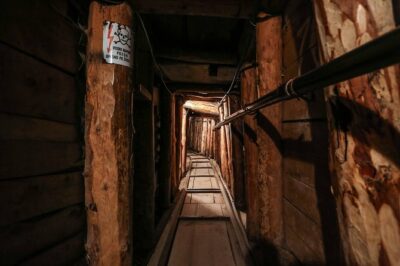 ★ 5.0Times of Misfortune – Life Under Siege and the Tunnel of HopeFrom $3253 reviews
Browse the lists this tour appears in