
REVIEW · SARAJEVO OLD TOWN WALKING TOURS
Walking Tour in Sarajevo
Sarajevo feels like a story you can walk through. This private old-town walk threads Ottoman and Austro-Hungarian Sarajevo together with real street signals, cevapi smoke, Turkish coffee, church bells, and minarets calls. I love the way the guide ties architecture to daily life, and I love that the pace is flexible, around 1 to 3 hours.
The only real drawback to plan for is tickets. A few major stops are marked as not included, so you may need extra cash or time for entries at places like Sarajevo City Hall, the mosque courtyard, the museum tied to 1914, and the Jewish Museum.
In This Review
- Key things I’d watch for
- Walking Sarajevo like a living map of empires
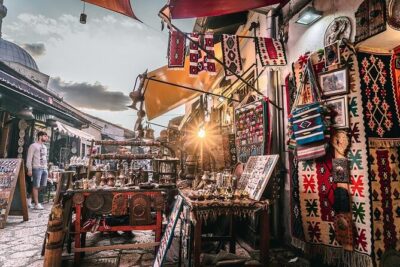
- The Ottoman street rhythm: Kazandžiluk, Sebilj, and the craft stalls
- Morića Han: where caravans met everyday trade
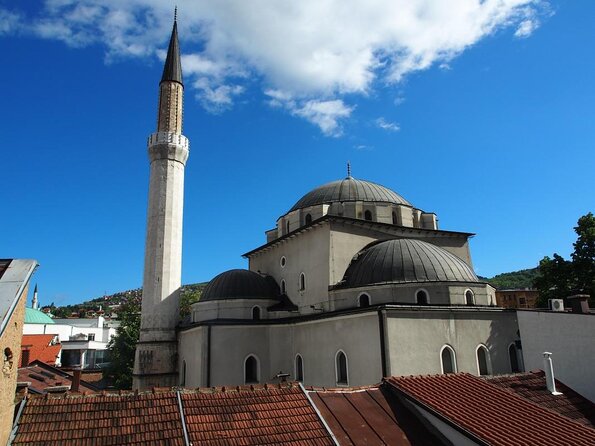
- Gazi Husrev-beg Mosque courtyard: architecture plus the neighborhood behind it
- Sarajevo City Hall: construction, destruction, and rebuilding
- Muzej Sarajeva and 1914: Franz Ferdinand and the start of WWI
- Bezistan: a 16th-century covered bazaar with Istanbul DNA
- Sarajevo Meeting of Culture: where East meets West
- Jewish Museum front stop: Sephardic roots, manuscripts, and memory
- Katedrala Srca Isusova and the church visits that kept Sarajevo in view
- Serbian Orthodox Cathedral, big chess pieces, and the Multicultural Man
- Price, timing, and what that small-group format really means
- Ticket reality check: what costs extra versus what stays free
- Who this walking tour is best for
- Should you book this Sarajevo walking tour?
- FAQ
- How much does the Sarajevo walking tour cost?
- How long is the tour?
- Is this tour private?
- Is pickup included?
- Is WiFi included?
- Where does the tour start and end?
- What time does the tour start?
- Are tickets included for every stop?
- What if the weather is poor?
- Are service animals allowed?
Key things I’d watch for
- A private group, up to 4 people, so questions do not get lost in the crowd
- Food smells in the route, cevapi, pita, and Turkish coffee aromas are part of the experience
- Two eras in one walk, Ottoman craftsmanship alongside Austro-Hungarian landmarks
- Stops tied to world-shaping events, including Franz Ferdinand and the road toward WWI
- Covered bazaar architecture, Bezistan as a copy of Istanbul’s Kapali Çaršija
- A strong guide performance, Suvad is noted for personal stories plus solid facts
Different walks through the Sarajevo old town
- Sarajevo: 2 Hours Old Town Walking Tour With Local Guide
★ 5.0 · 505 reviews - Sarajevo Grand Walking Tour
★ 5.0 · 232 reviews - Sarajevo Grand Tour: Old Town, War Tunnel, Olympic Sites & More
★ 5.0 · 73 reviews - Delicious Sarajevo: Eat, Walk & Discover City Tour
★ 4.5 · 37 reviews
Walking Sarajevo like a living map of empires
A walk through Sarajevo is not just sightseeing. It is a way to read the city, piece by piece, through buildings, streets, and what people still do today. This tour is built around that idea, moving from bazaars and fountains to mosques and cathedrals, with a clear sense of how Ottoman Istanbul and Austro-Hungarian Vienna both left their mark.
I like that it is not one-note history. You get to hear about construction and reconstruction at Sarajevo City Hall, then you move into Kazandžiluk, the street where crafts and coffee culture take center stage. Then the route snaps into places like Morića Han and Bezistan, where trade and daily routine used to be the heartbeat of the city.
If you enjoy city walking tours that feel personal, this is a strong fit. In the reviews, the guide Suvad stands out for sharing personal stories while still grounding things in facts, and for answering questions even when they catch you mid-thought. That mix matters, because Sarajevo history can get heavy fast, and you still want clarity, not chaos.
The Ottoman street rhythm: Kazandžiluk, Sebilj, and the craft stalls
A good Sarajevo tour gets you to notice what locals notice. Here, the route leans into the senses. You are guided past streets where you can eat some of the classic Bosnian comfort food, then you linger in Kazandžiluk, where shop vendors and crafts come into focus.
Kazandžiluk is where coffee culture becomes more than a drink. You should expect stories about coffee tasting and making, plus details about pot making and decorations. Even with just a short stop, this is the kind of place where you start to understand how Ottoman-era Sarajevo kept its identity through small, repeatable rituals.
Then comes the wooden fountain, Sebilj. You will stop next to it and hear about its history, creation, and how it was used through centuries. That single stop is useful because it gives you a reference point for the rest of the walk, a reminder that public water, public gathering, and public life were always part of the city’s design.
If your travel style is “walk, look, ask,” you will like this section. It is short, but it gives you anchors you can remember later when you are wandering on your own.
Morića Han: where caravans met everyday trade
Morića Han is one of those stops that makes the city feel practical. You enter the story of a caravan saray, a place built for travelers and goods moving through the region. The focus is on caravans traveling to the country, which helps the Ottoman trade network feel less abstract.
The tour also works in something tactile: you get an opportunity to see a carpet store with traditional Bosnian carpets. You are not just staring at artifacts behind glass. You get a chance to watch how the craft is presented, which helps you understand why the bazaar world mattered.
One small consideration: this is a walking tour, but you still need to think about time and attention. Ten minutes can pass fast if you are trying to read everything at once. The guide’s style helps here, because the goal is to give you the key threads, then let you look around with a sense of what to notice.
Gazi Husrev-beg Mosque courtyard: architecture plus the neighborhood behind it
This is not just a church-or-mosque photo stop. In the courtyard of Gazi Husrev-beg Mosque, you talk through construction and usage, and you also hear about supporting institutions tied to the mosque. That means Medressah, public toilets, and a library, all part of the complex story.
What I like most here is the idea that the mosque is not isolated. The tour explains how an entire neighborhood was constructed together with the mosque in the 16th century. That framing helps you look past the building itself and notice the broader plan.
Also, note the ticket situation. The mosque stop is marked as admission ticket not included, so you should plan for possible separate entry costs if you want full access beyond what is covered in the courtyard stop.
This part is also where the soundscape becomes real. You will hear the calls from minarets while the walk is moving, which makes Sarajevo feel like a working city rather than a museum set.
Other walks we have put boots to
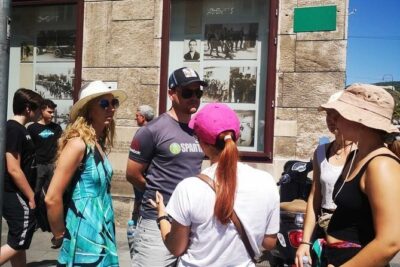
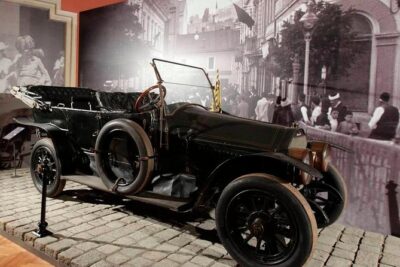
Sarajevo City Hall: construction, destruction, and rebuilding
Sarajevo City Hall is introduced with a clear theme: how the building was constructed, how it was used, and then what happened when it was destroyed and later reconstructed. Even in a short visit, this stop gives you context for why Sarajevo’s landmarks do not just represent art, they represent survival.
A short, focused history here pays off later. Once you have the idea of repeated rebuilding in your head, the rest of the tour makes more emotional sense. You start to notice that many of these sites are not merely old, they are persistent.
Ticket note: admission is not included for this stop. If you want to be flexible, consider bringing a little extra budget so you are not stuck deciding on the spot.
Muzej Sarajeva and 1914: Franz Ferdinand and the start of WWI
This is the tour’s most serious pivot. You stop in front of Muzej Sarajeva, the museum connected with the assassination of Austro-Hungarian Archduke Franz Ferdinand in 1914. The walk pairs the location with images of Gavrilo Princip and talks through reasons the assassination helped trigger World War I.
I appreciate how the approach is direct. Instead of trying to cover every political cause in full detail, it gives you the essentials to connect people, place, and consequence. That matters because WWI can feel like a distant school unit until you see how Sarajevo sits inside it.
Ticket note again: admission is not included for this stop. If you want to go inside, plan for extra time and costs that are not included in the tour price.
Bezistan: a 16th-century covered bazaar with Istanbul DNA
Then you shift back into the architecture of commerce. Bezistan is a closed bazaar, and the tour explains it was created as a copy of Kapali Çaršija in Istanbul. That is a great detail because it turns a building into a clue about cultural exchange.
You get to walk through the Bezistan area and hear why it is so impressive as a 16th-century building. Since the stop is marked free, you should be able to enjoy the space without worrying about entry fees for this segment.
This is also a good moment for photos, but do not just point and shoot. Look up. In covered bazaars, the ceiling design and shop layout tell you how people moved, traded, and waited. When you already have the Ottoman street context from Kazandžiluk and the caravan story from Morića Han, Bezistan clicks into place fast.
Sarajevo Meeting of Culture: where East meets West
At the Sarajevo Meeting of Culture stop, the tour explicitly calls out the theme you have been tracking the whole time. East meets West, small Istanbul meets small Vienna. You are not being asked to accept a vague claim. The stop is a quick pause to connect what you just saw to how Sarajevo’s identity has been shaped by both worlds.
This kind of “pause spot” is underrated. It helps you reset your brain between heavy and lighter moments. After the bazaar and before churches and museums, this stop gives you the emotional map.
It is also one of the free stops, so you can keep your schedule smooth without juggling ticket decisions.
Jewish Museum front stop: Sephardic roots, manuscripts, and memory
The Jewish Museum of Bosnia and Herzegovina is presented from the outside, where it was once a Sephardic Synagogue. You learn about the history of Jewish people in the country, including a mention of the Haggadah, an illuminated manuscript, plus the Holocaust and Righteous among Nations.
This is one of those places where a careful guide can make a difference. The point is not only that Jewish communities existed here. The point is that their story is tied to texts, community life, persecution, and remembrance.
Ticket note: admission is not included for this stop. If you want to go inside, budget for that separately. Even if you do not, the outside briefing is still useful because it gives you the background you will miss if you just walk past.
Katedrala Srca Isusova and the church visits that kept Sarajevo in view
Next comes religion in a different style. At Katedrala Srca Isusova, you visit the cathedral and talk about its neo-gothic construction. You also cover Pope visits in 1997 and 2015.
This stop is marked free for admission. That is a practical win because you can focus on the stories without thinking about extra entry costs for the segment itself.
I also like this part because it broadens the tour beyond Ottoman and Austro-Hungarian architecture alone. Sarajevo is a meeting city, and the cathedral story shows how later European connections stayed relevant.
Serbian Orthodox Cathedral, big chess pieces, and the Multicultural Man
The last part turns outward into the public square atmosphere. You stop in front of the Serbian Orthodox Cathedral and talk about its lavish architectural style and the Serbian community.
You also see a square where chess is being played with big figures. It might sound like a casual detail, but it fits the theme. Sarajevo is not only past tense. It is also lived in right now.
Then you circle back to the monument called Multicultural Man in the centre of the square. Ending here makes sense because the walk has been building toward one main idea, Sarajevo as a place where different communities keep overlapping.
This stop is marked free, so you should not need ticket decisions at the very end.
Price, timing, and what that small-group format really means
The price is $69.46 per group, up to 4 people. That is a key detail, because it means your cost stays tied to your group size rather than per person in a typical way.
For a tour that mixes sensitive history with architecture and street-level food culture, this is not bad value. The route is designed to be short enough to fit into a day, but dense enough that you walk away with a mental map. It is listed as 1 to 3 hours, which usually works well for travelers who want context without getting stuck in long museum time.
The tour is private, meaning only your group participates. In plain terms, you can ask questions without feeling rushed, and you can get answers tailored to what you care about. In the reviews, Suvad is praised for personal stories and factual historical knowledge, plus being happy to answer even awkward questions. That style is exactly what makes a private format feel worth paying for.
Pickup is offered, and the included air-conditioned vehicle plus WiFi on board can help if you start the day in warm weather or you want to confirm directions. It also means you can keep the morning moving even if your feet need a break.
Ticket reality check: what costs extra versus what stays free
A lot of stops are marked free. You get free segments at places like Kazandžiluk, the Sebilj fountain area, Morića Han, Bezistan, the Sarajevo Meeting of Culture spot, the Cathedral stop, and the Serbian Orthodox Cathedral area.
But some of the big-name stops are specifically marked as admission ticket not included. That includes Sarajevo City Hall, the Gazi Husrev-beg Mosque stop, Muzej Sarajeva, and the Jewish Museum of Bosnia and Herzegovina.
So if you want the best value, do this mental math ahead of time. Decide whether you want to pay for inside access at those not-included stops. If you are happy with outside stops plus the guide’s briefing, you can keep costs closer to the tour price.
Who this walking tour is best for
This tour is ideal if you want Sarajevo’s story told through walking, not through a long lecture. It suits couples and small groups who like architecture, city streets, and history that connects to real places.
It is also a good fit for travelers who eat with their eyes and noses. The route explicitly plays with the smell of cevapi, pies, and Turkish coffee, plus the sound of church bells and calls from minarets.
And because it is private and only your group participates, it works well for people who want their questions answered clearly. The reviews emphasize Suvad’s passion for Sarajevo and his ability to share personal details alongside facts.
If you hate walking in hot weather or you need frequent breaks, the 1 to 3 hour length helps, but I would still plan your footwear carefully and keep water on hand.
Should you book this Sarajevo walking tour?
Book it if you want a small-group, private walk that connects Ottoman and Austro-Hungarian Sarajevo with lived-in street culture, plus world-shaping 1914 history. I also think it is a smart choice if you care about understanding how different communities overlap, not just taking landmark photos.
Skip it or adjust expectations if you mainly want deep museum time inside ticketed sites, because several key entries are not included. This tour is more about the route, the meaning, and the guide’s ability to put the city into context while you walk.
FAQ
How much does the Sarajevo walking tour cost?
It costs $69.46 per group (up to 4). The price is per group, not per person.
How long is the tour?
The duration is listed as 1 to 3 hours, approximately.
Is this tour private?
Yes. It is a private tour/activity, and only your group participates.
Is pickup included?
Pickup is offered. The experience also includes an air-conditioned vehicle.
Is WiFi included?
Yes. WiFi on board is included.
Where does the tour start and end?
It starts at Telali 19, Sarajevo 71000, Bosnia and Herzegovina. It ends at the Orthodox Church of the Nativity of the Theotokos, in the square next to the Multicultural man monument.
What time does the tour start?
The start time is 9:00 am.
Are tickets included for every stop?
No. Some stops are marked as admission ticket not included, while others are free.
What if the weather is poor?
The experience requires good weather. If it is canceled due to poor weather, you will be offered a different date or a full refund.
Are service animals allowed?
Yes, service animals are allowed.
More Tours Across Bosnia
The Full Bosnia Review Shelf
Walking Sarajevo, Other Routes
Recently added to the Bosnia and Herzegovina shelf
- Walking Tour in Sarajevo★ 5.0 · 3 reviews
- Travnik, Jajce, Pliva Lakes & Mills –Medieval & Ottoman Bosnia Full Day Tour★ 5.0 · 3 reviews
- Tour of Herzegovina – From Sarajevo★ 5.0 · 3 reviews
- The Siege of Sarajevo Tour★ 5.0 · 3 reviews
- Srebrenica Genocide Tour from Sarajevo★ 4.5 · 3 reviews
- Sarajevo to Zagreb: One-Way Tour via Jajce, Travnik, Pliva Lake and Watermills★ 5.0 · 3 reviews
Sarajevo Old Town Walking Tours, compared.
 ★ 5.0Sarajevo: 2 Hours Old Town Walking Tour With Local GuideFrom $14505 reviews
 ★ 5.0Sarajevo Grand Walking TourFrom $20232 reviews
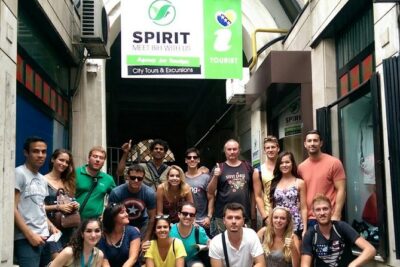 ★ 5.0Sarajevo Essential Full Walking TourFrom $18198 reviews
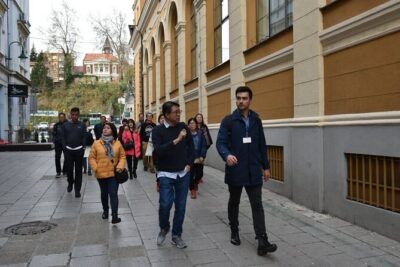 ★ 5.0Sarajevo Grand Tour: Old Town, War Tunnel, Olympic Sites & MoreFrom $4773 reviews
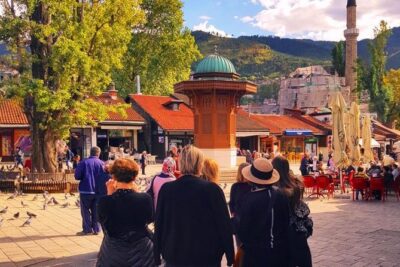 ★ 4.5Delicious Sarajevo: Eat, Walk & Discover City TourFrom $6837 reviews
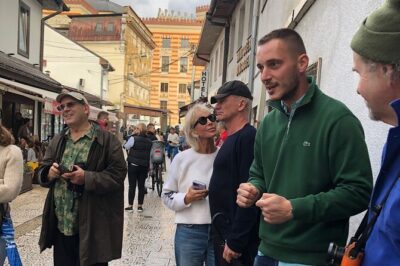 ★ 5.0PROFESSIONAL SARAJEVO WALKING TOUR – With guide who guided STING!From $3129 reviews
 ★ 5.0Sarajevo Full Day Tour: History, Culture, Nature, War & OlympicsFrom $11427 reviews
 ★ 4.5Sensational Sarajevo Sunset Walking TourFrom $1726 reviews
Browse the lists this tour appears in