
REVIEW · SARAJEVO OLD TOWN WALKING TOURS
Sarajevo Grand Tour: Old Town, War Tunnel, Olympic Sites & More
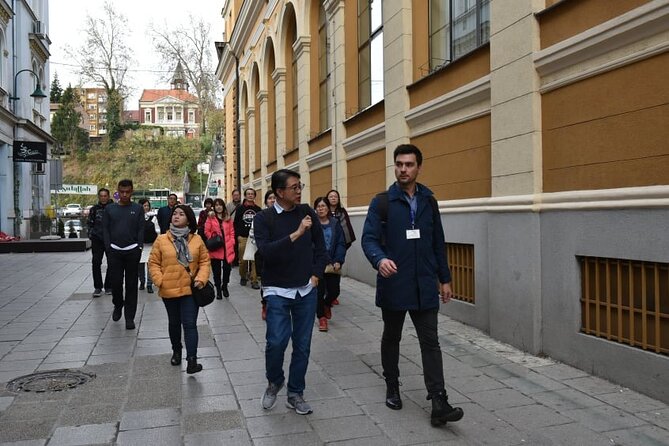
Sarajevo changes pace every few blocks. This small-group tour strings together the Ottoman core, Austro-Hungarian landmarks, and the wartime story, with hotel pickup and Old Town walking time you can’t easily recreate on your own.
I like that it mixes real walking with smart driving, so you get the sights without feeling punished by Sarajevo’s hills. I also like the War Tunnel portion, which is the emotional center of the day, not just a quick stop. One consideration: the day can feel time-tight if the schedule gets compressed, so ask your guide to confirm the plan early in the morning.
Key points worth knowing before you go
- Hotel pickup plus private transport keeps the hardest hops simple, especially around Trebevic and the forts.
- Small-group size (max 15) makes it easier to ask questions and move at a human pace.
- Bosnian coffee is built in, along with time to taste local sweets and coffee culture in the Old Town.
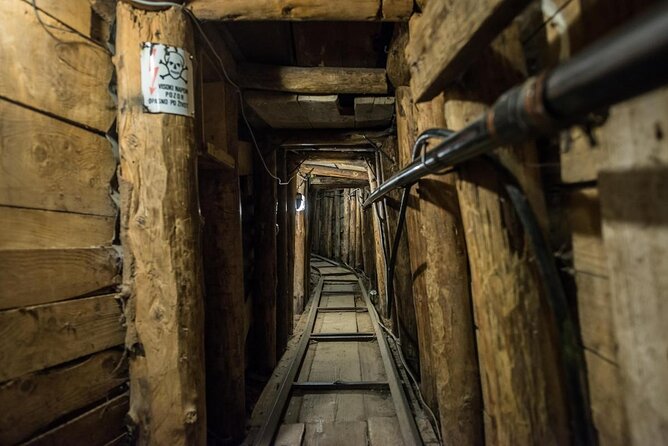
- War Tunnel walkthrough plus short movie gives context before you walk part of the tunnel.
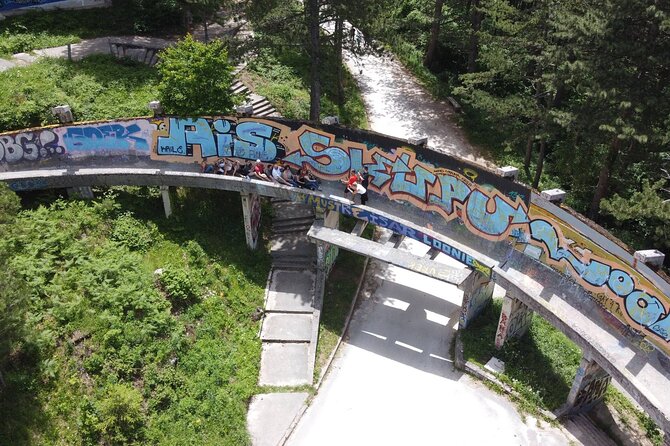
- Olympic Bobsleigh and Luge Track stop adds a surprising modern layer on Trebevic Mountain.
In This Review
- Sarajevo Grand Tour, the core idea, and why it works
- Old Town orientation: City Hall, the Miljacka River, and Seher Cehaja Bridge
- Kazandziluk and Bascarsija: food-street energy plus the Sebilj fountain
- Morica Han and Gazi Husrev-beg Mosque: caravan routes, coffee culture, and Ottoman touchpoints
- Latin Bridge to Bezistan: assassination history and a covered market vibe
- Jewish and Christian landmarks in the same route: Meeting of Cultures, synagogues, and cathedrals
- Markale to the War Tunnel: Sniper Alley, the siege story, and a walk you will remember
- Trebevic Olympic sites and the Yellow Fortress: warfront views plus a sports twist
- Guides, coffee, and the small details that make the day feel personal
- Price and value: what $47.06 gets you, and what to budget extra
- Who this tour fits best, and who should choose differently
- Should you book the Sarajevo Grand Tour?
- FAQ
- How long is the Sarajevo Grand Tour?
- Is hotel pickup included?
- What language is the tour offered in?
- How big is the group?
- What is included in the price?
- What is not included, and is there an extra cost for the War Tunnel?
- Are there admission fees for other stops like the mosque, cathedral, or markets?
- Can children join this tour?
- Is free cancellation available?
Sarajevo Grand Tour, the core idea, and why it works
This is the kind of tour that helps you get your bearings fast. You start with the Old Town, where streets and buildings still tell their story through names, fountains, and small Ottoman-era details. Then you shift gear into Sarajevo’s wartime geography, and you finish with views from Trebevic and the Yellow Fortress that make the city’s layout click.
You’ll also be glad the format is practical. You’re not doing a marathon hike through steep neighborhoods just to hit the highlights. You walk the key historic zones, then you ride in a private vehicle to the next cluster of sights. That rhythm matters in Sarajevo, because the elevation and the street layout can wear you out quickly.
Finally, this tour is good value for the scope. At around $47 per person for about five hours, you’re paying for a local guide, bottled water, included Bosnian coffee, and private transportation across a long route. You only have to budget extra for one major paid item: the War Tunnel Museum admission.
Different walks through the Sarajevo old town
- Sarajevo: 2 Hours Old Town Walking Tour With Local Guide
★ 5.0 · 505 reviews - Sarajevo Grand Walking Tour
★ 5.0 · 232 reviews - Sarajevo Grand Tour: Old Town, War Tunnel, Olympic Sites & More
★ 5.0 · 73 reviews - Delicious Sarajevo: Eat, Walk & Discover City Tour
★ 4.5 · 37 reviews
Old Town orientation: City Hall, the Miljacka River, and Seher Cehaja Bridge
The day starts near Sarajevo’s civic center, with a look at Sarajevo City Hall, also known as Vijecnica, from the outside. It’s a helpful first visual because it sets a tone for the whole city, a mix of empire-era grandeur and later layers of history.
Then the tour becomes a walking orientation route. You’ll hear a quick city introduction, including how Sarajevo’s population and geography shape life here. After that, you move through some of the most recognizable Old Town reference points:
- Inat Kuca (spite house), a famous local landmark you’ll see along the way.
- The Miljacka River, which anchors the historic center and helps explain how neighborhoods grew up around it.
- Seher Cehaja Bridge, including a short stop where the bridge acts like a natural photo and orientation pause (and in this schedule, the stop time is listed at about 15 minutes with no ticket needed).
This section is where you get the “mental map.” If you plan to visit the Old Town again later, you’ll understand why certain streets feel close together even when the city gets hilly.
Kazandziluk and Bascarsija: food-street energy plus the Sebilj fountain
Next you cross the Miljacka River again and enter the pedestrian area near Kazandziluk. This is one of those street zones that feels like the real everyday Sarajevo layer, not a museum set.
Kazandziluk is built around the famous food street moment. Along the route you’ll be guided to:
- Locksmith street, where you can do a cevapi tasting and sample pita-burek, plus sweets and coffee.
- Coppersmith street, where you can step into a coppersmith shop for a short handcraft presentation.
Even if you’re not a shopper type, this stop gives you a sense of how craft work used to support the city economy. Sarajevo’s Old Town is full of trade legacies, and coppersmithing is one of the easiest ways to feel that history without needing a ticket.
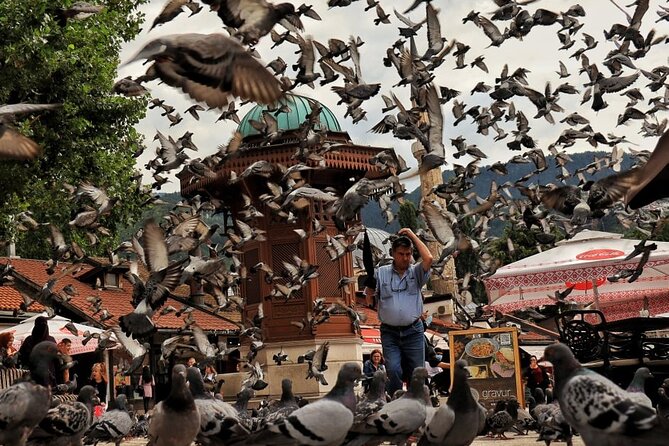
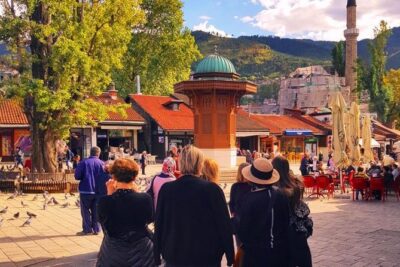
Then you arrive at Bascarsija, the Old Town’s main square, anchored by the Sebilj fountain. The tour frames it as the heart of the city, and the detail about the fountain providing free water for travelers for centuries is exactly the kind of practical local story that makes places memorable.
Morica Han and Gazi Husrev-beg Mosque: caravan routes, coffee culture, and Ottoman touchpoints
After Bascarsija, the route keeps moving through the Old Town shopping promenade toward Morica Han. This is your pause for atmosphere and tradition. The key draw is that Morica Han is a 16th-century Ottoman caravansaray, historically a place where merchants and traders stayed during travel.
Inside this stop you get a traditional Bosnian coffee tasting and a quieter corner in the Old Town while the guide shares stories about traditions. It’s a good reset, especially because the day stacks a lot of emotionally heavy history later on.
Then you head to Gazi Husrev-beg Mosque, focusing on the mosque complex and its surrounding features. Expect time around:
- the garden setting,
- the mosque and minaret,
- the story of Gazi Husrev Bey,
- the Sadrvan fountain,
- the Medresa Islamic school,
- and the Lunar Clock Tower.
Even if you’re not there to do a long worship stop, this area helps you understand how Ottoman Sarajevo organized daily life around religious and educational institutions. You also get enough time to take photos and read the place with your guide’s narration.
Latin Bridge to Bezistan: assassination history and a covered market vibe
From the Ottoman core, you move into the story of modern Sarajevo. The next cluster centers on Latin Bridge and the surrounding assassination narrative.
A few details here are especially worth your attention:
- You’ll pass the oldest public toilet in the country, described as a 16th-century site that is still working. It’s a memorable contrast, because it’s so normal for something with such big history nearby.
- You’ll walk past Latin Bridge itself.
- You’ll get the story of the assassination that put Sarajevo into global history.
After that, you reach Gazi Husrev Beg’s Bezistan, a 16th-century covered market. Before the covered market, you’ll also pass Taslihan, described as the ruins of the largest caravansaray, plus Hotel Europe as a recognizable city marker on the route.
This portion is a nice shift. Instead of only big monuments, you’re seeing how the Old Town moved people through trade corridors, bridges, and covered retail space. It’s the sort of detail that makes the city feel lived-in rather than staged.
Further siege history tours in Sarajevo
Jewish and Christian landmarks in the same route: Meeting of Cultures, synagogues, and cathedrals
One of the strongest parts of this tour is that it doesn’t treat Sarajevo’s religious history as separate boxed tours. It strings key locations into a single route so you see how different communities shaped the city side by side.
You’ll stop at Sarajevo Meeting of Culture, described as the place where East meets West. This stop is short, but it works as a theme-setting pause.
Then you visit the Jewish Museum of Bosnia and Herzegovina area. In this schedule, it’s an outside visit focused on the museum’s 16th-century synagogue setting and the story of the Hagadah book, plus how communities lived together. Even as an outside look, it gives a human framework for Sarajevo’s mixed identity.
You also get stops for major Christian landmarks:
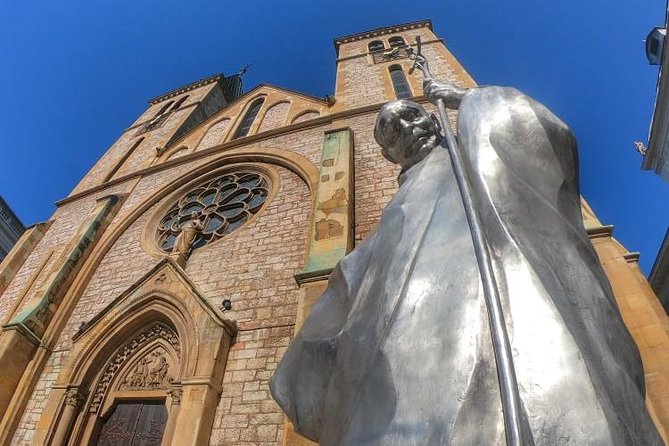
- Sacred Heart Cathedral (Katedrala Srca Isusova), as an outside visit.
- A walk along Ferhadija promenade.
- Passing points like Sarajevo roses and a John Paul Statue.
- Then an outside look at the Serbian Orthodox Cathedral.
This section is most rewarding if you’re the kind of traveler who likes “how people lived” context. If you prefer only iconic, ticketed interiors, you’ll still come away with a coherent map of neighborhoods and faith landmarks, but it may feel like more of an overview than a deep study.
Markale to the War Tunnel: Sniper Alley, the siege story, and a walk you will remember
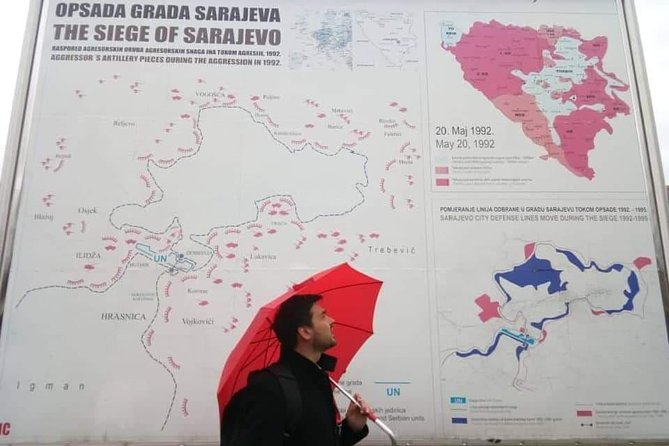
After the culture stops, the tour moves into the wartime geography. You’ll pass Hamam and then arrive at Markale marketplace, tied to the massacres during the 1992 to 1995 war. The stop is brief, but it matters because it places the siege story into a real street-level location.
Then you head toward Sarajevo War Tunnel. This is where the day turns serious. On the way, you’ll pass Sniper Alley, and you’ll also pass through the area tied to the Republica Srpska (RS), plus Sarajevo Airport, before reaching the tunnel.
At the War Tunnel itself, the schedule includes:
- a presentation,
- a short movie about the siege and tunnel,
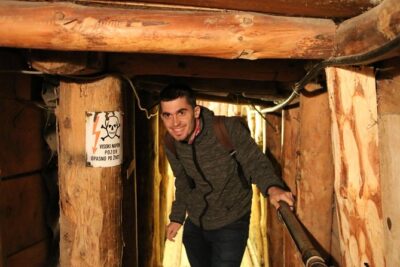
- and a walk through part of the tunnel.
One key note for planning: the Tunnel Museum admission is not included, listed as €10.50 per booking. So budget for that if the tunnel museum experience is part of what you want most.
This is also where the guides in feedback tend to shine. People talk about guides explaining the siege context clearly, with strong storytelling. If you want to ask questions, this is the best moment to do it, because the tunnel’s physical layout turns abstract history into something you can actually point at.
Trebevic Olympic sites and the Yellow Fortress: warfront views plus a sports twist
The final stretch mixes modern Sarajevo with dramatic views. You drive up to Trebevic Mountain, about 15 to 20 minutes away, with stops that frame the route against what used to be war frontlines.
Then you reach the Olympic Bobsleigh and Luge Track. In this schedule, you’ll do a short walk to the bobsleigh area and get time for photos. It’s only about 30 minutes, but it’s a high-value stop because the contrast is so strong: Olympic sports infrastructure sitting in a place marked by conflict.
After the bobsleigh area, you drive down through neighborhoods and make a stop at the Jewish Cemetery Sarajevo. You’ll get a chance to see the “snipers nest” viewpoint looking over the city center and Sniper Alley, plus a look at what’s described as the war hotel area.
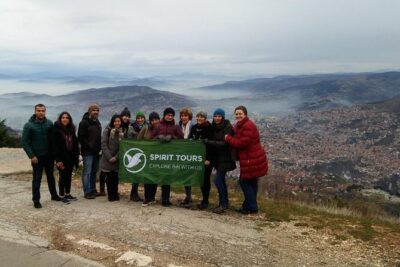
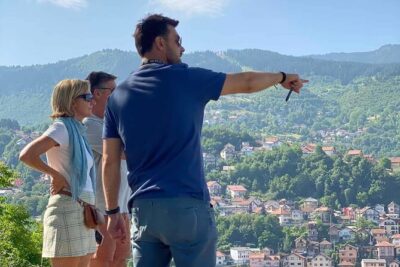
Finally, you end with the Yellow Fortress, also described as the place with the most amazing views of Sarajevo. This is a great finish because it turns everything you heard earlier into a single visual picture. You’ll finally see how the river, old neighborhoods, and surrounding hills fit together.
Guides, coffee, and the small details that make the day feel personal
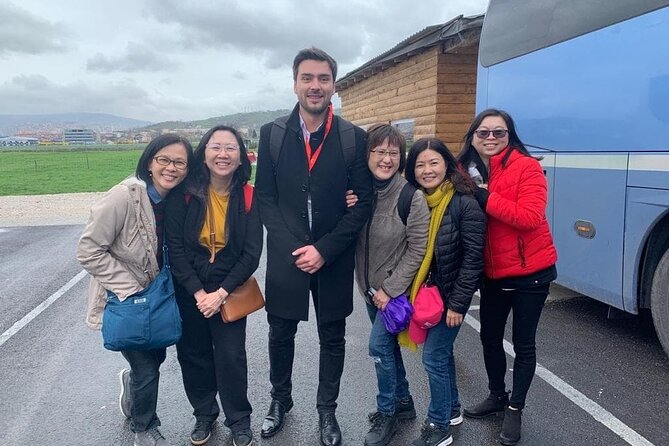
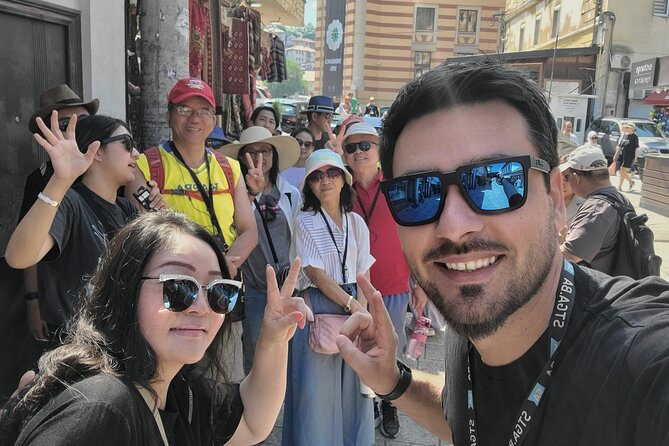
The biggest difference between a good tour and a great one is how it sounds in your ears, not just how it looks on a map. This tour’s reputation is strongly tied to its guides, and names show up again and again in feedback, including Elvis, Enes, Edis, and Zulfo.
A pattern you’ll likely notice: guides talk with energy, and they use little anchors to keep the story straight. Some guides bring extra visuals on an iPad to support explanations. Others go beyond the basic route by building in extra food moments. For example, feedback mentions a coffee and snack stop connected with a tunnel-area family, including traditional items like ustipci.
If you care about food, this day has those built-in cues. You have the chance for cevapi and burek-style snacks in the Old Town, plus the formal Bosnian coffee moment in the caravan stop zone. It’s not just sightseeing, it’s a taste-led route through Sarajevo.
One more practical tip: since this is a walking-plus-driving day, comfortable shoes matter more than you might think. You’ll do several Old Town walks, and at the end you’re also moving short distances near viewpoints.
Price and value: what $47.06 gets you, and what to budget extra
At about $47.06 per person for roughly five hours, this tour stacks several things that are expensive or exhausting to DIY:
- a local guide,
- hotel pickup,
- private vehicle transport across multiple zones,
- bottled water,
- and included Bosnian coffee.
Most of the scheduled stops are listed with free admission. That’s a big deal when you’re trying to keep costs under control, because Sarajevo’s major historic and cultural points often come with fees if you go inside.
The main add-on is clear: the Sarajevo War Tunnel Museum admission is not included, listed as €10.50 per booking. If you want the tunnel museum element, treat that as a necessary line item, not an optional splurge.
Also remember the tour is capped at a maximum of 15 travelers, and it’s booked often (on average about 36 days in advance). That usually means fewer empty seats and faster sell-through during peak days, so it’s smart to book early rather than hoping for last-minute availability.
Who this tour fits best, and who should choose differently
This is a strong match if you want a fast, structured way to see both the Old Town and the wartime story without spending your vacation time figuring out routes. It’s also a good option if you like mixing architecture and food, because the day includes Old Town walking, a coffee stop in a caravan-era building, and the chance to taste local bites.
It can also work well for families and mixed ages, with feedback mentioning that a guide kept a young child engaged. For seniors or people who don’t want steep climbs, the private transport between clusters is the practical advantage.
If you are the type of visitor who wants long museum time, interior access at every stop, and slow pacing with lots of free time, you might find a guided format too scheduled. The upside is that you will cover a lot, but you’ll need to plan to return to any place that you want to explore more deeply.
Should you book the Sarajevo Grand Tour?
Yes, if you want one day that connects the Ottoman Old Town, Sarajevo’s religious and cultural landmarks, and the wartime reality without turning your schedule into a logistics puzzle. The price is fair for the amount of ground you cover, and the inclusion of coffee, bottled water, and private transport makes it feel designed for real people on real schedules.
Book it especially if you’re short on time and want a guide-led route that ends with viewpoints at Trebevic and the Yellow Fortress. Just do one thing before the morning starts: ask your guide to confirm the pacing so you can protect the full experience length you paid for, including the War Tunnel portion you will likely care about most.
FAQ
How long is the Sarajevo Grand Tour?
It runs for about 5 hours on average.
Is hotel pickup included?
Yes. Pickup is offered, and you are picked up at your hotel lobby or another location in Sarajevo.
What language is the tour offered in?
The tour is offered in English.
How big is the group?
The tour has a maximum of 15 travelers.
What is included in the price?
Included items are bottled water, Bosnian coffee, a local guide, transport by private vehicle, and hotel pickup.
What is not included, and is there an extra cost for the War Tunnel?
The Tunnel Museum admission is not included and is listed as €10.50 per booking.
Are there admission fees for other stops like the mosque, cathedral, or markets?
In the schedule, most stops are listed with free admission. The War Tunnel Museum is the specific paid item noted as not included.
Can children join this tour?
Yes, children can participate, but they must be accompanied by an adult.
Is free cancellation available?
Free cancellation is available. You can cancel up to 24 hours in advance for a full refund.
Trebevic and the Olympic Mountains, More Tours
Sarajevo Siege History, Further Tours
Walking Sarajevo, Other Routes
Recently added to the Bosnia and Herzegovina shelf
- Walking Tour in Sarajevo★ 5.0 · 3 reviews
- Travnik, Jajce, Pliva Lakes & Mills –Medieval & Ottoman Bosnia Full Day Tour★ 5.0 · 3 reviews
- Tour of Herzegovina – From Sarajevo★ 5.0 · 3 reviews
- The Siege of Sarajevo Tour★ 5.0 · 3 reviews
- Srebrenica Genocide Tour from Sarajevo★ 4.5 · 3 reviews
- Sarajevo to Zagreb: One-Way Tour via Jajce, Travnik, Pliva Lake and Watermills★ 5.0 · 3 reviews
Sarajevo Old Town Walking Tours, compared.
 ★ 5.0Sarajevo: 2 Hours Old Town Walking Tour With Local GuideFrom $14505 reviews
 ★ 5.0Sarajevo Grand Walking TourFrom $20232 reviews
 ★ 5.0Sarajevo Essential Full Walking TourFrom $18198 reviews
 ★ 4.5Delicious Sarajevo: Eat, Walk & Discover City TourFrom $6837 reviews
 ★ 5.0PROFESSIONAL SARAJEVO WALKING TOUR – With guide who guided STING!From $3129 reviews
 ★ 5.0Sarajevo Full Day Tour: History, Culture, Nature, War & OlympicsFrom $11427 reviews
 ★ 4.5Sensational Sarajevo Sunset Walking TourFrom $1726 reviews
 ★ 5.0Sarajevo genuine walking tour: Steps through historyFrom $2722 reviews
Browse the lists this tour appears in