
REVIEW · SARAJEVO SIEGE HISTORY TOURS
The Siege of Sarajevo Tour
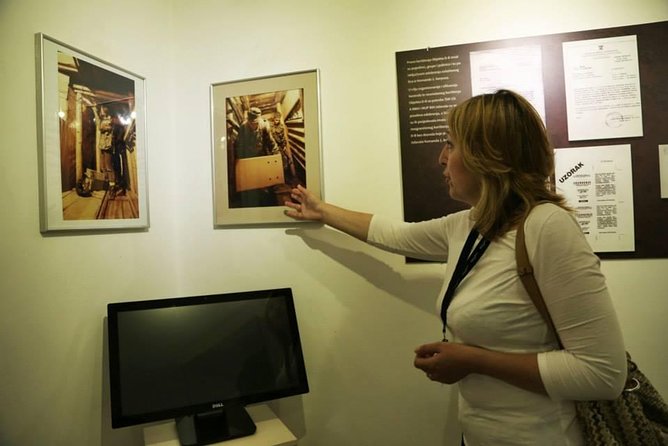
Sarajevo feels quiet, but the past is loud. This private Siege of Sarajevo tour connects what you see today to what happened during the Bosnian War, with a guided look at the Tunnel of Hope and other key sites. You also hear personal war-era stories from your guide, including Danijela.
I loved how the route stays focused, you cover major points without wasting time. You’ll also appreciate the human scale, not just dates, especially around places tied to civilians and supply routes, like the Siege of Sarajevo landmarks and the war tunnel area.
One consideration: this is heavy material. The day is only about 4 hours, but the pacing can feel slow when you stop at memorial sites and do the tunnel video and grounds walk.
In This Review
- Key things to know before you go
- Why this Siege of Sarajevo tour works in a half-day
- Starting at Sarajevo City Hall, where the war left visible scars
- Markale green market, WWII-era monuments, and the politics of visibility
- Snipers on the main boulevard: when a street becomes a hazard
- Asim Ferhatovic Hase Stadium and Trebević: Olympic places under siege pressure
- Tunnel of Hope: the Siege of Sarajevo’s supply lifeline
- Jewish Cemetery Sarajevo and the meaning of damage
- Yellow Fortress: fortifications, views, and Kovači Cemetery in sight
- How the 4 hours actually feels, and how to prepare
- Price and value: what $34.91 buys you in Sarajevo
- Who should book this tour, and who might want a different option
- Should you book the Siege of Sarajevo Tour?
- FAQ
- How long is the Siege of Sarajevo Tour?
- What is the price per person?
- Does the tour include hotel pickup?
- Is this a private tour?
- What ticket costs are not included?
- Where does the tour start?
- Where do you end the tour?
- Is a mobile ticket used?
- What is the cancellation policy?
Key things to know before you go
- A private tour with a licensed guide: you get a real conversation, not a lecture you barely hear over a crowd.
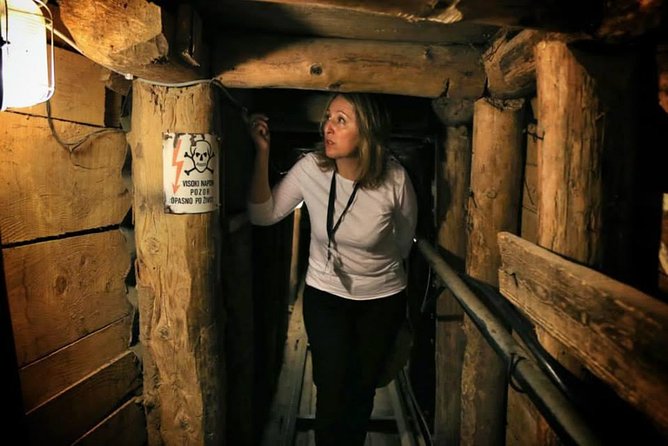
- Tunnel of Hope time matters: you watch a short video, then do a guided walk near the hidden passage area.
- Trebević views come with context: the Olympic mountain sites are also tied to siege-era lines.
- Cemeteries and fortifications are part of the story: the Jewish cemetery and the Yellow Fortress explain how the war used elevation and visibility.
- You get hotel pickup and bottled water: small details, big help when you want to stay comfortable for the full half-day.
Further siege history tours in Sarajevo
- Fall of Yugoslavia, Sarajevo War Tour with Tunnel of Hope Museum and Frontlines
★ 5.0 · 1,314 reviews - ROSES OF SARAJEVO (Official WAR + CITY tour)- Story of a Survivor
★ 5.0 · 770 reviews - Tunnel Museum: Bosnian & Yugoslav Wars Tour with War Veteran
★ 5.0 · 551 reviews - Sarajevo War Tour: A Veteran’s Story of the Siege (fees included)
★ 5.0 · 326 reviews
Why this Siege of Sarajevo tour works in a half-day
If you only have a morning or afternoon in Sarajevo, this tour gives you a clean path through the siege story. The big advantage is that it is private, so you can ask questions and you do not feel rushed or shuffled. You also get a licensed guide/driver and an air-conditioned vehicle, which matters in the real world. Sarajevo streets can be busy, and you will be spending your mental energy on the subject, not on navigation.
I also like that the focus stays on places you can actually stand in front of. Instead of just hearing names and dates, you connect the skyline and streets to what those locations meant during the siege. That is where the guide’s personal storytelling really helps. Danijela, for example, is known for pacing the experience so the time does not drag, even though the topics are intense.
The tour ends back at the meeting point, so you are not stuck at some far-off spot wondering how to get home. It is built to be day-friendly, even when the content is not.
Starting at Sarajevo City Hall, where the war left visible scars
You begin at Sarajevo City Hall on Brodac 1, and right away you get a sense of what reconstruction looks like after a bombardment era. The building you see today was rebuilt after it was shelled and then burned down during the siege. It is not just a historical fact. It is a reminder that the city physically changed, and the memory of that change is still right in front of you.
From there, the tour shifts toward the everyday spaces that became charged with danger. You will not just talk about the siege as an abstract event. You will move through parts of the city that were tied to movement, survival, and visibility.
A key practical tip here: wear comfortable shoes. Even when the tour is not long, the route includes multiple stops where you may need a short walk, a bit of standing time, and moving between viewpoints.
Markale green market, WWII-era monuments, and the politics of visibility
Next, you get a close look at Markale, the green market area. Markets are supposed to be normal places, full of daily routine. In a siege, that normalcy becomes fragile. Your guide ties this area into the broader siege context so it stops feeling like a sightseeing stop and starts feeling like a piece of how civilians lived under pressure.
You will also see a monument built after WWII. It might not sound like a siege highlight at first, but it helps you frame Sarajevo’s later layers of memory. War does not end when the guns stop. It continues through monuments, ceremonies, and how societies interpret what happened.
Then comes the Presidency building. Seeing government architecture in the siege context is sobering, because it puts leadership and decision-making into the same frame as survival and threat. The tour keeps your attention on how people had to navigate danger just to move through the city.
Snipers on the main boulevard: when a street becomes a hazard
One of the most striking stops is the main boulevard, explained through what it meant during the Siege of Sarajevo. During the siege, it was lined with snipers’ posts, and it became infamous as a dangerous place for civilians to traverse.
This is one of those moments where your brain tries to understand a concept and then immediately realizes it is real. A boulevard is where you normally expect movement and life, not death lines. Here, your guide helps you picture what it would have felt like to cross that space under constant risk.
I found the key value in this part of the tour is the way it teaches you to look carefully at the city geometry. Without needing technical details, you start to notice sightlines, elevations, and how built spaces can change safety. Even if you do not remember every street name, you will remember the concept.
Asim Ferhatovic Hase Stadium and Trebević: Olympic places under siege pressure
The tour includes a stop at Asim Ferhatovic Hase Stadium, the Olympic stadium. You get a view of how athletic landmarks sit inside a city that also endured extreme pressure. It is a reminder that Sarajevo was more than wartime headlines. Sports places and public spaces belonged to ordinary life, even when conflict later rewired the city’s meaning.
Then you head to Trebević, the mountain area tied to Sarajevo’s Winter Olympic hosting. During the siege, it was described as a first line, so the tour connects high ground and visibility to both military strategy and civilian danger.
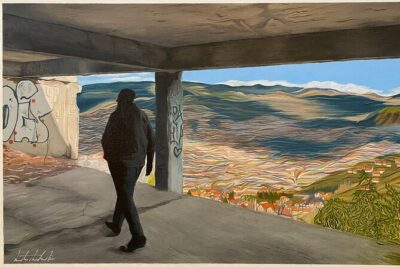
On Trebević, you also have time to see and even walk on the bobsleigh and luge track. It is now one of the abandoned places in Sarajevo, and that contrast hits. Olympic engineering turned into a silent relic. The best part is the panorama. The views help you understand why height matters in any conflict, and they also give you a breath of air after the heavier city stops.
Tunnel of Hope: the Siege of Sarajevo’s supply lifeline
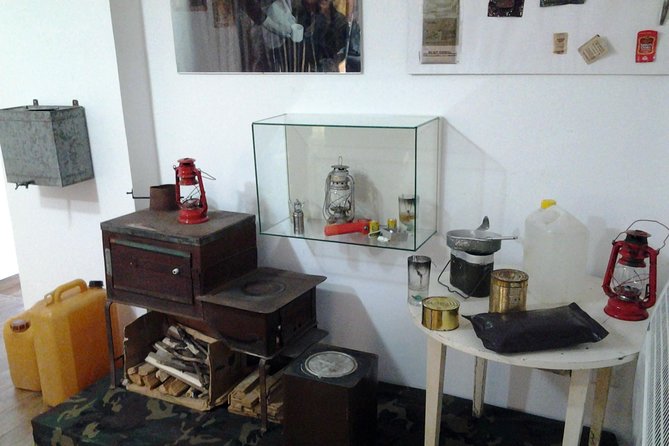
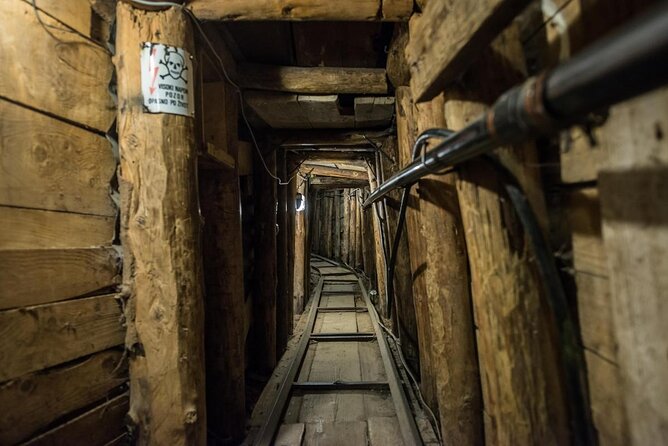
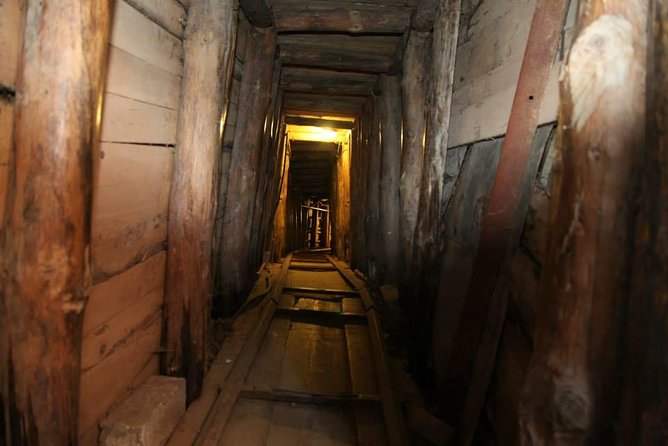
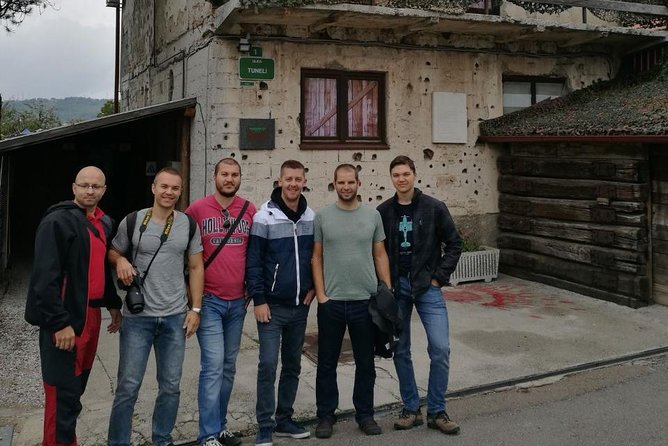
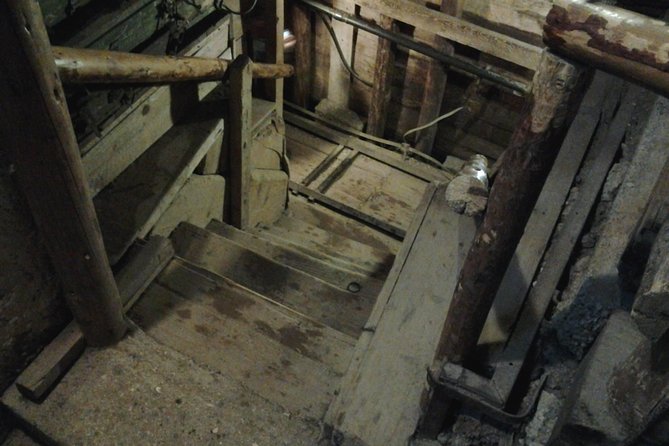
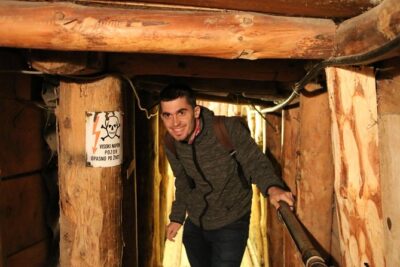
This is the stop most people remember. After a short video about the Siege of Sarajevo, you do a brief walk through the Tunnel of Hope. Then you get a guided tour of the grounds and the home area where the tunnel was hidden, now functioning as a museum.
Two practical points make this part smoother. First, remember that the Tunnel museum ticket is not included in the tour price. You’ll want to budget for that extra cost so there are no surprises at the site. Second, this stop is the emotional peak of the tour, so take your time. It is not a rush-through photo op, and your guide will frame what you are seeing.
Why is it so valuable? Because it explains survival logistics in a way that clicks. The tunnel becomes more than a story. It becomes a physical reminder of how people moved food, supplies, and aid into the city when the outside world was cut off. You can stand there and understand why this place is called the Tunnel of Hope.
Also, do not expect a long adventure. The tunnel time is about learning and orientation. You watch, you walk briefly, and then you absorb the grounds with your guide’s context.
Jewish Cemetery Sarajevo and the meaning of damage
Next, you visit the Jewish Cemetery Sarajevo. Your guide explains how, during the conflict, the cemetery was among the front lines used to maintain the siege. Specifically, Bosnian Serb Army snipers used its strategic position, overlooking much of the city to shoot at civilians.
This is hard to process, so it helps to know what to look for besides shock. The tour points out that many tombstones were damaged by the fighting. Their unique structures were compromised after three years of heavy shelling and indiscriminate shooting.
If you are someone who gets overwhelmed easily, consider pacing yourself here. You do not need to stare at everything at once. You can step back, breathe, and let your guide’s explanation land. And if you are traveling with family, I would keep expectations realistic. This is a cemetery, and it is part of a siege story tied to civilians and violence.
Yellow Fortress: fortifications, views, and Kovači Cemetery in sight
The Yellow Fortress is another defensive-wall fortification that helped guard the city. The value of this stop is two-fold. It is a viewpoint, and it is a teaching tool. From the fortress, you get a fantastic view of Sarajevo, and you also understand how defensive walls and elevation work together.
On a clear day, the view can even connect to other memory sites. From the Yellow Fortress, you can also see Kovači Cemetery. Your guide ties this into the siege story by noting that Sarajevo’s defenders from the Siege of Sarajevo and the first president of independent Bosnia and Herzegovina are buried there.
This stop is a good example of why a guided tour beats a self-walk. You might enjoy the view on your own, but without the context, you would miss the meaning behind what you are seeing. With the context, the viewpoint becomes a map of history.
How the 4 hours actually feels, and how to prepare
The tour is about 4 hours, give or take. In practice, that usually means a steady rhythm of short street stops and a few longer site moments. One stop is short and photo-friendly, like the stadium. Another is more time-based, like the tunnel. Then you have cemetery and fortress time where you will want to stand and take it in.
Here is how I would prepare:
- Wear comfortable walking shoes. Even short distances add up across multiple stops.
- Bring a light layer. The tunnel area and viewpoints can feel cooler than you expect.
- Use the bottled water and pace yourself. This tour is intense, not active like a hike.
Also, if you have limited mobility, check with the provider before booking. The tour says most travelers can participate, but the content includes walking and standing in sensitive sites. A private guide can sometimes help you plan your movement, but you still need to be realistic about how much time you’ll spend on your feet.
Price and value: what $34.91 buys you in Sarajevo
At $34.91 per person for a private half-day, the price is focused on transportation plus interpretation. What you get included is important:
- licensed tour guide/driver
- air-conditioned vehicle
- pickup at your hotel
- bottled water
Then there is the one clear extra cost to know about: the war tunnel museum ticket. That means the base price covers your guide and the city route, and you pay separately for the tunnel museum admission.
If you compare this to the cost of doing multiple standalone tickets and trying to piece together siege sites on your own, the value is in the guidance and the efficient route. You do not have to hunt for context. You also do not spend your precious half-day guessing what matters most.
One more subtle value point: hotel pickup. It saves time and stress, especially if your lodging is not close to the meeting point at Sarajevo City Hall.
Who should book this tour, and who might want a different option
This tour is a great fit if you:
- want a tight, half-day overview of the Bosnian War with a specific focus on the Siege of Sarajevo
- care about understanding what places meant during the siege, not just taking pictures
- prefer learning with a real guide who shares stories in plain language, like Danijela
It is also a good match if you like cities where monuments and streets hold meaning. Sarajevo is exactly that kind of place.
Where it may not be ideal is if you are looking for a light, fun day. This is serious history with cemetery and fortification stops. It can still be worthwhile, but you should book it with the right mindset.
Should you book the Siege of Sarajevo Tour?
Yes, if you want one guided half-day that connects the Tunnel of Hope, the city’s siege-era danger zones, and key memorial and fortification viewpoints into one coherent experience. The strongest reason to book is the guide-led personal storytelling, plus the efficient route with pickup and transport handled for you.
If you are short on time, the 4-hour format is a practical way to get your bearings fast. And if you are choosing between multiple siege-related options, this one earns its place because it builds a story across the city, not just at one site.
Book it with two expectations: it will be emotional, and it will be informative. If that sounds right for your trip, you will probably walk away with a much clearer picture of how Sarajevo survived.
FAQ
How long is the Siege of Sarajevo Tour?
It runs for about 4 hours.
What is the price per person?
The price is $34.91 per person.
Does the tour include hotel pickup?
Yes. Pickup is offered, and hotel pickup is included.
Is this a private tour?
Yes. It is private, and only your group participates.
What ticket costs are not included?
The ticket for the War Tunnel museum is not included.
Where does the tour start?
It starts at Sarajevo City Hall, Brodac 1, Sarajevo 71000, Bosnia and Herzegovina.
Where do you end the tour?
It ends back at the meeting point.
Is a mobile ticket used?
Yes. A mobile ticket is included.
What is the cancellation policy?
Free cancellation is available up to 24 hours before the experience for a full refund.
More Tours Across Bosnia
The Full Bosnia Review Shelf
Sarajevo Siege History, Further Tours
Recently added to the Bosnia and Herzegovina shelf
- Walking Tour in Sarajevo★ 5.0 · 3 reviews
- Travnik, Jajce, Pliva Lakes & Mills –Medieval & Ottoman Bosnia Full Day Tour★ 5.0 · 3 reviews
- Tour of Herzegovina – From Sarajevo★ 5.0 · 3 reviews
- The Siege of Sarajevo Tour★ 5.0 · 3 reviews
- Srebrenica Genocide Tour from Sarajevo★ 4.5 · 3 reviews
- Sarajevo to Zagreb: One-Way Tour via Jajce, Travnik, Pliva Lake and Watermills★ 5.0 · 3 reviews
Sarajevo Siege History Tours, compared.
 ★ 5.0Fall of Yugoslavia, Sarajevo War Tour with Tunnel of Hope Museum and FrontlinesFrom $361,314 reviews
 ★ 5.0ROSES OF SARAJEVO (Official WAR + CITY tour)- Story of a SurvivorFrom $53770 reviews
 ★ 5.0Tunnel Museum: Bosnian & Yugoslav Wars Tour with War VeteranFrom $36551 reviews
 ★ 5.0Sarajevo War Tour: A Veteran’s Story of the Siege (fees included)From $48326 reviews
 ★ 5.0Sarajevo 1425 days under the siege – War TourFrom $48170 reviews
 ★ 5.0Tunnel of Hope Tour – Survival and ResilienceFrom $25118 reviews
 ★ 5.0Sarajevo Grand Tour: Old Town, War Tunnel, Olympic Sites & MoreFrom $4773 reviews
 ★ 5.0War Times Experience in Sarajevo – Half Day TourFrom $3561 reviews
Browse the lists this tour appears in