
REVIEW · SARAJEVO SIEGE HISTORY TOURS
Tunnel Museum: Bosnian & Yugoslav Wars Tour with War Veteran
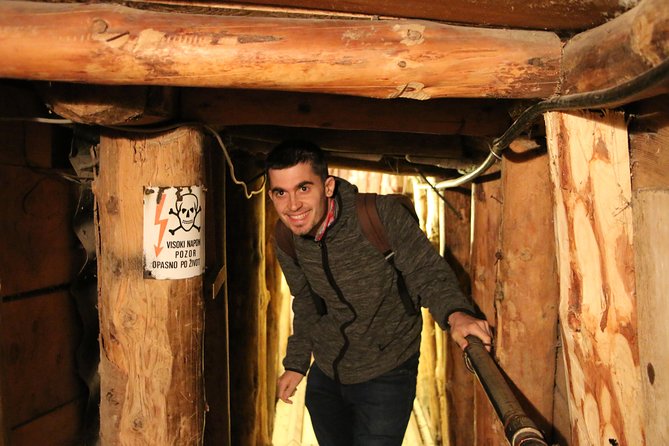
Sarajevo’s past is never far away. This half-day route links street-level landmarks to the story of the Siege of Sarajevo and the Tunnel of Hope. You ride in comfort, then stop at places you would otherwise rush past, explained through a firsthand war lens.
I especially love the way this tour uses short, timed stops to keep the story clear, not overwhelming. I also like that the guide lineup often includes real veterans and locals, with names like Adis, Ibrahim, Enes, Asim, and Adnan showing up in past groups. That personal angle makes the history feel specific, like it belongs to this block, not a textbook.
One possible drawback: the topics are intense, and you will be outside and walking some uneven ground at a few sites. If you prefer lighter sightseeing, this may feel like a tough afternoon.
In This Review
- Key things I’d plan around
- Why the Siege Story Hits Hard in Sarajevo
- Price and time: what $36.28 buys you
- Getting to the start point and settling into the ride
- Markale massacres, Eternal Flame, and Sniper Alley
- War Tunnel Museum: Sarajevo Rose, the film, and the Tunnel of Hope
- Trebević: frontline views and a panoramic reality check
- Jewish Cemetery Sarajevo: stepping into memory under Trebević
- Yellow Fortress and the old Ottoman city edge
- What guides do best on this tour
- Who this tour fits best
- Should you book the Sarajevo War Tunnel and Siege tour?
- FAQ
- How long is the Sarajevo Tunnel and Siege tour?
- Is the tour offered in English?
- What does the price include, and what costs extra?
- Where does the tour start?
- Do you offer hotel pickup?
- Is the tour physically demanding?
- What is the cancellation policy?
Key things I’d plan around
- War Tunnel Museum plus a guided build-up before you even enter, including sites that show up in the museum film
- A veteran-led Siege of Sarajevo explanation that turns landmarks into real daily life stories
- Scenic stops on Trebevic with city views, including spots tied to the frontline
- Cultural memory stops like the Jewish Cemetery and the Yellow Fortress, not just military sites
- Small group feel (up to 20) with transport in an air-conditioned car or minivan
Further siege history tours in Sarajevo
- Fall of Yugoslavia, Sarajevo War Tour with Tunnel of Hope Museum and Frontlines
★ 5.0 · 1,314 reviews - ROSES OF SARAJEVO (Official WAR + CITY tour)- Story of a Survivor
★ 5.0 · 770 reviews - Tunnel Museum: Bosnian & Yugoslav Wars Tour with War Veteran
★ 5.0 · 551 reviews - Sarajevo War Tour: A Veteran’s Story of the Siege (fees included)
★ 5.0 · 326 reviews
Why the Siege Story Hits Hard in Sarajevo
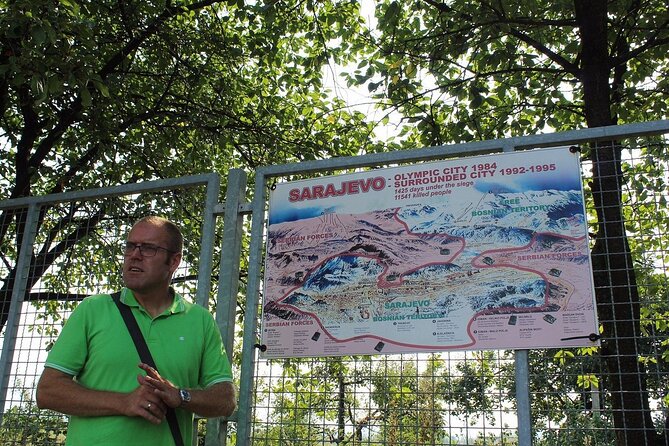
Sarajevo is one of those cities where the war isn’t locked in a museum. It sits in the streets, the monuments, the routes people had to take, and the views people still look at today. That is why this tour works so well: it connects what you see outside to what the city endured.
You start with an on-the-road intro that frames the theme, then the guide helps you notice details you might miss on your own. I like that the trip is not just a list of famous stops. It is about how movement through Sarajevo changed during the siege.
And yes, you should expect emotion. Guides in this program often share personal stories, and you will hear the kind of context that makes the timeline feel human, not abstract.
Price and time: what $36.28 buys you
This is priced at $36.28 per person for about 4 hours. For that money, you get the driver-guide plus air-conditioned transport, and the tour is timed to include multiple landmark stops without feeling rushed off a map.
What is not included is important for your budget. War Tunnel Museum admission is not included, and food is not included. So if you want this day to be smooth, plan a little extra for museum entry and bring a water bottle. You do not want money surprises while you are sitting in a history-heavy building.
Also, max group size is 20 travelers. In practice, that usually means you can hear the guide clearly, and questions do not vanish into the noise.
Getting to the start point and settling into the ride
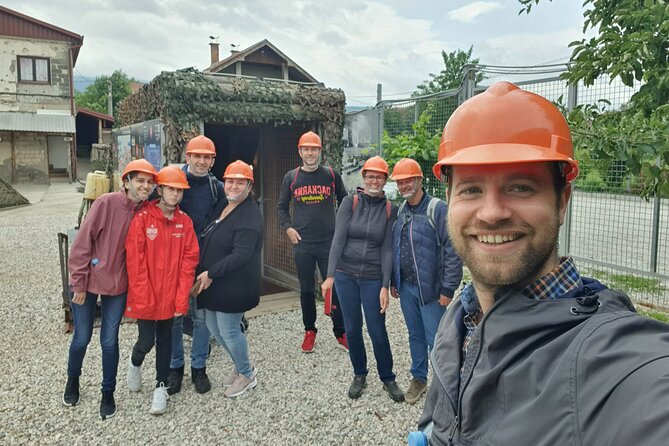
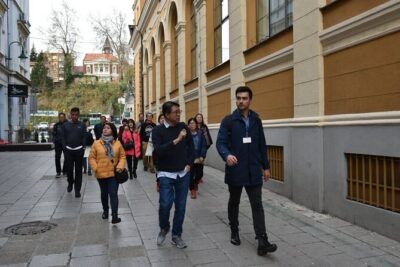
The tour begins at Velika avlija Laure Papo Bahorete 2, Sarajevo, and you then meet up in the central pedestrian area. Early on, the team gives you an introduction, then leads you to the vehicle to start the ride.
This matters because you are not just jumping into a van and waiting for the first stop. The route begins with a short war-themed briefing and a quick orientation of the city sites you will later see referenced again. That trick makes the museum visit make more sense, because the guide is training your eyes before you walk into the Tunnel of Hope story.
The transport is air-conditioned, and the itinerary includes multiple short viewing moments. So if the weather is hot, you still get comfortable breaks between sites.
Markale massacres, Eternal Flame, and Sniper Alley
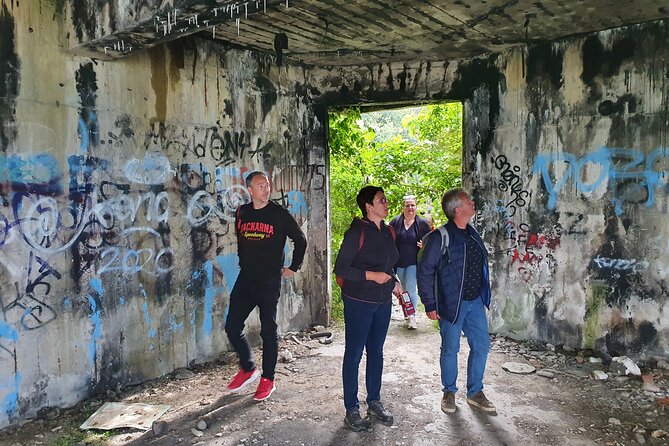
The tour passes several memorial and siege-era locations that help you understand how war showed up in everyday routes. This is not the kind of history that stays in one building. It is printed into Sarajevo’s public spaces.
First up is the area connected to the Markale massacres, described as bombardments targeting civilians during the siege. The guide’s job here is not to sensationalize. It is to show how the city faced repeated attacks that reshaped where people could safely live and move.
Next you stop at the Eternal Flame, a memorial dedicated in 1946 for military and civilian victims of World War II in Sarajevo. It is a reminder that Sarajevo has had layers of tragedy before the 1990s siege. This broader context can help your brain place the siege within a longer pattern of conflict and survival.
Then comes Sniper Alley, tied to streets Zmaja od Bosne Street and Meša Selimović Boulevard. The key thing you learn is why those streets became infamous: high-rise buildings created long sightlines, and civilians had limited safe ways to cross. Even if you have seen photos before, the guide helps you visualize what it meant to choose a route where an entire city could become dangerous.
Practical tip: wear comfortable shoes. These streets and viewpoints are close together on paper, but you still walk and stand in real places where the city is steep and windy.
Other tours that read the Yugoslav decades
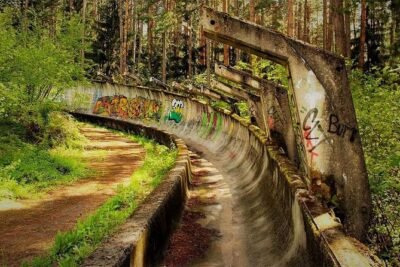
War Tunnel Museum: Sarajevo Rose, the film, and the Tunnel of Hope
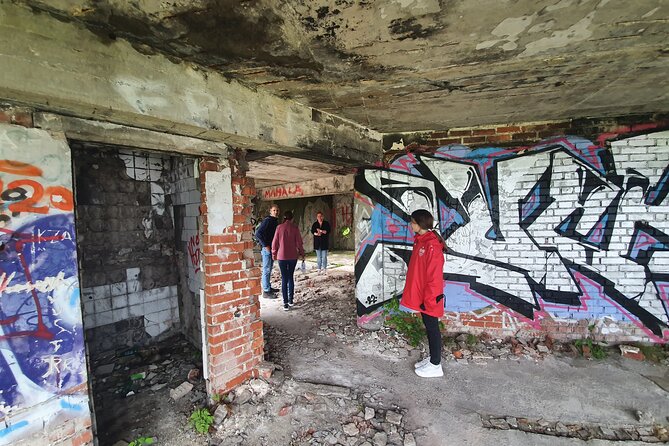
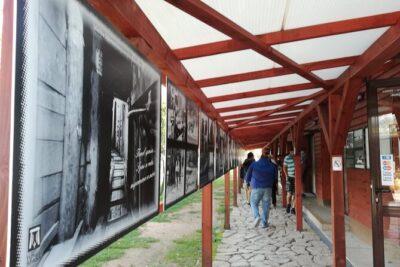
The highlight here is the War Tunnel Museum, where the story of survival becomes physical. You arrive, and you get an orientation around the entrance marker called Sarajevo Rose.
Before the longer presentation starts, there is a short movie. The smart part is that the guide has already previewed some of the sites you see on the way in, so the film feels like a continuation, not a reset. That keeps momentum and helps you follow the narrative from Yugoslavia’s breakup into the specific siege mechanics Sarajevo faced.
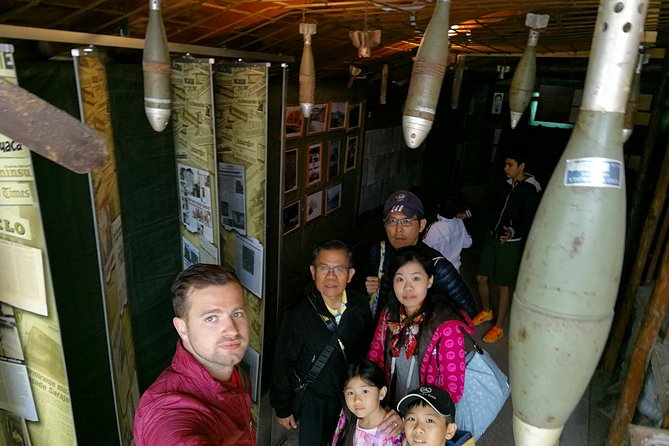
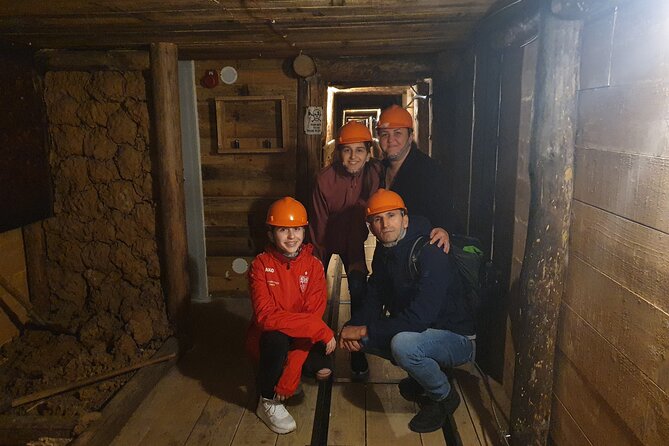
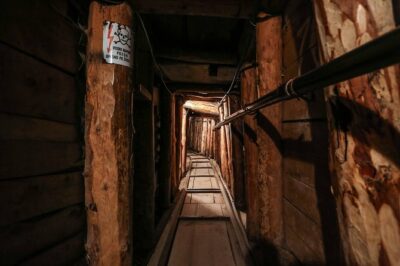
Once inside, the presentation focuses on the fall of Yugoslavia, the wars in Slovenia and Croatia, and then the Bosnia and Herzegovina conflict and the creation and importance of the tunnel. The Tunnel of Hope is explained as an engineering response to isolation, where supply lines and movement became a life-or-death challenge.
One detail I find especially interesting is what else sits in the same museum space. The museum is described as covering archaeology, art history, ethnology, geography, history, and natural history. It also holds the Sarajevo Haggadah, an illuminated manuscript and described as the oldest Sephardic Jewish document in the world, issued in Barcelona around 1350. That means you are not only learning siege-era events. You are also seeing how Sarajevo’s broader cultural threads lived on.
Budget note: the museum admission is not included in the tour price. If you want to avoid stress, check the current ticket cost ahead of time, or be ready to pay on arrival.
Trebević: frontline views and a panoramic reality check
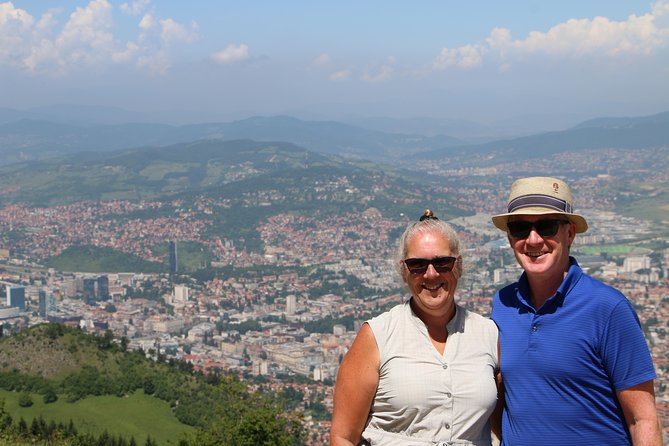
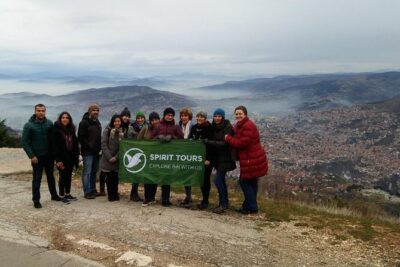
After the museum, you head to Trebević, specifically 84 Olympic mountain Trebević, described as the closest mountain to Sarajevo’s center and a first line during the siege. If you want the visual takeaway, this is where it lands.
You get a chance to see and walk around the hotel restaurant area called 8. The big payoff is the panoramic views of Sarajevo. And the guide points out what made those views so strategically dangerous, because enemy positions could use elevation to observe and attack.
This stop is also a good moment to reset your brain. You go from museum explanations to open air and wide sightlines. The city looks peaceful, which is part of what makes the history feel so unsettling. It forces the question: how does a place look normal after it has been so close to collapse?
Time on site is short, about 30 minutes, so you can enjoy views without needing to plan a long hike. Still, dress for wind and uneven paths.
Jewish Cemetery Sarajevo: stepping into memory under Trebević
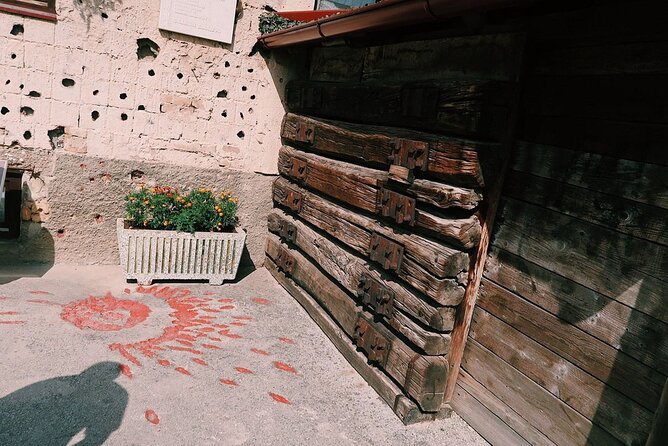
Just under Trebević lies the Jewish Cemetery Sarajevo, described as the second largest Jewish cemetery in Europe. This is a quiet stop that shifts the focus from siege tactics to human loss and cultural memory.
The cemetery is known for tombstones with unique shapes you can see in Bosnia and Herzegovina. The guide explains that their forms are believed to be influenced by medieval Bosnian tombstones called Stećak.
This is one of those stops that can feel surprisingly moving because it is personal and specific. You are not learning a concept. You are seeing the physical marks left by generations.
Practical note: this is not an attraction where you need big stamina, but you do need respectful attention. Go slowly, and give yourself time to read what you can.
Yellow Fortress and the old Ottoman city edge
Next you head toward the old Ottoman part of Sarajevo to visit the Yellow Fortress. This spot earns its place because it offers more than a view. It is described as a place from which you can see the Soldiers cemetery and the resting place of the first Bosnian president.
That combination matters. The tour is constantly connecting multiple layers: civilian experience, military reality, and the way the city later chose to remember.
Time is about 20 minutes, so it is a quick, focused stop. You will likely take photos, but try to also use the time for orientation. From here, your sense of Sarajevo’s geography starts to snap into place.
What guides do best on this tour
The real reason this tour earns repeat recommendations is the guide style. In the available feedback, you see the same pattern over and over: guides bring the war story alive with personal accounts and the kind of small details that make history stick.
People mention guides like Adis, who shared experiences from when he was in high school defending Sarajevo, and also from later work de-mining Bosnia. Other guides named in past groups include Ibrahim, Enes, Asim, Mustafa, Adnan, Haris, and Enes again. The names change, but the format stays consistent.
You should expect a mix of storytelling and direct answers. Some guides even use humor as a pressure release. That can feel jarring at first when the subject is heavy, but it is often how locals cope while still telling the truth.
For you, the benefit is simple: you leave with more than facts. You leave with a clearer sense of how normal life shifted into war life, and what resilience looked like.
Who this tour fits best
This tour fits best if you want a guided, story-driven Siege of Sarajevo experience rather than a quick hit of attractions. If you like context and you enjoy learning how geography affects history, you will get a lot out of the Trebević views and the sniper-sightline explanations.
You will also like it if you appreciate authentic local perspective. Veteran-led tours have a different weight because you are not just hearing what happened. You are hearing how it felt to stand in the middle of it.
Consider skipping or choosing a lighter alternative if you get overwhelmed by intense topics, or if you dislike walking and standing in outdoor memorial settings. This is not an all-day hike, but it is not a couch tour either.
Should you book the Sarajevo War Tunnel and Siege tour?
I think you should book this if your priority is understanding Sarajevo’s siege through real places. The value is strong because you get transport, multiple key landmarks, and a guide who can tie them together. At $36.28, it is not expensive for a guided half-day, as long as you budget separately for the War Tunnel Museum admission.
Book it with a practical mindset:
- Plan for museum entry fees and bring water.
- Wear comfortable shoes for short outdoor walks and viewpoints.
- If you can, come with a bit of curiosity about the early 1990s breakup period, so the tunnel story has full context.
If you want a relaxed sightseeing afternoon with low emotional intensity, then this might not be your best match. But if you want meaning, geography, and firsthand explanation in one tight route, this is a very solid way to spend four hours in Sarajevo.
FAQ
How long is the Sarajevo Tunnel and Siege tour?
It runs for about 4 hours.
Is the tour offered in English?
Yes, it is offered in English.
What does the price include, and what costs extra?
The price includes the driver/guide and transport in an air-conditioned car or minivan. It can also include hotel pickup if you are staying outside the Old Town, but food is not included, and War Tunnel Museum admission is not included.
Where does the tour start?
You meet at Velika avlija Laure Papo Bahorete 2, Sarajevo. The tour also references a start near the Info Bosnia Tourist Information Center on Ferhadija.
Do you offer hotel pickup?
Yes, hotel pickup is available if you stay outside the Old Town of Sarajevo.
Is the tour physically demanding?
It calls for a moderate physical fitness level. Children must be accompanied by an adult.
What is the cancellation policy?
You can cancel for a full refund up to 24 hours in advance. If you cancel less than 24 hours before the start time, the amount you paid is not refunded.
The Full Bosnia Review Shelf
The Yugoslav Decades, Further Tours
Sarajevo Siege History, Further Tours
Recently added to the Bosnia and Herzegovina shelf
- Walking Tour in Sarajevo★ 5.0 · 3 reviews
- Travnik, Jajce, Pliva Lakes & Mills –Medieval & Ottoman Bosnia Full Day Tour★ 5.0 · 3 reviews
- Tour of Herzegovina – From Sarajevo★ 5.0 · 3 reviews
- The Siege of Sarajevo Tour★ 5.0 · 3 reviews
- Srebrenica Genocide Tour from Sarajevo★ 4.5 · 3 reviews
- Sarajevo to Zagreb: One-Way Tour via Jajce, Travnik, Pliva Lake and Watermills★ 5.0 · 3 reviews
Sarajevo Siege History Tours, compared.
 ★ 5.0Fall of Yugoslavia, Sarajevo War Tour with Tunnel of Hope Museum and FrontlinesFrom $361,314 reviews
 ★ 5.0ROSES OF SARAJEVO (Official WAR + CITY tour)- Story of a SurvivorFrom $53770 reviews
 ★ 5.0Sarajevo War Tour: A Veteran’s Story of the Siege (fees included)From $48326 reviews
 ★ 5.0Sarajevo 1425 days under the siege – War TourFrom $48170 reviews
 ★ 5.0Tunnel of Hope Tour – Survival and ResilienceFrom $25118 reviews
 ★ 5.0Sarajevo Grand Tour: Old Town, War Tunnel, Olympic Sites & MoreFrom $4773 reviews
 ★ 5.0War Times Experience in Sarajevo – Half Day TourFrom $3561 reviews
 ★ 5.0Times of Misfortune – Life Under Siege and the Tunnel of HopeFrom $3253 reviews
Browse the lists this tour appears in