
REVIEW · SARAJEVO SIEGE HISTORY TOURS
Sarajevo War Tour: A Veteran’s Story of the Siege (fees included)
Sarajevo keeps the story close. This 4-hour Siege of Sarajevo tour is built around one thing: hearing the war from a survivor, then walking to the places where it happened. You’ll see Sniper Alley sites, pass key massacre memorials, and go down into the Tunnel of Hope for a first-person way to understand how a city survived a siege.
I especially like the small-group feel, max 8 people, because it makes real questions possible. I also like that the tour has both heavy sites in the city and higher views from Mt. Trebević, so you get the full “how it felt on the ground and from above” picture. A fair consideration, though: this is intense history, and even with low overall walking, you may still be on your feet for parts of the day (especially near outdoor viewpoints).
In This Review
- Key highlights that make this tour worth your time
- A veteran-led Siege of Sarajevo story, told where it happened
- Price and value: $48.39 for a focused half-day with key admissions
- Getting picked up in Sarajevo and how the day stays manageable
- Stop by the memorials, then connect them to what daily life looked like
- Sniper Alley and Hotel Holiday: seeing how close danger was
- The War Tunnel Museum, Tunnel of Hope: the part that sticks
- Trebević Mountain viewpoints: battlefield scars plus real damage you can see
- Sarajevo Olympic bobsleigh track: brutalist architecture with siege-era context
- Jewish Cemetery Sarajevo: a quiet ending with frontline meaning
- Guides and real conversations: why the Q and A makes the difference
- What to expect on the ground: timing, small walking segments, and how to prepare
- Who should book this Sarajevo war tour, and who should skip it
- Should you book this Sarajevo War Tour?
- FAQ
- How long is the Sarajevo War Tour: A Veteran’s Story of the Siege?
- Where does the tour start and end?
- Is pickup included?
- What language is the tour offered in?
- What is included in the price?
- Is the War Tunnel Museum included?
- Is food or drink included?
- How many people are on the tour?
- What is the cancellation policy?
Key highlights that make this tour worth your time
- A veteran English-speaking guide who answers direct questions, even personal ones
- Sniper Alley passes through the Marijin Dvor and Holiday Hotel area tied to frontline danger
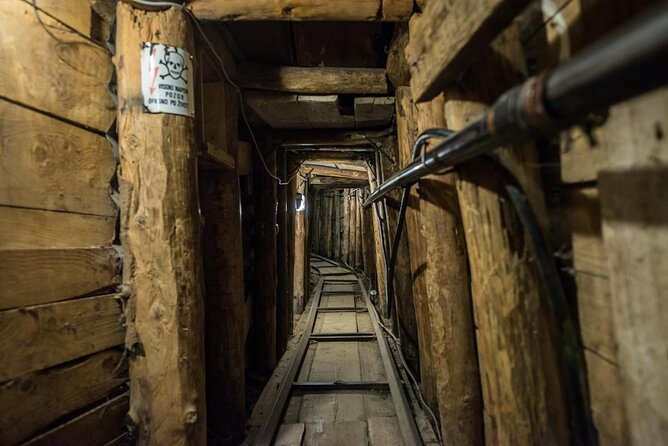
- Tunnel of Hope visit with a short film, then a guided walk through the tunnel itself
- Trebević Mountain stops for battle-scarred ruins and tank trace type evidence
- Olympic bobsleigh and luge track views plus Yugoslav brutalist architecture and graffiti-covered walls
- Jewish Cemetery Sarajevo as a final, sobering frontline perspective
Further siege history tours in Sarajevo
- Fall of Yugoslavia, Sarajevo War Tour with Tunnel of Hope Museum and Frontlines
★ 5.0 · 1,314 reviews - ROSES OF SARAJEVO (Official WAR + CITY tour)- Story of a Survivor
★ 5.0 · 770 reviews - Tunnel Museum: Bosnian & Yugoslav Wars Tour with War Veteran
★ 5.0 · 551 reviews - Sarajevo War Tour: A Veteran’s Story of the Siege (fees included)
★ 5.0 · 326 reviews
A veteran-led Siege of Sarajevo story, told where it happened
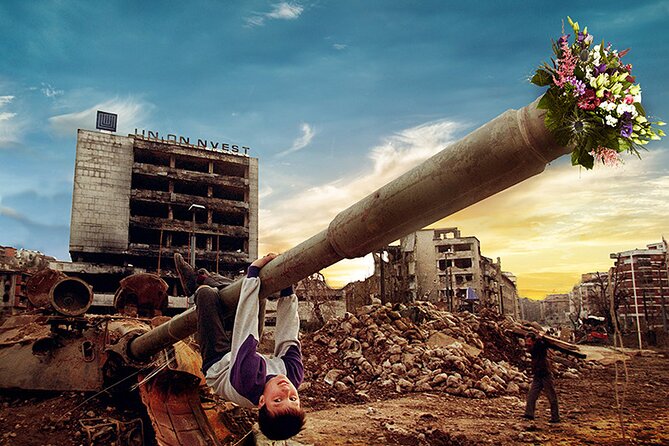
If you’re in Sarajevo for even a short time, this tour gives you something museums rarely can: a human voice attached to the map. The guide is a Sarajevo War veteran and Siege survivor. That matters because you’re not just hearing dates and names, you’re hearing how the siege shaped daily life, fear, decisions, and community survival.
You’ll also notice how the tour pushes past simple “here’s what happened” commentary. The pace is structured to connect causes to consequences. You start with the breakup of Yugoslavia and the Siege of Sarajevo context, then you move from street-level danger to the city’s underground “lifeline,” and finally to viewpoints and preserved damage.
The result is a day that feels less like a history lecture and more like a guided walk with someone who still remembers the details.
Price and value: $48.39 for a focused half-day with key admissions
At $48.39 per person for about 4 hours, this is priced like a solid, small-group city experience. The best part for value is what’s included. You get pickup and drop-off, an air-conditioned vehicle, and admissions for the major attraction: the War Tunnel entrance fee is included (listed as 10.5 EUR per adult, 2.5 EUR for children and students).
Other stops are “admission free” on the tour route, which helps keep the total cost predictable. The one extra you should plan for is food and drinks, since nothing is included there.
So the value equation is pretty simple: you’re paying for an expert local guide with first-hand experience plus transportation plus the most important paid stop. If you’ve been juggling museum tickets and private guide rates in your head, this package tends to make budgeting easier.
Getting picked up in Sarajevo and how the day stays manageable
The tour meets at Funky Tours (Besarina čikma 5, Sarajevo). You can also arrange complimentary pickup and drop-off if needed, and you’ll return back to the meeting point at the end.
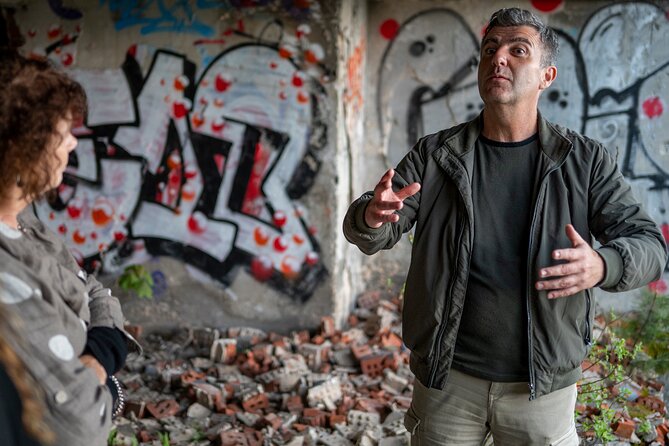
The tour is offered in English and capped at a maximum of 8 people. That small size shows up in the real experience: you’re not stuck in the back with zero time for questions. The guide is also explicit about answering lots of queries, including personal ones, so you’re encouraged to speak up when something doesn’t make sense.
In practical terms, it’s a good half-day plan if you want one outing that adds meaning to the rest of your Sarajevo time. And because it’s only “approx.” 4 hours, you still keep the flexibility for dinner plans afterward.
Stop by the memorials, then connect them to what daily life looked like
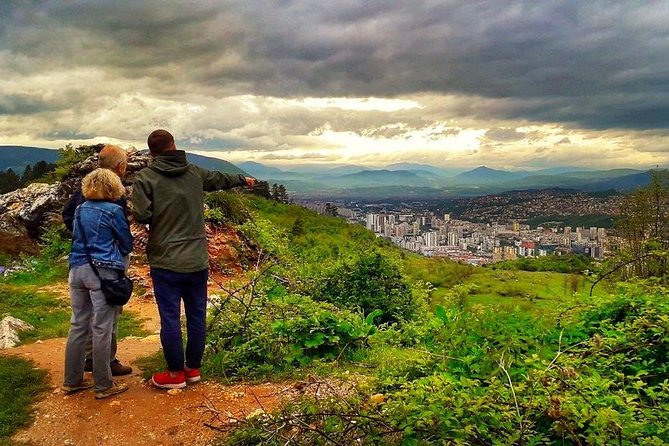
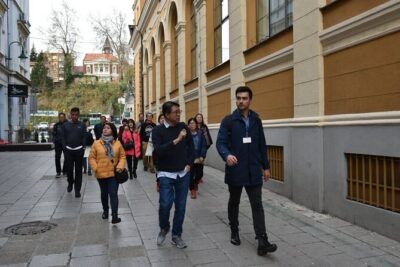
You start with the Funky Tours meet-up, where your guide sets the foundation. The tone is direct: how the Yugoslav breakup happened, how Sarajevo’s siege unfolded, and why different parts of the city became so dangerous.
From there, you’ll pass important sites tied to the worst civilian suffering. The tour route includes a pass by Markale Markets, described as Sarajevo’s largest massacre site during the 1992 to 1995 siege period. You’ll also pass a memorial dedicated to 1601 children murdered in Sarajevo during the same period.
These stops matter because they anchor the day in real civilian impact. Without them, it’s easy to think about the war only in terms of military zones. With them, the logic becomes clearer: the siege was not abstract. It was close, public, and brutally personal.
It can be emotionally heavy to look at these places from street level, so I’d treat this as your “serious history” block, not a light sightseeing morning.
Sniper Alley and Hotel Holiday: seeing how close danger was
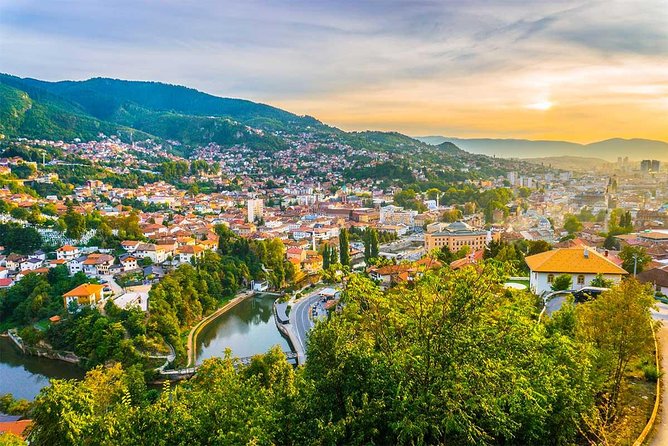
Next comes Sniper Alley, tied to the Marijin Dvor area and the former Hotel Holiday (now Hotel Holiday). This is one of those places where the words “danger zone” actually click, because you’re shown why certain buildings, streets, and corners mattered.
At the Hotel Holiday stop, you’ll learn about the location’s role during the Olympics and how it was repurposed during the siege. The building was built for the Sarajevo 1984 Winter Olympics, and during the siege it reportedly housed foreign journalists and reporters.
That detail adds a strange layer of contrast. On one side, you have international attention and the modern symbolism of a sports venue. On the other side, it sits inside the geography of fear. It’s a reminder that war changes the meaning of familiar spaces fast.
If you like walking through cities with a “how could this have felt” mindset, this segment is a strong match. It gives you a mental map, not just photos.
The War Tunnel Museum, Tunnel of Hope: the part that sticks
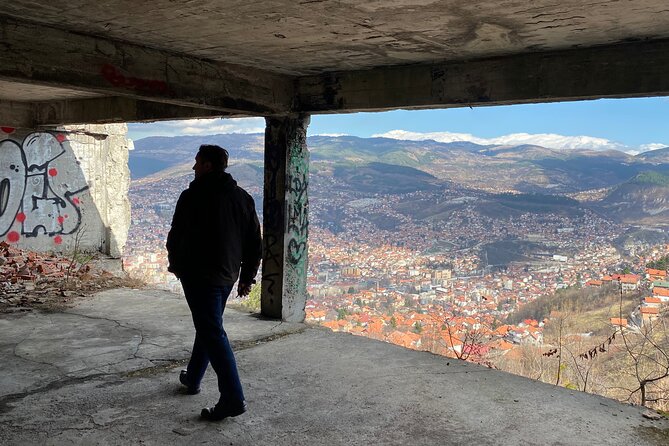
The center of the tour is the War Tunnel Museum, also known as the Tunnel of Hope. This is where you stop thinking like a visitor and start understanding the siege as a system.
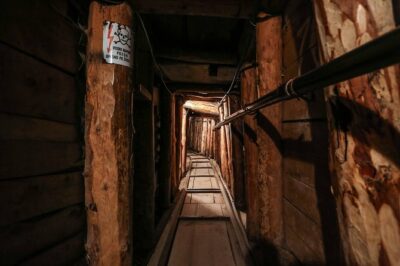
You’ll watch a short movie about the war and the tunnel, then you’ll walk through the tunnel itself. The time at this stop is about 1 hour 30 minutes, and the tour includes admission for the tunnel.
What I find valuable here is the guided nature of the whole experience. A veteran guide isn’t just narrating. They’re framing why the tunnel existed, how it functioned as a major “blood vessel” for a heavily besieged city, and what people hoped for when the outside world felt far away.
The tunnel visit also gives you something few other experiences can: scale you can feel. It’s hard to keep history in your head when you’re physically inside the infrastructure people relied on.
Expect the museum portion to be full of exhibits tied directly to the siege. The goal isn’t just shock. It’s comprehension.
Trebević Mountain viewpoints: battlefield scars plus real damage you can see
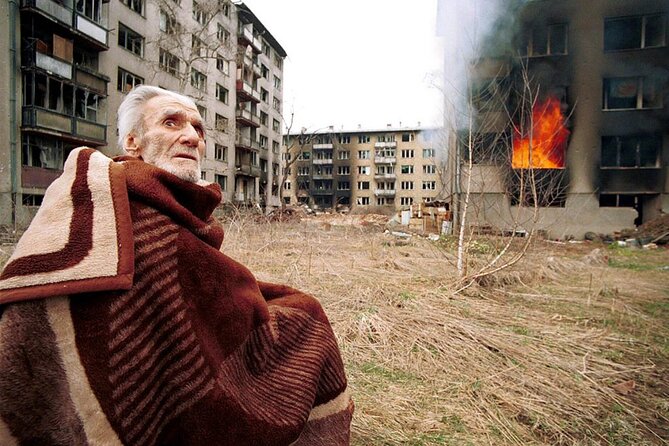
After the tunnel, you head to Mt. Trebević. This part of Sarajevo is presented as a first-line area during the siege, with many battles across different battlefields.
You’ll get viewpoint time and a walk around sites described as Zlatište, Osmice, and Trebević Vidikovac. The tour also points out the kind of damage that still exists today: remains of bunkers, minefield-type evidence, tank caterpillar traces, trenches, bullets, and grenade shrapnels.
This is one of the moments where the tour earns its half-day length. City streets show you fear and targeting. The mountain shows you positioning and why “from above” mattered.
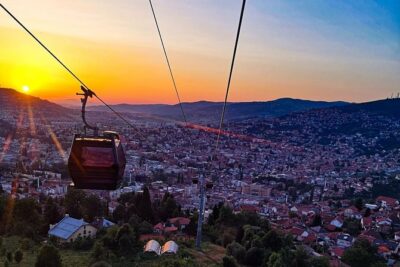
It also adds perspective for understanding how fighting and survival overlapped spatially. From this height, you start to grasp why the siege could stretch across so much of the urban area, and why it was so hard for ordinary life to stay ordinary.
Sarajevo Olympic bobsleigh track: brutalist architecture with siege-era context
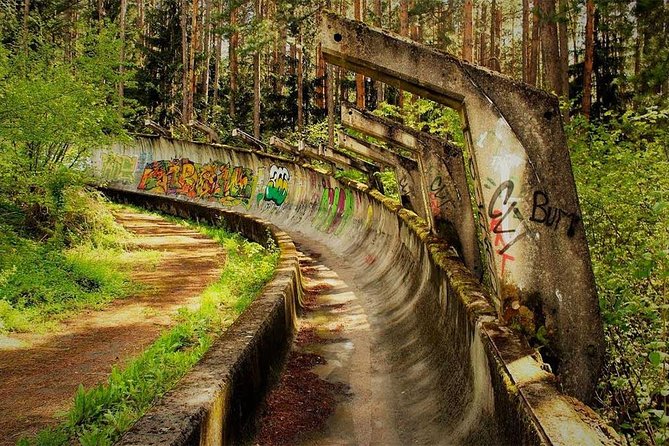
Next is the Sarajevo Olympic Bobsleigh and Luge Track, originally built for the 1984 Winter Olympics. You’ll see Yugoslav brutalist architecture and hear how this location was on one of the main front lines during the siege.
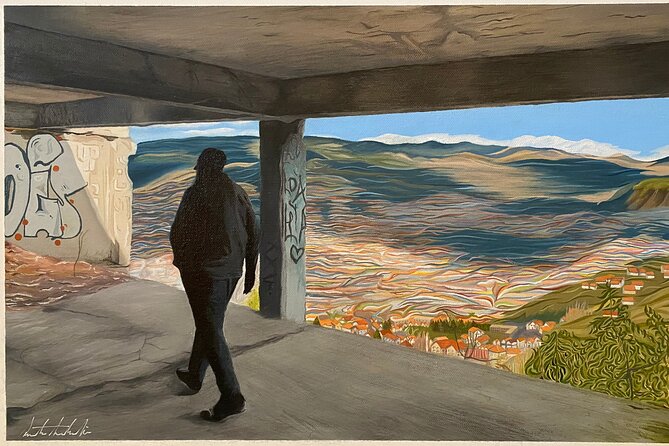
Then you get another kind of visual layer. Today, the bobsled track is noted as one of the world’s most beautiful abandoned places, and it’s covered with graffiti from artists around the world.
This combination is worth paying attention to. It’s not just “abandoned” for aesthetic reasons. It’s abandoned because history made normal use impossible. And the graffiti, in a way, is a loud form of reclaiming the space.
In a tour full of somber moments, this stop offers a different kind of processing: what comes after, and how people leave marks even when the place once carried fear.
Jewish Cemetery Sarajevo: a quiet ending with frontline meaning
To finish, the tour returns to the city area for Jewish Cemetery Sarajevo. This cemetery is described as one of the largest Jewish cemeteries in Europe for its historical importance, but the siege period turned it into a frontline and sniper nest for forces of the Republic of Srpska.
That final stop is important because it broadens your understanding of the siege beyond obvious “combat areas.” It shows how danger could reach places tied to memory, community, and long-term history.
If you’re trying to understand Sarajevo as a city made of many layers, this ending helps. It’s not only about the siege years as a closed chapter. It’s about how communities carry the consequences forward.
Guides and real conversations: why the Q and A makes the difference
A big reason this tour scores so high is that your guide is not just narrating a script. Multiple guides have been described in strong terms in the available information, including veterans named Adnan, Enes, Mustafa, Edo, Ibrahim, Omer, and Adnan (sometimes spelled Adnar in comments).
Even without you knowing which name you’ll get, the pattern is consistent: the guide is comfortable talking history and also comfortable answering questions that go beyond the immediate sights.
I like that the tour specifically invites questions of all types, including personal ones. If you’re the kind of person who has a lot of context questions about Yugoslavia and the Balkans, this format works well, because you’re not forced to wait for a class lecture later.
And yes, some groups have ended with small moments of connection, like sharing a beer with the guide after the tour. I wouldn’t plan your day around that, but it does fit the tone of Sarajevo hospitality.
What to expect on the ground: timing, small walking segments, and how to prepare
The tour route is designed to be low-walking overall, and it uses an air-conditioned vehicle between stops. You’ll have short time windows at each site and a longer dedicated tunnel segment.
Still, some parts are outdoors and you’ll be moving between viewpoints, museum access areas, and memorial sites. One person highlighted that walking near the bobsleigh track from the car park can be longer than expected if you have limited mobility, and that the guide handled it by offering an alternative plan for that person while the rest explored.
So my practical advice: if you have mobility concerns, mention them when you book. The tour may be low walking in general terms, but local terrain and short outdoor stretches still matter.
Also, the tour does not include food and drinks. If you tend to get hungry easily, plan a simple meal before or after, and carry water.
Who should book this Sarajevo war tour, and who should skip it
This tour is a good match if you want:
- First-hand historical context from a Sarajevo Siege survivor
- A route that connects street-level danger sites to the War Tunnel
- An experience that helps you understand the conflict without hiding behind abstract facts
- A small-group pace where you can ask questions and get direct answers
It’s less ideal if:
- You want only light sightseeing and don’t want to face massacre memorials and sniper-related sites
- You’re looking for a purely museum-style experience with no personal storytelling
If you’re visiting Sarajevo for culture and food and you only have time for one “serious” outing, this is often the kind of tour that gives meaning to everything else you see.
Should you book this Sarajevo War Tour?
If you’re okay with emotionally intense history, I think you should book it. The value is strong for the price because admissions are included for the tunnel, you get pickup and transportation, and the guide is a Siege veteran who can answer real questions on the spot.
The best reason to choose this tour is also the hardest to replicate: going to the Tunnel of Hope with a survivor voice next to you, then wrapping the day with Trebević views and cemetery context. You leave with a mental map, not just a list of sights.
Just be honest about your tolerance level for difficult places. If you can handle that, this tour is one of the most meaningful ways to understand Sarajevo’s recent past.
FAQ
How long is the Sarajevo War Tour: A Veteran’s Story of the Siege?
It runs for about 4 hours.
Where does the tour start and end?
The tour starts at Funky Tours, Besarina čikma 5, Sarajevo 71000, Bosnia and Herzegovina, and ends back at the meeting point.
Is pickup included?
Yes. Address pick-up and drop-off are included. Complimentary pickup is offered if needed.
What language is the tour offered in?
The tour is offered in English.
What is included in the price?
The price includes the War Tunnel Entrance Fee, address pick-up and drop-off, a Sarajevo War Veteran English-speaking guide, all fees and taxes, and an air-conditioned vehicle.
Is the War Tunnel Museum included?
Yes. The War Tunnel Museum, also called Tunnel of Hope, includes admission and is a major part of the tour.
Is food or drink included?
No. Food and drinks are not included.
How many people are on the tour?
The tour has a maximum of 8 travelers.
What is the cancellation policy?
Free cancellation is available, and you can cancel up to 24 hours before the experience for a full refund.
More Tours Across Bosnia
The Full Bosnia Review Shelf
Sarajevo Siege History, Further Tours
Recently added to the Bosnia and Herzegovina shelf
- Walking Tour in Sarajevo★ 5.0 · 3 reviews
- Travnik, Jajce, Pliva Lakes & Mills –Medieval & Ottoman Bosnia Full Day Tour★ 5.0 · 3 reviews
- Tour of Herzegovina – From Sarajevo★ 5.0 · 3 reviews
- The Siege of Sarajevo Tour★ 5.0 · 3 reviews
- Srebrenica Genocide Tour from Sarajevo★ 4.5 · 3 reviews
- Sarajevo to Zagreb: One-Way Tour via Jajce, Travnik, Pliva Lake and Watermills★ 5.0 · 3 reviews
Sarajevo Siege History Tours, compared.
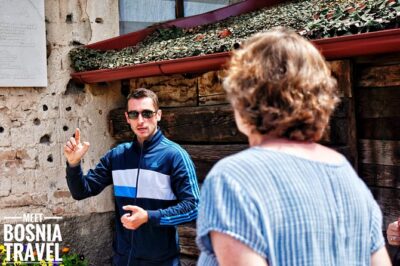 ★ 5.0Fall of Yugoslavia, Sarajevo War Tour with Tunnel of Hope Museum and FrontlinesFrom $361,314 reviews
 ★ 5.0ROSES OF SARAJEVO (Official WAR + CITY tour)- Story of a SurvivorFrom $53770 reviews
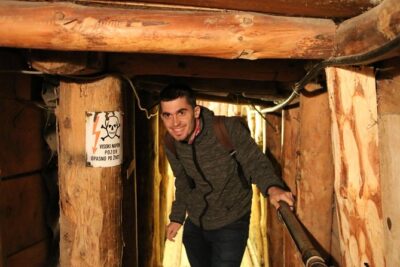 ★ 5.0Tunnel Museum: Bosnian & Yugoslav Wars Tour with War VeteranFrom $36551 reviews
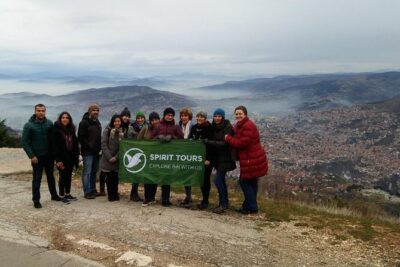 ★ 5.0Sarajevo 1425 days under the siege – War TourFrom $48170 reviews
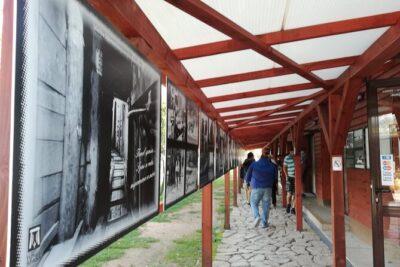 ★ 5.0Tunnel of Hope Tour – Survival and ResilienceFrom $25118 reviews
 ★ 5.0Sarajevo Grand Tour: Old Town, War Tunnel, Olympic Sites & MoreFrom $4773 reviews
 ★ 5.0War Times Experience in Sarajevo – Half Day TourFrom $3561 reviews
 ★ 5.0Times of Misfortune – Life Under Siege and the Tunnel of HopeFrom $3253 reviews
Browse the lists this tour appears in