
REVIEW · SARAJEVO OLD TOWN WALKING TOURS
PROFESSIONAL SARAJEVO WALKING TOUR – With guide who guided STING!
Sarajevo tells its story on foot. This 2 to 3 hour walking tour is interesting because it stitches together places tied to multiple eras, from Ottoman-era streets to Sarajevo’s 20th century turning points. I like the tight route and how it keeps you moving efficiently, plus most stops are listed as free admission, so your money goes to the guide, not tickets. The main drawback is the pace: each stop is short, so if you want to linger or shop at length, plan extra time.
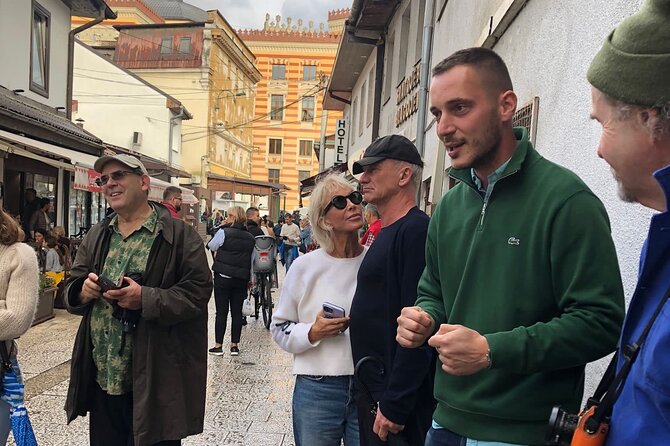
I especially liked the human tone of the guide, Mak, and the way he keeps things clear for different ages during the walk. The operator also bills the experience’s guide as someone who has guided Sting, and in practice that translates into a confident, story-led route that stays easy to follow. With a small group (maximum 10 travelers, and also marketed as up to 15), you should get room to ask questions, but you still need to be ready for an active evening.
In This Review
- Key things to know before you go
- Why an evening walk at 6:15 makes Sarajevo easier to understand
- The route is built like a story, not a checklist
- Stop 1: Sacred Heart of Jesus Cathedral and the Roses of Sarajevo
- Stop 2: Orthodox Church of the Nativity of the Theotokos, Mondo sculpture, and a city park moment
- Stop 3: Ferhadija Pedestrian Street, Tito Street, and the Eternal Flame
- Stop 4: Gazi Husrev Begova Medresa, Gazi Husrev-Beg mosque, Bezistan, and the clock tower
- Stops 5 and 11: Princip Gavrilo and Latin Bridge, the WWI assassination spot
- Stop 6: Sarajevo City Hall, Inat Kuca, and the fortress-and-heritage viewpoint
- Stop 7: The Yellow Fortress and Kovaci Street, plus the food street vibe
- Stops 8 and 9: Sebilj Fountain and Pijaca Markale, the Roses and the massacre spot
- Stop 10: Jewish Museum of Bosnia and Herzegovina and the Sefardi synagogue area
- Stop 12: The Eternal Flame, WWII liberation memorial stop
- The guide experience: Mak keeps it clear for families and mixed groups
- Value and practicalities: is $31.24 worth it?
- Who might want a different style of tour
- Should you book this Professional Sarajevo Walking Tour?
- FAQ
- How long is the Sarajevo walking tour?
- What language is the tour offered in?
- How much does the tour cost per person?
- Where is the meeting point and what time does the tour start?
- Is this tour canceled if the minimum number of travelers is not met?
- What should I know about dress code, weather, and bringing family or a service animal?
Key things to know before you go
- Small-group pace (up to 10): fast enough to cover the center, slow enough for real explanations.
- Roses of Sarajevo shows up more than once: you’ll spot the themed markers at multiple stops.
- Most entrances listed as free: you’re paying for guidance across major sights, not ticket fees.
- Major 20th century sites are part of the route: Latin Bridge and the Eternal Flame are handled as memorial stops.
- English-language tour: good for visitors who want clear context without a language gap.
- Smart casual is the call: comfortable shoes matter because it is a real walking tour.
Different walks through the Sarajevo old town
- Sarajevo: 2 Hours Old Town Walking Tour With Local Guide
★ 5.0 · 505 reviews - Sarajevo Grand Walking Tour
★ 5.0 · 232 reviews - Sarajevo Grand Tour: Old Town, War Tunnel, Olympic Sites & More
★ 5.0 · 73 reviews - Delicious Sarajevo: Eat, Walk & Discover City Tour
★ 4.5 · 37 reviews
Why an evening walk at 6:15 makes Sarajevo easier to understand
The tour starts at 6:15 pm and runs about 2 to 3 hours, returning you back to the meeting point. That timing is practical. Evening gives you softer light for photos, and it also keeps the walking portion from eating your whole day.
Because it’s near public transportation and ends where you start, you don’t need a complex plan to keep going after the tour. You can drop in for an orientation walk, then decide what you want to revisit later on your own.
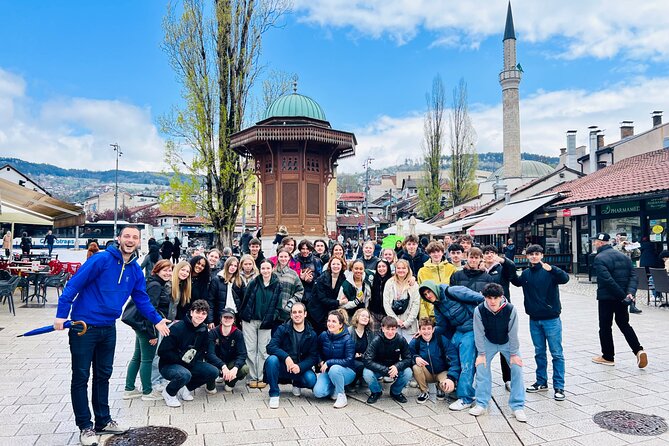
The group size also changes how it feels. With a maximum of 10 travelers, you are less likely to get stuck behind a crowd at tight corners or inside smaller areas. You still get the social benefit of meeting people, without the chaos.
The route is built like a story, not a checklist
What makes this tour work is how the stops connect. You are not just collecting monuments. You are walking through layers of Sarajevo, and the guide’s job is to explain how different communities, rulers, and conflicts shaped what you see today.
You’ll move through Catholic and Orthodox landmarks, then pivot to bazaar streets and Ottoman-era textures, and later shift into the memorial geography tied to World War I and World War II. It’s a lot for one evening, but it stays manageable because each stop is timed. That structure helps you get your bearings fast.
And yes, the Roses of Sarajevo theme threads through the walk. You’ll encounter rose markers at several points, which turns what could be random sights into a repeated visual cue.
Stop 1: Sacred Heart of Jesus Cathedral and the Roses of Sarajevo
You begin at Katedrala Srca Isusova (Sacred Heart of Jesus Cathedral). This is where the tour sets a tone: Sarajevo is not one culture, it’s many, and the city’s architecture reflects that mix.
Right at the cathedral area, you also connect to the Roses of Sarajevo theme. That helps you understand that this walk is designed to point out symbolism, not only buildings.
The nice part for your time budget is that the stop is about 15 minutes. It’s long enough to notice key exterior details and hear the story, without turning into a slow bottleneck.
One thing to consider: if you are the type who loves inside visits and takes your time, this first stop is more about context than a full cathedral experience. It’s still a solid start, just don’t expect a long sit-down visit.
Stop 2: Orthodox Church of the Nativity of the Theotokos, Mondo sculpture, and a city park moment
Next comes the Serbian Orthodox Church of the Nativity of the Theotokos area. This stop adds another layer to Sarajevo’s cultural map. Even if you are not a deep church-history person, the placement helps you see how the city’s religious communities sit alongside each other.
You’ll also see the Mondo sculpture and spend time in a nearby city park. That mix is smart. It keeps the walk varied. You get a visual landmark, then you get a short breather in open space.
This stop is also timed at about 15 minutes, with the experience framed as “see, look, then connect it to the larger story.” Since the admission is listed as free for this part, you are not waiting on any ticket process.
Other walks we have put boots to
Stop 3: Ferhadija Pedestrian Street, Tito Street, and the Eternal Flame
From there, you step into Ferhadija Pedestrian Street, a lively corridor where Sarajevo feels like a living city. The tour highlights the Eternal Flame and the Tito street connection here, which is a good reminder that street names carry political eras too.
You also hit another Roses of Sarajevo marker at this stage, and that repeated pattern helps the theme stick in your head.
This segment is also about 15 minutes, so it feels like a street walk with a purpose. If you enjoy just wandering, you’ll probably like this portion a lot, because you get to move while learning.
Stop 4: Gazi Husrev Begova Medresa, Gazi Husrev-Beg mosque, Bezistan, and the clock tower
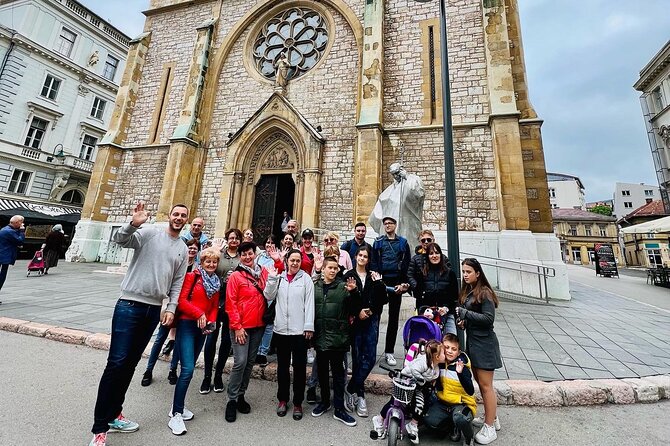
This is one of the most important “old Sarajevo” stops: Gazi Husrev Begova Medresa. The tour frames it as a hub where religious space, education, and commerce overlap.
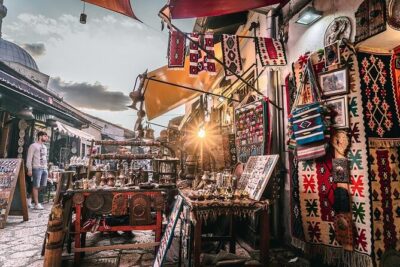
You’ll see the Gazi Husrev-Beg mosque, then continue into Bezistan Bazaar, the clock tower, and down Jewel street. This is where the walk turns from sightseeing into street-sense. You learn how a bazaar area is meant to be used, and why these places were built to keep people moving and trading.
Time-wise, you get about 20 minutes here. That’s enough for an overview without turning it into a shopping trip you did not plan for.
Tip: wear shoes you can walk in for a full evening. Bazaar streets often have uneven spots and busy foot traffic. Even if this is not an all-day market visit, your feet will feel it by the end.
Stops 5 and 11: Princip Gavrilo and Latin Bridge, the WWI assassination spot
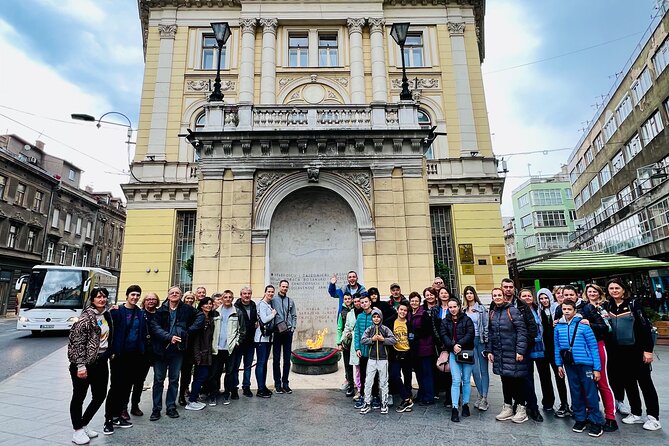
Then the tour shifts into memorial geography.
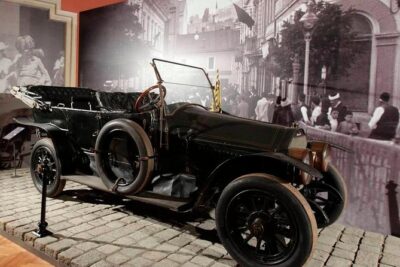
Stop 5 takes you to the Mausoleum of Princip Gavrilo, tied to the assassination spot. Later, at stop 11, you return to Latin Bridge itself, highlighted as the assassination spot of Franz Ferdinand and his wife Sophie, linked to WWI.
It’s the kind of place where a good guide matters. You need context, because without it the location can feel like a marker on a map. With the story, you understand why this spot is central to Sarajevo’s global reputation.
Each of these segments is about 15 minutes. That is short, but it works because the goal is remembrance plus understanding, not a long formal visit.
One consideration: if you are sensitive to WWII and WWI themes, you might want to mentally pace yourself. This tour handles multiple conflict-related stops in one evening, and you will feel the emotional weight. It is respectful, just expect it to be serious.
Stop 6: Sarajevo City Hall, Inat Kuca, and the fortress-and-heritage viewpoint
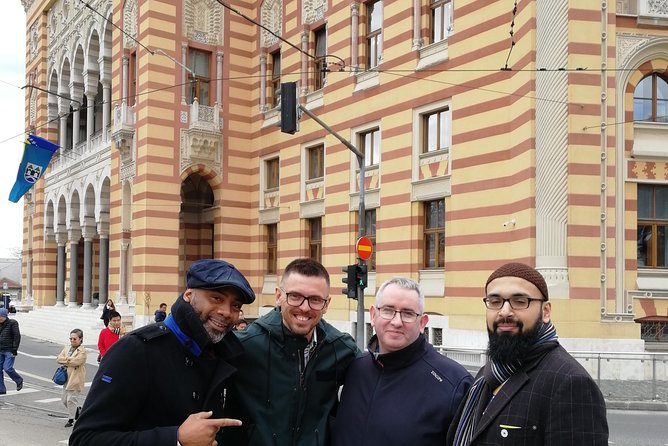
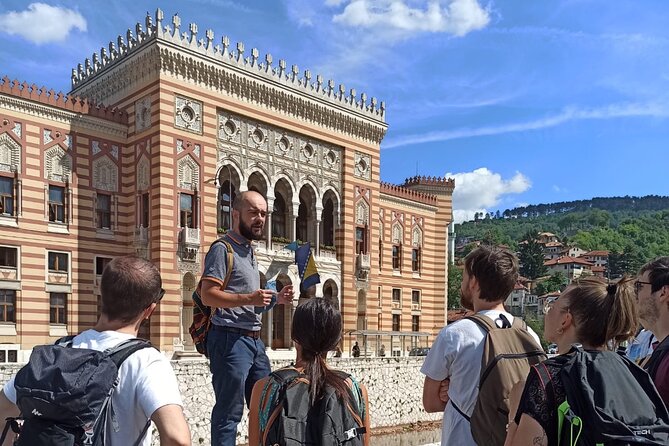
Next up is Sarajevo City Hall, where you also pass Inat Kuca, White Fortress, Yellow Fortress, Jajce Army house, and the 1984 Olympic mountain reference point.
This stop is timed at about 20 minutes, and it’s designed to show you how Sarajevo organizes its civic and defensive heritage in the same general area. The names alone hint at history, but the guide’s explanations are what help you connect the dots.
You also get a feel for why Sarajevo’s geography matters. Some cities present views as scenery. Sarajevo presents them as memory, because sightlines and heights mattered during conflicts.
Stop 7: The Yellow Fortress and Kovaci Street, plus the food street vibe
Right after City Hall area, the tour moves to The Yellow Fortress and then walks through Kovaci street and a food street section.
This is a good “reset” after heavier stops. It returns you to street level, where the city’s daily life and food culture reappear. Even if you do not stop for a meal, you’ll at least get the layout and where people naturally gather.
It’s also about 15 minutes, and with admission listed as free, there is no friction. Just walk, look, and let the guide tell you why this area is remembered.
Stops 8 and 9: Sebilj Fountain and Pijaca Markale, the Roses and the massacre spot
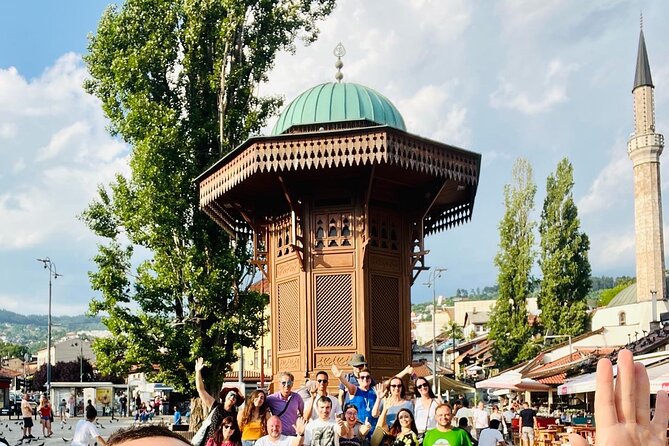
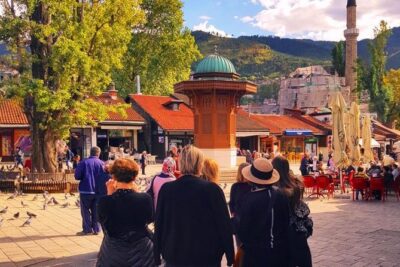
At stop 8, you see Sebilj Brunnen (Fountain), plus Kazandziluk street and pigeon square. This is one of those Sarajevo moments that feels instantly recognizable. The Sebilj fountain area is where visitors and locals both drift, and the guide’s job is to help you read what you see.
Then you move to Pijaca Markale, described as the Yellow market, and you also get another Roses of Sarajevo marker plus a massacre spot.
This portion can feel intense. Markale is tied to real suffering, and the tour includes it for a reason. You should go in prepared for sober historical context.
The stop length is about 15 minutes, which is again a balancing act. You get enough time to process it with the guide, without dragging the emotional tone for too long. If you need a breather, take it. A short pause on the side is better than pushing through.
Stop 10: Jewish Museum of Bosnia and Herzegovina and the Sefardi synagogue area
Stop 10 brings you to the Jewish Museum of Bosnia and Herzegovina, near Jewish Park, with time connected to the Sefardi synagogue.
This is where the tour rounds out the “many Sarajevo” picture. It also keeps the experience from becoming only a Christian-Muslim narrative, which is a common imbalance in some city walks.
The stop is about 15 minutes with admission listed as free for this part, so you are not spending your budget on entrances. You are paying for guided context, which matters here because places like synagogues can be easy to walk past without understanding their setting.
If you want to go deeper later, this stop often gives you the names and themes you can follow up on independently.
Stop 12: The Eternal Flame, WWII liberation memorial stop
The final main memorial stop is Eternal Flame again, highlighted here as the fascist liberation of Sarajevo spot, tied to WWII, and it is only 5 minutes.
That short time is intentional. You get a clear closing idea: Sarajevo’s story in the 20th century is not a single event. It is repeated shock, remembrance, and rebuilding.
It also ends neatly at the meeting point, so you do not need to figure out how to get back if your evening is already planned.
The guide experience: Mak keeps it clear for families and mixed groups
From the information provided about the tour style, Mak is the key reason this works for many people. He’s described as kind and patient, and he checks in from time to time that everyone understands, including families with adults and teenagers.
That matters more than you might think. Sarajevo is not a city where every landmark is self-explanatory. The guide’s ability to keep the story coherent, and to make sure different ages can track it, is part of the value.
Also, the tour title notes that the guide has guided Sting. Even if you care only about Sarajevo, that detail signals something about presentation style. You are less likely to get a dry lecture. You get an organized walk where the facts are put into story form.
Value and practicalities: is $31.24 worth it?
At $31.24 per person, you are paying for a small-group evening guide and a route packed with major Sarajevo stops. The tour duration is short enough to be a good add-on, but long enough to hit the city core.
The strongest value angle is that many stops are listed with admission ticket free. That means your money is mostly going to guided time. You are not paying repeatedly for entry fees across multiple sights.
Logistics are also simple. You get a mobile ticket, the tour is offered in English, and it runs in all weather conditions, so you should dress for rain or cold if needed. The dress code is smart casual, but the reality is simple: comfortable shoes beat outfit points.
Who this tour fits best:
- First-time visitors who want a fast, structured city orientation
- People who like walking and learning without turning it into an all-day marathon
- Families who want big highlights without needing separate transport between sites
- Travelers who appreciate a guide to connect political and cultural layers clearly
Who might want a different style of tour
This is not the best match if you want deep museum time or long photo stops. With short stop windows across 12 locations, you will be moving. You can still take photos, but the rhythm is guided.
If you prefer quiet, unhurried visits, you might feel rushed at places like Latin Bridge or the cathedral area. You can fix that by choosing one or two stops to revisit on your own afterward.
Finally, because this tour covers WWI and WWII memorial-linked stops, people who dislike heavier topics might want a lighter Sarajevo-focused walk instead.
Should you book this Professional Sarajevo Walking Tour?
I’d book it if you want an efficient evening route that covers Sarajevo’s essentials and explains what you are looking at, without making you research every stop yourself. The small-group size, the English-language format, and the repeated Roses of Sarajevo theme make it feel organized rather than random.
If you’re sensitive to war memorial topics, go in with that awareness and give yourself permission to slow down for a moment when needed. And if you love lingering, plan an extra hour before or after, so this tour becomes your foundation, not your final chapter.
If you want a practical way to understand Sarajevo’s layers in just a few hours, this one is a strong choice.
FAQ
How long is the Sarajevo walking tour?
It runs about 2 to 3 hours.
What language is the tour offered in?
The tour is offered in English.
How much does the tour cost per person?
The price is $31.24 per person.
Where is the meeting point and what time does the tour start?
You meet at Đulagina 2, Sarajevo 71000, Bosnia and Herzegovina, and the start time is 6:15 pm. The tour ends back at the meeting point.
Is this tour canceled if the minimum number of travelers is not met?
Yes. If it is canceled because the minimum is not met, you will be offered a different date or a full refund.
What should I know about dress code, weather, and bringing family or a service animal?
The dress code is smart casual. The tour operates in all weather conditions, so dress appropriately. Service animals are allowed, and children must be accompanied by an adult.
More Tours Across Bosnia
The Full Bosnia Review Shelf
Walking Sarajevo, Other Routes
Recently added to the Bosnia and Herzegovina shelf
- Walking Tour in Sarajevo★ 5.0 · 3 reviews
- Travnik, Jajce, Pliva Lakes & Mills –Medieval & Ottoman Bosnia Full Day Tour★ 5.0 · 3 reviews
- Tour of Herzegovina – From Sarajevo★ 5.0 · 3 reviews
- The Siege of Sarajevo Tour★ 5.0 · 3 reviews
- Srebrenica Genocide Tour from Sarajevo★ 4.5 · 3 reviews
- Sarajevo to Zagreb: One-Way Tour via Jajce, Travnik, Pliva Lake and Watermills★ 5.0 · 3 reviews
Sarajevo Old Town Walking Tours, compared.
 ★ 5.0Sarajevo: 2 Hours Old Town Walking Tour With Local GuideFrom $14505 reviews
 ★ 5.0Sarajevo Grand Walking TourFrom $20232 reviews
 ★ 5.0Sarajevo Essential Full Walking TourFrom $18198 reviews
 ★ 5.0Sarajevo Grand Tour: Old Town, War Tunnel, Olympic Sites & MoreFrom $4773 reviews
 ★ 4.5Delicious Sarajevo: Eat, Walk & Discover City TourFrom $6837 reviews
 ★ 5.0Sarajevo Full Day Tour: History, Culture, Nature, War & OlympicsFrom $11427 reviews
 ★ 4.5Sensational Sarajevo Sunset Walking TourFrom $1726 reviews
 ★ 5.0Sarajevo genuine walking tour: Steps through historyFrom $2722 reviews
Browse the lists this tour appears in