
REVIEW · SARAJEVO OLD TOWN WALKING TOURS
Sarajevo Essential Full Walking Tour
Sarajevo packs a lot into one small walk. This Sarajevo Essential Full Walking Tour strings together major landmarks and teaches you how the city’s Catholic, Jewish, Orthodox, and Ottoman worlds rubbed shoulders in the street. I love that it hits the headline sights fast, like City Hall and the Gazi Husrev-beg Mosque, while still giving context you can actually use while you walk.
The second thing I like is the human scale. Stops are short, but you’re guided by a professional who can keep the story straight without turning it into a lecture, and the route includes practical highlights like Kazandziluk, where the coppersmith craft is still part of the street. A small-group format also makes it easier to ask questions if your group is small.
One possible drawback: it is a quick hit. You’ll see a lot in about 1 to 2 hours, and two key places have admission not included, so you may want to budget extra for those.
In This Review
- Key things I’d pay attention to before you go
- Sarajevo essential in 1 to 2 hours, with a guide who keeps pace
- Price: $18.15, and why the value is in the route, not just the sites
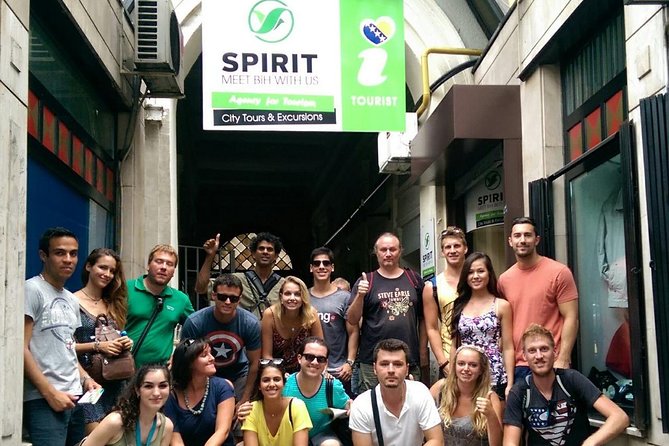
- Where the walk begins: Spirit Tours on Ferhadija 19
- Sacred Heart Cathedral: the Neo-Gothic anchor at the start
- The Museum of the Jews of Bosnia and Herzegovina inside the city museum
- Sarajevo Meeting of Cultures: the message you see in plain sight
- Gazi Husrev-beg Mosque: Ottoman scale in the middle of town
- Sebilj Brunnen in Baščaršija Square: Ottoman wooden fountain life
- Kazandziluk, coppersmith street: craft that still has a pulse
- Sarajevo City Hall, Vijećnica: Austro-Hungarian grandeur with a ticket
- Cumurija Bridge and the Spite House: a bridge with personality
- Emperor’s Mosque: the oldest mosque stops you at 1462
- Latin Bridge, Principov Most: the moment Sarajevo changed everything
- Gazi-Husrev Beg’s Bezistan: trade under a covered bazaar roof
- Taslihan: a waqf complex with a story of fires
- Hotel Europe and Centar: architecture notes and Orthodox presence
- Monument All Man and Sarajevo Rose: coexistence and memory in public space
- Tour pace, timing, and what to do before and after
- Who should book this walking tour, and who might not
- Should you book the Sarajevo Essential Full Walking Tour?
- FAQ
- How long is the Sarajevo Essential Full Walking Tour?
- How much does the tour cost?
- Is the tour offered in English?
- Is hotel or apartment pickup available?
- What is included in the price?
- Are entrance tickets included for every stop?
- Where does the tour start?
- What is the tour group size?
- Is food and drinks included?
- Is the tour near public transportation?
Key things I’d pay attention to before you go

- Short stop times, big coverage: you move through 16 sights in about 1 to 2 hours, with each stop typically 5 to 10 minutes.
- If you get Ado, you’ll be in good hands: his style is easy to listen to, and he handles lots of questions well.
- Real Sarajevo flavor on Kazandziluk: the coppersmith street is kept for centuries, and you’ll see living craft.
- Most entrances are free: most stops list free admission, but the Museum of Jews and Sarajevo City Hall are not included.
- Multifaith, all in one route: you’ll see Catholic, Muslim, Orthodox, and Jewish sites close together, plus monuments about coexistence and memory.
Different walks through the Sarajevo old town
- Sarajevo: 2 Hours Old Town Walking Tour With Local Guide
★ 5.0 · 505 reviews - Sarajevo Grand Walking Tour
★ 5.0 · 232 reviews - Sarajevo Grand Tour: Old Town, War Tunnel, Olympic Sites & More
★ 5.0 · 73 reviews - Delicious Sarajevo: Eat, Walk & Discover City Tour
★ 4.5 · 37 reviews
Sarajevo essential in 1 to 2 hours, with a guide who keeps pace
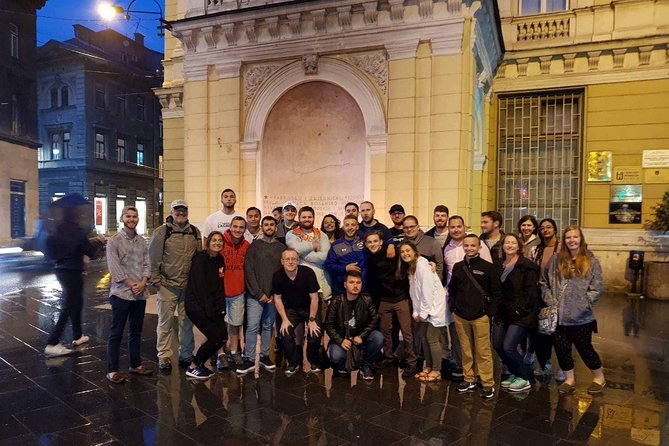
This tour is built for people who want their bearings fast. You get a local guide and a professional guide, and the route is designed as a logical walk through the Old Town core, so you are not hopping around town. It is also offered in English, so you can focus on what you are seeing rather than decoding maps.
The company caps the group at a maximum of 50, which matters. Even if you have a larger group, you still get the benefits of a planned route and a guide who keeps you moving, not wandering. If your group ends up small, the guide can slow down for your questions without derailing the walk.
Price: $18.15, and why the value is in the route, not just the sites
At $18.15 per person, the value is really in efficiency plus interpretation. You are paying for a guided circuit through major Sarajevo landmarks, plus insider tips you would likely miss if you tried to do it solo. With short stop times, you also avoid the common problem of spending a whole afternoon on just a couple of buildings.
Pickup is available if you need it in advance, and the meeting point is right at Spirit Tours in Ferhadija. That reduces friction, especially if you are staying near the center. You also get a mobile ticket, which is handy when you are juggling street photos, coffee runs, and timing.
Where the walk begins: Spirit Tours on Ferhadija 19
You start at Spirit Tours, Ferhadija 19, Sarajevo 71000, and the tour ends back at the meeting point. That end-back detail sounds small, but it helps you plan the rest of your day, since you do not get stranded across town.
You’ll also notice the tour is designed for easy joining: it lists that service animals are allowed and that it is near public transportation. Most travelers can participate, which is useful if you are coming in with mixed comfort levels for walking.
Sacred Heart Cathedral: the Neo-Gothic anchor at the start
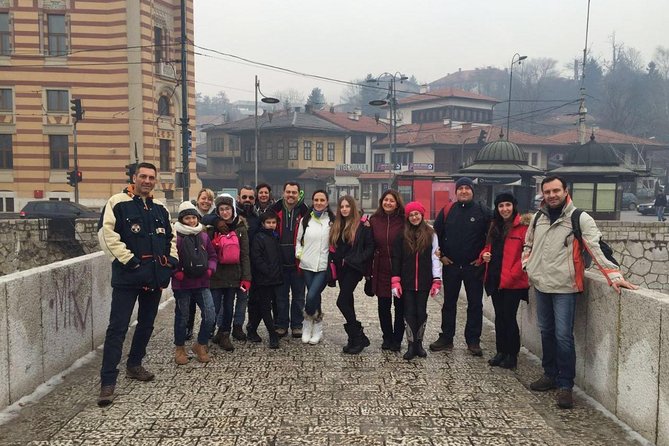
The first stop is the Cathedral of Jesus’ Sacred Heart. It is the biggest Catholic church in Sarajevo, built in 1889 in Neo-Gothic style, and it is the seat of the Archdiocese of Vrhbosna.
This opening matters because it sets a tone. You start in the Catholic story of the city, then the route quickly moves into Sarajevo’s other traditions, so you are not just collecting buildings, you are seeing how different communities occupied the same urban space over time. Admission here is free, and the stop is about 10 minutes.
Other walks we have put boots to

The Museum of the Jews of Bosnia and Herzegovina inside the city museum
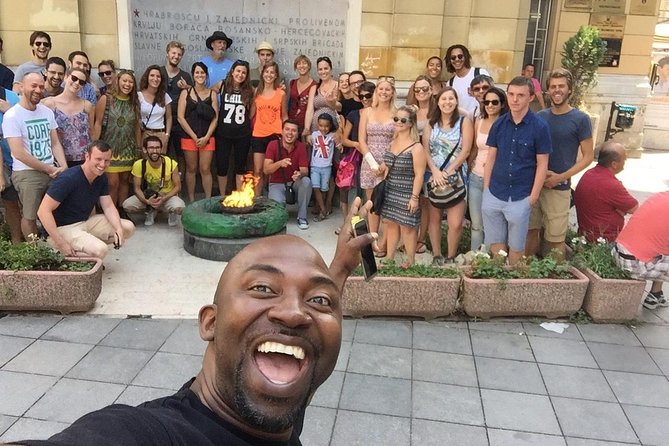
Next you’ll head to the Museum of the Jews of Bosnia and Herzegovina. It is located within the City Museum of Sarajevo and is set in the oldest synagogue in Bosnia and Herzegovina.
This is a quick stop, about 5 minutes. Admission is not included here, so you should expect to pay separately if you want to go in. If you are the type who likes to spend a little extra time reading, you might appreciate coming back later after the walking portion.
Sarajevo Meeting of Cultures: the message you see in plain sight
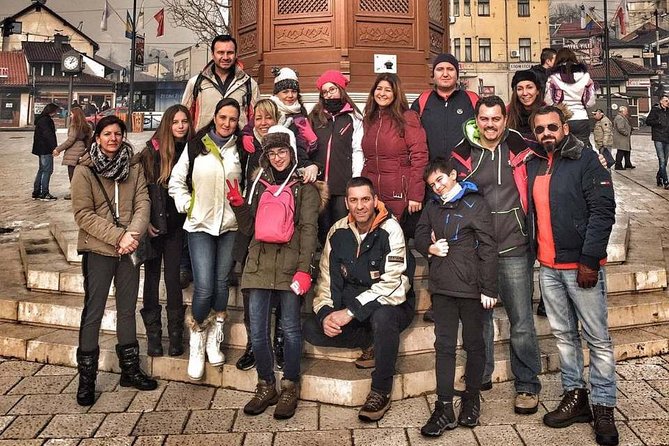
A few steps later, you encounter the Sarajevo Meeting of Cultures message on Ferhadija St., near Gazi Husrev Bey’s Bezistan. It is a visible reminder of the city’s mixed cultural roots.
This segment is short, about 5 minutes, and admission is free. The value is not the building itself, it is the framing. You are being nudged to look at the city as more than a list of landmarks, as a place where cultures meet in everyday geography.
Gazi Husrev-beg Mosque: Ottoman scale in the middle of town
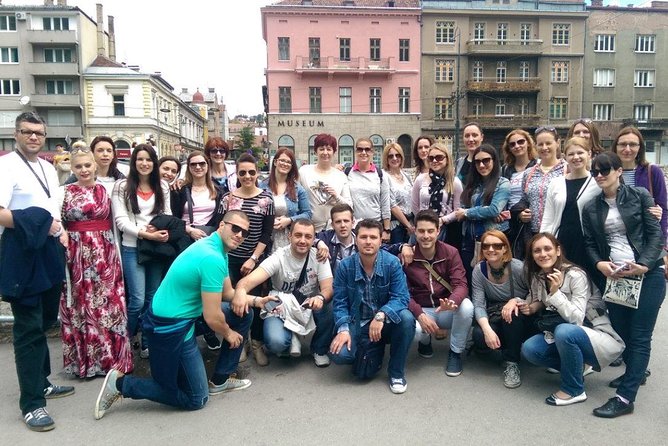
Now you hit one of the main Ottoman anchors on the route: Gazi Husrev-beg Mosque. Built in the 16th century, it is described as the largest historical mosque in Bosnia and Herzegovina and one of the most representative Ottoman structures in the Balkans.
Admission is free, and you get around 10 minutes here. This is a stop where you will probably slow down a bit on your own, because mosque architecture makes you look up by default. The guide’s context is especially useful here, since it helps you understand what makes the structure historically important, beyond the visual impression.
Sebilj Brunnen in Baščaršija Square: Ottoman wooden fountain life
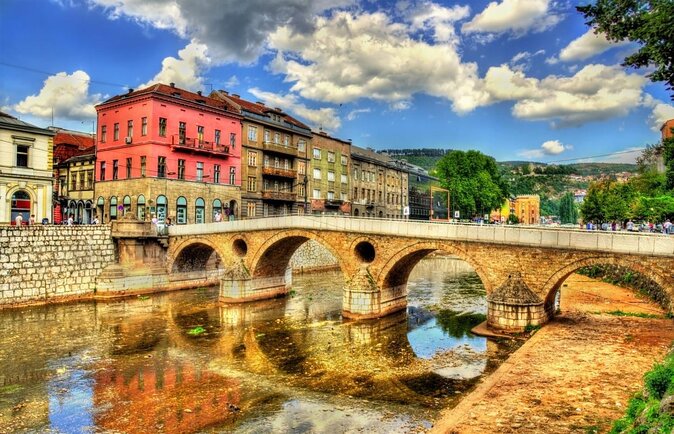
Then you move to Sebilj Brunnen, the Ottoman-style wooden fountain in the center of Baščaršija Square. It was built by Mehmed Pasha Kukavica in 1753, and it is free to see.
Stop time is about 5 minutes. This is one of those “easy to miss, hard to forget” spots. When you see the fountain in the middle of the square, it helps you picture how public life happened in the Ottoman era, not just how it looked in photos.
Kazandziluk, coppersmith street: craft that still has a pulse
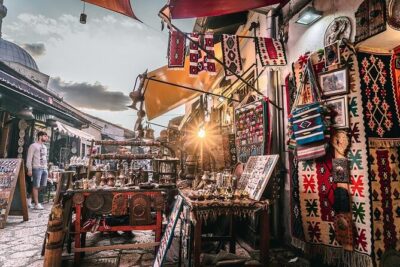
One of my favorite ideas in the route is Kazandziluk, the coppersmith street. You get about 10 minutes here, and admission is free.
The street’s authentic look has been retained for centuries, and the coppersmith craft still lives here. In a tour that covers major religious and political landmarks, this stop adds a grounded reality check: Sarajevo is not only about monuments, it is also about work, skills, and the street economy that keeps traditions visible.
If you like shopping that feels like part of the place, not just souvenirs, this is where you’ll want to pay attention.
Sarajevo City Hall, Vijećnica: Austro-Hungarian grandeur with a ticket
Next comes Sarajevo City Hall, also known as Vijećnica. It is described as the most extravagant building constructed in Sarajevo during Austro-Hungarian occupation and a symbol of the meeting of world civilizations.
Stop time is about 10 minutes, and admission is not included. That does not mean it is not worth it, it means you should decide ahead of time whether you want to spend extra money to go inside. Even from the outside, the building is an immediate “wow” moment, because the grandeur contrasts strongly with the surrounding Old Town feel.
Cumurija Bridge and the Spite House: a bridge with personality
The route crosses to Cumurija Bridge, near the Spite House. The Spite House earned its name from the stubbornness of its owner, and today it is a popular national restaurant and a protected cultural and historical heritage site.
This stop is around 5 minutes and free to see. It is quick, but the story is memorable because it turns a building or location into something human. It is also a good break in the walking rhythm before you head back into deeper historic layers.
Emperor’s Mosque: the oldest mosque stops you at 1462
Next is the Emperor’s Mosque, Sarajevo’s oldest mosque and one of the oldest in Bosnia and Herzegovina. It is presumed that Isa Bey Ishaković, the founder of Sarajevo, had this place of worship built soon after the city’s founding in 1462 in honor of Sultan Mehmed II.
You get about 5 minutes, and admission is free. This stop works best if you pay attention to how the guide connects dates and names, because it is easy to think of “old mosque” as just an adjective. Here it is tied to the founding story of the city.
Latin Bridge, Principov Most: the moment Sarajevo changed everything
Now the tour shifts into global history territory, at Latin Bridge, also called Principov Most. You’ll learn it is where Gavrilo Princip assassinated Archduke Franz Ferdinand and his wife Sofie, a few meters away, and that event is described as the beginning of World War I.
Admission is free, and this stop lasts about 10 minutes. Even if you know the broad story, the physical closeness of the locations tends to hit harder in person. The guide’s job here is to keep the details grounded, so you leave with a clearer sense of place, not just a headline.
Gazi-Husrev Beg’s Bezistan: trade under a covered bazaar roof
Then you move into Gazi-Husrev Beg’s Bezistan, a covered bazaar preserved from the Ottoman period. It was built in 1555 in Baščaršija and still serves its purpose for trade.
Stop time is about 5 minutes, and admission is free. A covered bazaar can sound repetitive compared to the mosques and fountains, but this is where you see a different kind of history, one tied to daily commerce. It also helps you understand how the city functioned, not just what it believed.
Taslihan: a waqf complex with a story of fires
Taslihan is next, built in 1543 as Ghazi Husrev-Bey’s waqf. The complex included a fountain, mosque, yard, shops, and storage rooms, and it was severely damaged in several fires that struck Sarajevo.
You’ll spend about 5 minutes, and admission is free. The main value is how it connects religion, public infrastructure, and economics in one place. Fires are mentioned in the description, so the stop feels like a reminder that history also comes through damage, rebuilding, and surviving.
Hotel Europe and Centar: architecture notes and Orthodox presence
After that, the route passes Europe Hotel, positioned in the heart of Sarajevo Old Town. It is an Austro-Hungarian building, and the external splendor is the main reason it is included, even though the stop is only about 5 minutes.
Then you reach Centar, the Cathedral Church of the Nativity of the Theotokos, described as the largest Serbian Orthodox church in Sarajevo and one of the largest in the Balkans. Stop time is about 5 minutes and admission is free.
These quick “architecture and faith” stops keep the tour balanced. You are not stuck in one tradition for too long, so you end the walk with a broad sense of how multiple communities shaped the same city streets.
Monument All Man and Sarajevo Rose: coexistence and memory in public space
A standout late-route stop is the Monument All Man Multicultural. It sits between three major religious symbols, including a Catholic cathedral, Muslim mosque, and Christian Orthodox church. The inscription is carved in Italian and Bosnian, and it includes the idea that multicultural humanity is constructing the world.
Admission is free, and the stop is about 10 minutes. This is one of those moments where the guide’s framing matters. You are looking at symbolism, not only architecture, and the placement between different religious sites is part of the message.
Right after, you’ll see the Sarajevo Rose. It is described as a concrete memorial scar caused by a mortar shell explosion that was later filled with red resin. Stop time is about 10 minutes, and admission is free.
This part of the walk is heavier, but it also gives the tour emotional balance. The monuments and the street stories add up to why Sarajevo is not just pretty buildings, it is also a city that remembers.
Tour pace, timing, and what to do before and after
Because the stops are short, you should treat this as a first read of Sarajevo. You will likely leave wanting a second visit to one or two places that stuck with you, especially if you care about architecture or want to spend time in one interior space.
Also, note that only some things require extra admission payments. The Museum of the Jews of Bosnia and Herzegovina and Sarajevo City Hall list admission not included, while the rest are free according to the tour details. If you want the most out of the walk, plan for at least those two may require your attention and extra time if you decide to go inside.
In terms of total duration, it runs 1 to 2 hours approximately. That is perfect if you have a packed day, but it is not long enough for deep museum time. If you are the type who likes slow travel, you might consider adding extra time in the areas you most want to repeat.
Who should book this walking tour, and who might not
This tour is a strong fit if you want an efficient route through Sarajevo’s main landmarks and you enjoy context as you walk. It is also a good choice if you are comfortable with short stops and want a guided overview rather than a long interior-focused experience.
You might consider skipping or adjusting if you need long museum time, because several stops are brief by design. If you are traveling with someone who wants fewer locations and longer sits, you may find the pace a little tight, even though it is still only 1 to 2 hours.
If you love crafts and street texture, Kazandziluk is a real highlight. If you love architecture and big visual statements, Gazi Husrev-beg Mosque and City Hall will likely be your favorites.
Should you book the Sarajevo Essential Full Walking Tour?
Yes, I’d book it if you want your Sarajevo orientation without guesswork. For $18.15, you get a guided circuit through major religious landmarks, Ottoman-era trade spaces, and globally significant sites like Latin Bridge. The route also includes practical, human touches like Kazandziluk and stories tied to Sarajevo’s everyday streets.
One final tip: decide in advance whether you want to pay for the stops that are not included, especially the Museum of the Jews and Sarajevo City Hall. If those matter to you, you’ll plan your timing better and avoid the last-minute scramble.
FAQ
How long is the Sarajevo Essential Full Walking Tour?
It lasts about 1 to 2 hours.
How much does the tour cost?
The price is $18.15 per person.
Is the tour offered in English?
Yes, it is offered in English.
Is hotel or apartment pickup available?
Pickup is offered. If required in advance, you can organize pickup from your hotel, apartment, or hostel.
What is included in the price?
The tour includes a local guide and a professional guide.
Are entrance tickets included for every stop?
No. Some stops list admission not included, including the Museum of the Jews of Bosnia and Herzegovina and Sarajevo City Hall (Vijećnica).
Where does the tour start?
The tour starts at Spirit Tours, Ferhadija 19, Sarajevo 71000, Bosnia and Herzegovina.
What is the tour group size?
The tour has a maximum of 50 travelers.
Is food and drinks included?
No. Food and drinks are not included.
Is the tour near public transportation?
Yes, it is near public transportation. Service animals are also allowed.
More Tours Across Bosnia
The Full Bosnia Review Shelf
Walking Sarajevo, Other Routes
Recently added to the Bosnia and Herzegovina shelf
- Walking Tour in Sarajevo★ 5.0 · 3 reviews
- Travnik, Jajce, Pliva Lakes & Mills –Medieval & Ottoman Bosnia Full Day Tour★ 5.0 · 3 reviews
- Tour of Herzegovina – From Sarajevo★ 5.0 · 3 reviews
- The Siege of Sarajevo Tour★ 5.0 · 3 reviews
- Srebrenica Genocide Tour from Sarajevo★ 4.5 · 3 reviews
- Sarajevo to Zagreb: One-Way Tour via Jajce, Travnik, Pliva Lake and Watermills★ 5.0 · 3 reviews
Sarajevo Old Town Walking Tours, compared.
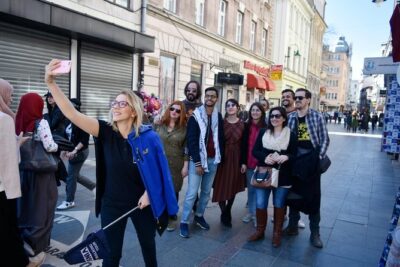 ★ 5.0Sarajevo: 2 Hours Old Town Walking Tour With Local GuideFrom $14505 reviews
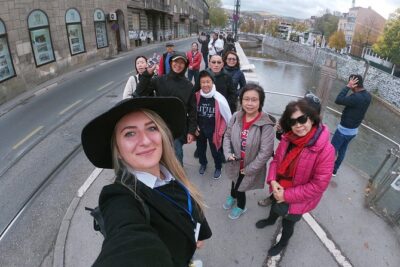 ★ 5.0Sarajevo Grand Walking TourFrom $20232 reviews
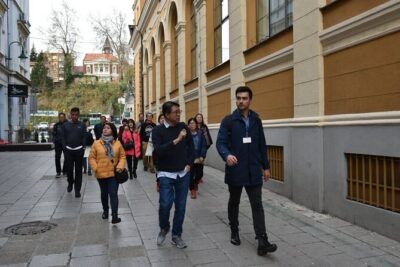 ★ 5.0Sarajevo Grand Tour: Old Town, War Tunnel, Olympic Sites & MoreFrom $4773 reviews
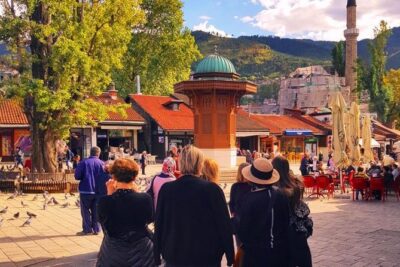 ★ 4.5Delicious Sarajevo: Eat, Walk & Discover City TourFrom $6837 reviews
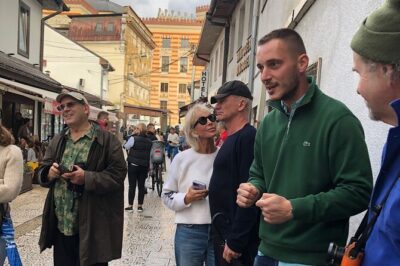 ★ 5.0PROFESSIONAL SARAJEVO WALKING TOUR – With guide who guided STING!From $3129 reviews
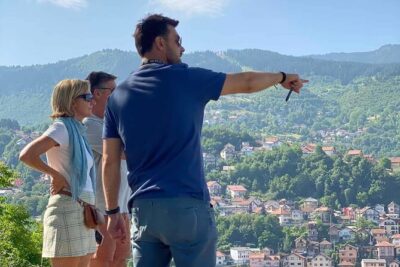 ★ 5.0Sarajevo Full Day Tour: History, Culture, Nature, War & OlympicsFrom $11427 reviews
 ★ 4.5Sensational Sarajevo Sunset Walking TourFrom $1726 reviews
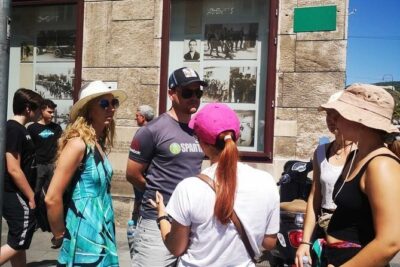 ★ 5.0Sarajevo genuine walking tour: Steps through historyFrom $2722 reviews
Browse the lists this tour appears in