
REVIEW · SARAJEVO SIEGE HISTORY TOURS
Sarajevo Under Siege: A War History Tour
Sarajevo under siege has a way of turning the city into a living history book, and this tour uses that fact fast. You get a tight, 3-hour route that blends scenic stops with real wartime survival stories, from Bijela Tabija to the Tunnel of Salvation. It is serious, but it is also well paced and easy to follow.
I especially love how the tour feels personal, with guides like Suvad and Evan sharing firsthand-flavored details rather than textbook summaries. I also like the practical setup, with an air-conditioned vehicle, pickup offered, and WiFi on board for a smooth half-day. One possible drawback: the subject matter is heavy, and some sections involve driving past and viewing sights tied to ongoing political memory, so it may feel intense for anyone who wants a lighter sightseeing day.
In This Review
- Key highlights you will actually care about
- Getting your bearings at Bijela Tabija, then moving into real stakes
- Zetra Olympic Hall area: where the Siege story becomes personal
- Sniper Alley drive: how danger worked in everyday errands
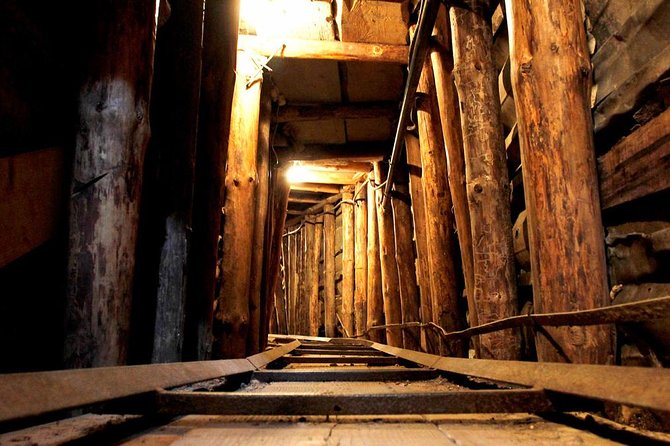
- Tunnel of Salvation: the lifeline you can walk through
- Lukavica and the Dayton Peace Agreement: why the war still shows up
- Vijećnica City Hall: Sarajevo’s cultural identity after destruction
- Price, extra entrance fees, and value for a 3-hour private tour
- Timing, meeting point, and what to expect from the tour pace
- Who this war-history tour fits best
- Should you book Sarajevo Under Siege?
- FAQ
- What is the duration of the Sarajevo Under Siege tour?
- What time does the tour start, and where do I meet?
- Is pickup offered?
- Is the tour private?
- What is included in the price?
- Are entrance fees included?
- What language is the tour offered in?
- What happens if the weather is poor?
Key highlights you will actually care about
- Bijela Tabija viewpoints: a panoramic start that connects Sarajevo’s Ottoman-era position to the Siege.
- A war-time neighborhood story: the Zetra area and nearby bombed sites connect the history to one family’s experience.
- Sniper Alley in context: you will learn how residents navigated daily danger for basic needs like water and food.
- Tunnel of Salvation walking time: a narrow underground passage dug in 1993 that functioned as a lifeline for food, medicine, and hope.
- Lukavica and post-war division: you will drive through a former front-line area and discuss how the Dayton Peace Agreement reshaped things.
- Vijećnica City Hall’s destruction and return: destroyed in 1992, restored today, and tied to Sarajevo’s cultural identity.
Further siege history tours in Sarajevo
- Fall of Yugoslavia, Sarajevo War Tour with Tunnel of Hope Museum and Frontlines
★ 5.0 · 1,314 reviews - ROSES OF SARAJEVO (Official WAR + CITY tour)- Story of a Survivor
★ 5.0 · 770 reviews - Tunnel Museum: Bosnian & Yugoslav Wars Tour with War Veteran
★ 5.0 · 551 reviews - Sarajevo War Tour: A Veteran’s Story of the Siege (fees included)
★ 5.0 · 326 reviews
Getting your bearings at Bijela Tabija, then moving into real stakes
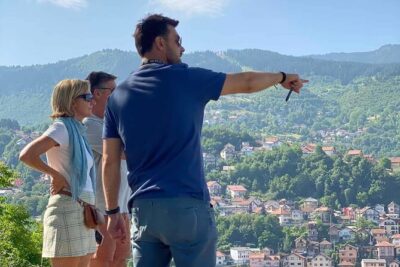
Your tour starts with a scenic, high-ground reset. At Bijela Tabija (White Fortress), you get a panoramic view over Sarajevo, and that matters. Seeing the city from above makes the rest of the story easier to understand, especially when your guide explains Sarajevo’s strategic position across eras, from Ottoman times into the Siege.
The fortress itself dates back to the 16th century, so even before the war comes into focus, you are not just looking at modern streets. You are looking at geography that has shaped people’s lives for centuries. That is why this first stop works so well early in the tour. It gives you a visual map before you start hearing details about where shelling and danger happened.
Practical note: this is about 30 minutes and an outdoor viewpoint. If you are sensitive to heat or cold, plan accordingly. Otherwise, it is a strong setup for the rest of the day.
Zetra Olympic Hall area: where the Siege story becomes personal
Next, you head toward the Zetra Olympic Hall neighborhood, and this is where the tour shifts from broad context into lived experience. You will visit the area where your local guide lived during the war. The route also points you to nearby places associated with heavy bombing, including the former maternity hospital that was hit hard.
What makes this stop powerful is the specificity. Your guide tells a personal story about childhood under siege, daily survival, and life under constant shelling. Then, you will visit the place where the guide’s father was buried and walk the street where he grew up and played.
That family-centered structure is one of the most praised parts of the experience. In a small tour like this, you are not getting a distant overview. You are seeing how a conflict shows up in ordinary life: school days, sidewalks, and the route from home to wherever safety might be.
This stop is shorter, about 15 minutes, so you will want to stay mentally present. When the guide shifts from broad history to family details, that is where you get the emotional weight.
Sniper Alley drive: how danger worked in everyday errands
After the more intimate Zetra area, the tour takes you along one of Sarajevo’s most infamous wartime streets, Sniper Alley. You will drive along the main avenue and hear how it was under constant sniper fire, meaning crossing could be a matter of life and death.
The key here is not just the dramatic nickname. Your guide connects the street to the routines people still had to do: fetching water, getting food, reaching safety. That turns the concept of siege warfare from something abstract into something painfully practical.
Now, a fair caution. This part of the tour is not a movie scene. You are surrounded by modern buildings, and the contrast can make it hard to process. That is normal. If you go in expecting easy sightseeing, you will feel the mismatch. If you go in expecting a reality check, you will understand why this road is so central to the story.
Tunnel of Salvation: the lifeline you can walk through
Then you reach the centerpiece for many people, the Tunnel of Salvation. This underground passage was dug secretly beneath the airport runway in 1993, and it connected besieged Sarajevo with the outside world.
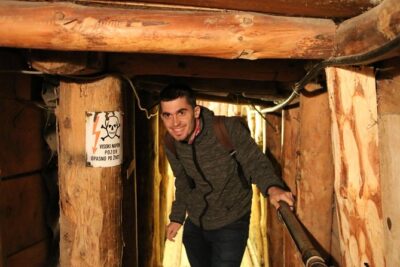
It is hard to describe this stop without sounding dramatic, so I will keep it practical. The tunnel is narrow, underground, and built for survival needs. Your guide explains how it functioned as a lifeline for food, medicine, and hope, allowing thousands to survive. During your visit, you will walk through a section of the original tunnel, see authentic wartime artifacts, and watch a short documentary about the Siege.
This is also where reviews tend to agree: the tunnel is worth your time if you want to understand what the siege really meant on the ground. The physical act of moving through a constrained space helps your brain connect the numbers and headlines to a basic human reality, limited passage, limited options, limited control.
Time-wise, you are looking at about 1 hour 20 minutes here. That is enough time to absorb the documentary and artifacts without feeling rushed. It is also enough time that you should dress for comfort, especially if the weather outside is very hot or very cold.
Budget note: the stop schedule lists admission tickets as free at the tunnel. Still, the tour overall lists an entrance fee category for the war tour in Sarajevo (with separate adult and student pricing), so bring at least some flexibility in your budget.
Other history-led tours in Bosnia
Lukavica and the Dayton Peace Agreement: why the war still shows up
The tour continues with a drive through Lukavica, once part of the front line during the Siege of Sarajevo. Today, it belongs to Republika Srpska, and your guide uses this drive-by to explain how post-war Bosnia and Herzegovina was divided.
You will hear how the Dayton Peace Agreement reshaped the city and how the front lines relate to modern boundaries. Your guide also points out graffiti and murals linked to wartime figures, including references to Ratko Mladić. For some visitors, that is the moment when the tour stops being only about the past and becomes about how memory gets politicized.
This part can feel uncomfortable, and that is part of the point. You are seeing that reconciliation is not just a slogan. It is something lived with, debated, and remembered differently depending on identity and politics.
If you are hoping for a strictly neutral history lesson, you should know this tour invites reflection. It pushes you to think about reconciliation, identity, and why peace takes time that you can measure in generations, not months.
Vijećnica City Hall: Sarajevo’s cultural identity after destruction
The final major stop centers on Sarajevo City Hall, Vijećnica. Built in 1896 during the Austro-Hungarian period, it later became the seat of the National Library. In August 1992, Serbian forces shelled it and the building burned, destroying almost two million books and manuscripts.
What you see today is the restored building, and your guide frames it as a symbol of both destruction and rebirth. This is one of those stops where the structure matters. A restored landmark is not just a pretty facade. It is a public decision about what the city refuses to lose.
I like that the tour does not end by only pointing at trauma. It lands on cultural identity, which gives you something to hold onto after the heavier sections of siege life. It helps the day feel like a story with a beginning and an ending, rather than a collection of grim points.
Time and flow wise, the tour concludes back at the meeting point near Vijećnica, so the final stop brings you back to your starting area.
Price, extra entrance fees, and value for a 3-hour private tour
The listed price is $30.10 per person for about 3 hours. On paper, it is not expensive for a half-day format in a city that can be hard to navigate without local help.
Where the value really comes from is the format: private transportation, pickup offered within Sarajevo city center, and WiFi on board, plus a route that hits the big siege-related landmarks like Bijela Tabija, Sniper Alley, the Tunnel of Salvation, and Vijećnica. For solo travelers or small groups, private touring can feel like a bargain because you get more time with the guide, and you are not getting stuck waiting for a large bus.
One cost consideration: the tour notes entrance fees for the war tour in Sarajevo that are not included. Adults are listed at €10.25 per person, students at €5.25 per person. The stop descriptions also mark admission tickets as free for several segments, so you should treat this as a small budgeting area rather than a guaranteed zero. If you want a clean budget, plan to cover both the tour fee and any listed entrance charges.
Timing, meeting point, and what to expect from the tour pace
This tour starts at 1:30 pm and meets at Vijećnica, using the location reference VC5M+8GF, Hafiza Ibrahima Trebinjca 10, Sarajevo 71000. Pickup begins 15 minutes before the tour starts if you choose a city-center pickup location.
The itinerary is built to keep moving, with short on-site windows like 30 minutes at Bijela Tabija and 15 minutes near Zetra, then longer focused time where it counts, like the Tunnel of Salvation. That pacing can be a plus. It prevents the day from dragging. It also means you will need to pay attention because the guide is covering major territory in a limited time.
Language is listed as English, so if you need another language, you should confirm that during booking.
Who this war-history tour fits best
This tour suits you if you want history that is connected to real places and real people, not just dates and names. It is especially good if the Siege of Sarajevo interests you and you want a guided path that ties together geography, survival, and aftermath.
It is also a strong choice for people who appreciate a guide who takes questions seriously. One review highlights how the guide answered questions and stayed sensitive and respectful while covering difficult material. That approach matters on a tour like this.
If you are coming for light sightseeing, you might find the tone heavy. If you are coming for understanding, it can feel both sobering and well structured.
Should you book Sarajevo Under Siege?
Yes, if you want a focused, well-timed war-history experience that mixes major landmarks with personal storytelling. The combination of Bijela Tabija’s strategic overview, Tunnel of Salvation’s physical lifeline, and Vijećnica’s cultural story gives you a full arc in a short day.
Book it too if you value good guide communication. The standout praise in the feedback centers on guides sharing gripping stories with sensitivity and respect, and on the overall organization feeling seamless with comfortable transportation.
Skip it only if you know you want a cheerful day out, or if you strongly prefer tours that avoid politically sensitive visuals. This route does not shy away from post-war memory, including what you might see in murals and graffiti.
In short: if you are ready for a serious history walk with practical logistics, this is a solid choice for Sarajevo.
FAQ
What is the duration of the Sarajevo Under Siege tour?
It runs for about 3 hours.
What time does the tour start, and where do I meet?
The start time is 1:30 pm, and the meeting point is Vijećnica at Hafiza Ibrahima Trebinjca 10, Sarajevo.
Is pickup offered?
Yes. Pickup is offered from any hotel or location within Sarajevo city center, and pickup begins 15 minutes before the tour starts.
Is the tour private?
Yes. It is a private tour/activity, with only your group participating.
What is included in the price?
The tour includes an air-conditioned vehicle, private transportation, and WiFi on board. The tour also offers a mobile ticket.
Are entrance fees included?
Entrance fees for the war tour in Sarajevo are not included. Adults are listed at €10.25 per person, and students at €5.25 per person.
What language is the tour offered in?
The tour is offered in English.
What happens if the weather is poor?
This experience requires good weather. If it is canceled due to poor weather, you will be offered a different date or a full refund.
More Tours Across Bosnia
The Full Bosnia Review Shelf
Sarajevo Siege History, Further Tours
Recently added to the Bosnia and Herzegovina shelf
- Walking Tour in Sarajevo★ 5.0 · 3 reviews
- Travnik, Jajce, Pliva Lakes & Mills –Medieval & Ottoman Bosnia Full Day Tour★ 5.0 · 3 reviews
- Tour of Herzegovina – From Sarajevo★ 5.0 · 3 reviews
- The Siege of Sarajevo Tour★ 5.0 · 3 reviews
- Srebrenica Genocide Tour from Sarajevo★ 4.5 · 3 reviews
- Sarajevo to Zagreb: One-Way Tour via Jajce, Travnik, Pliva Lake and Watermills★ 5.0 · 3 reviews
Sarajevo Siege History Tours, compared.
 ★ 5.0Fall of Yugoslavia, Sarajevo War Tour with Tunnel of Hope Museum and FrontlinesFrom $361,314 reviews
 ★ 5.0ROSES OF SARAJEVO (Official WAR + CITY tour)- Story of a SurvivorFrom $53770 reviews
 ★ 5.0Tunnel Museum: Bosnian & Yugoslav Wars Tour with War VeteranFrom $36551 reviews
 ★ 5.0Sarajevo War Tour: A Veteran’s Story of the Siege (fees included)From $48326 reviews
 ★ 5.0Sarajevo 1425 days under the siege – War TourFrom $48170 reviews
 ★ 5.0Tunnel of Hope Tour – Survival and ResilienceFrom $25118 reviews
 ★ 5.0Sarajevo Grand Tour: Old Town, War Tunnel, Olympic Sites & MoreFrom $4773 reviews
 ★ 5.0War Times Experience in Sarajevo – Half Day TourFrom $3561 reviews
Browse the lists this tour appears in