
REVIEW · SARAJEVO SIEGE HISTORY TOURS
Sarajevo War Tour with TRAVELPLUS
Siege Sarajevo becomes real on this tour. The big draw is the Tunnel of Hope, plus a string of stops that explain how everyday life worked under siege. I especially love the way Haris shares first-hand memories alongside the key facts, including what it meant to move through the city when it was cut off.
You also get a practical, easy half-day plan with short viewpoints and enough context to connect the dots between places. One thing to plan for, though: the Tunnel museum entry ticket is not included, so budget for that extra cost before you go in.
In This Review
- Key highlights worth your attention
- A Small-Group Look at Siege Sarajevo From the Ground Up
- Meeting Point, Vehicle, and the Built-In Ease
- Sniper Alley Panoramas and Why the City Felt Exposed
- Zmajevac Views and Bosnian Coffee as a Conversation Starter
- 1984 Bobsleigh Track Turned Artillery Position
- Tunnel of Hope Museum: The Underground Lifeline
- What You Pay For With Travelplus, and What to Budget Extra
- Who This Sarajevo War Tour Fits Best
- Should You Book This Sarajevo War Tour With Travelplus?
- FAQ
- How long is the Sarajevo War Tour with Travelplus?
- Where is the meeting point, and do we return there?
- What does the tour cost, and is Tunnel museum entry included?
- What is included in the tour price?
- How big is the group?
- Is free cancellation available?
Key highlights worth your attention
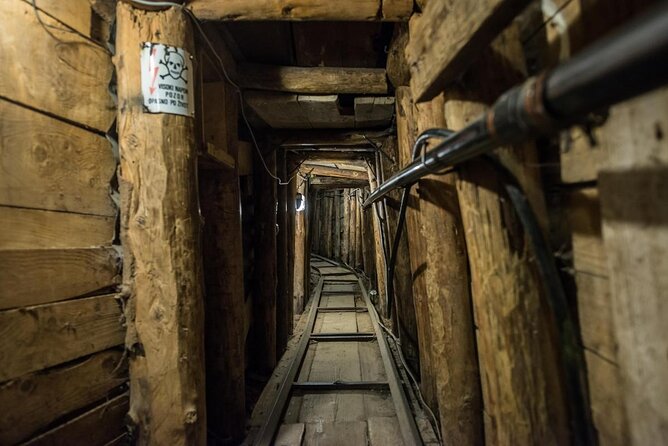
- Tunnel of Hope museum stop that explains the underground lifeline linking cut-off neighborhoods
- Sniper Alley panoramic view with admission ticket included
- Zmajevac viewpoint with a fun detour into Bosnian coffee culture
- 1984 Olympic bobsleigh track site that shows how old sport infrastructure became wartime artillery position
- Small group size, max 8 people, which makes it easier to ask questions
- Personal war memories from guides, including Haris and Aida
Further siege history tours in Sarajevo
- Fall of Yugoslavia, Sarajevo War Tour with Tunnel of Hope Museum and Frontlines
★ 5.0 · 1,314 reviews - ROSES OF SARAJEVO (Official WAR + CITY tour)- Story of a Survivor
★ 5.0 · 770 reviews - Tunnel Museum: Bosnian & Yugoslav Wars Tour with War Veteran
★ 5.0 · 551 reviews - Sarajevo War Tour: A Veteran’s Story of the Siege (fees included)
★ 5.0 · 326 reviews
A Small-Group Look at Siege Sarajevo From the Ground Up
This tour is short enough to fit into a normal Sarajevo schedule, but it does not treat the siege like a textbook topic. The flow is designed so you understand the city as a set of problems people had to solve, day after day: visibility, supply routes, safety, and the stubborn effort to keep the city alive.
What makes it work is that the storytelling comes with lived-in details. In the reviews, Haris is repeatedly called out for mixing facts with personal recollections, and Aida also leads part of the tour. That matters because siege history can sound abstract fast. Hearing it through someone who experienced the period helps the places feel connected, not just listed.
You will be moving between viewpoint stops and key historical sites over about 3 to 4 hours. The group is kept small, up to 8 travelers, so it feels more like a guided conversation than a bus lecture. And you will get breaks built into the schedule: a short stop for Sniper Alley, a longer stay at the viewpoint at Zmajevac, and a dedicated segment for the abandoned bobsleigh and luge track.
Meeting Point, Vehicle, and the Built-In Ease
The meeting point is Hostel Vagabond Sarajevo, Ferhadija 21. The tour starts there and ends back at the same spot. That loop is genuinely handy. It means you can start from a central, walkable location and avoid the stress of finding a separate drop-off.
You also travel by air-conditioned vehicle, which is a big quality-of-life detail in a city where weather can swing. You will also get coffee and/or tea included, so you do not have to spend your time hunting for a caffeine stop between sites.
One more practical detail: you get a mobile ticket. That is useful if you like to travel light and keep everything on your phone. It also reduces friction on the day, because you are not fumbling with paper.
The tour is near public transportation and is described as suitable for most travelers. That suggests it is paced for real visitors, not only hardcore history people.
Sniper Alley Panoramas and Why the City Felt Exposed
Sniper Alley is listed as a stop with a panoramic view, about 15 minutes, and admission ticket included. Even with no extra museum time here, this stop is doing important work.
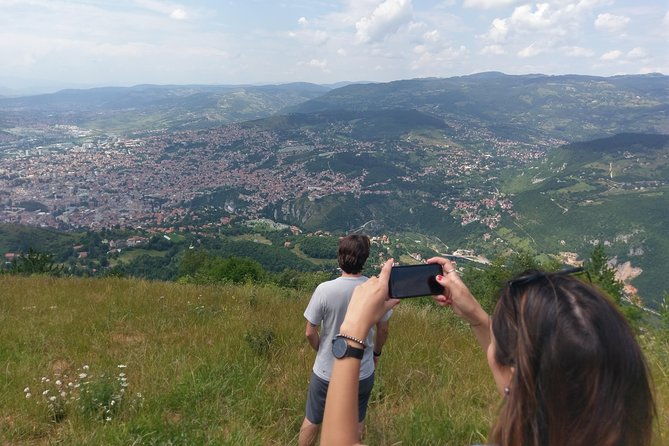
Panoramic views are not just pretty on a war tour. In Sarajevo, they help you visualize what it means to be watched and targeted across distances. You get a built-in chance to look over the city from the outside, then connect that view to the idea of threats coming from particular lines and positions. The short time also keeps you from burning out mentally before you reach the heavier sites later.
If you have never done an urban war tour like this, a good approach is to use this stop like a visual anchor. Keep your eyes on the bigger shapes of the city, then let the guide connect those shapes to the siege story.
The 15-minute duration is another positive. It respects your attention. You will not be forced to stand there for a long time just to say you saw it.
Zmajevac Views and Bosnian Coffee as a Conversation Starter
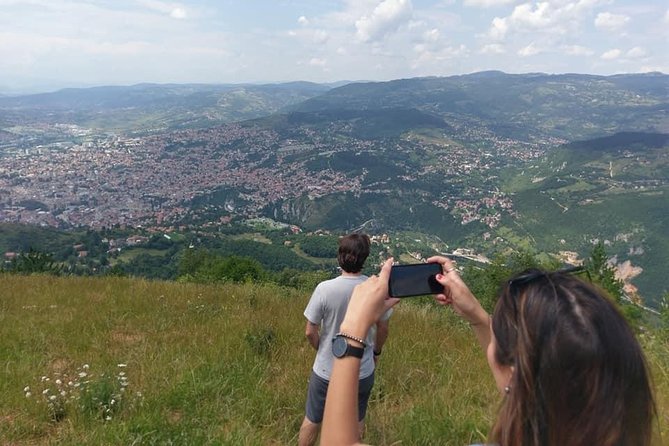
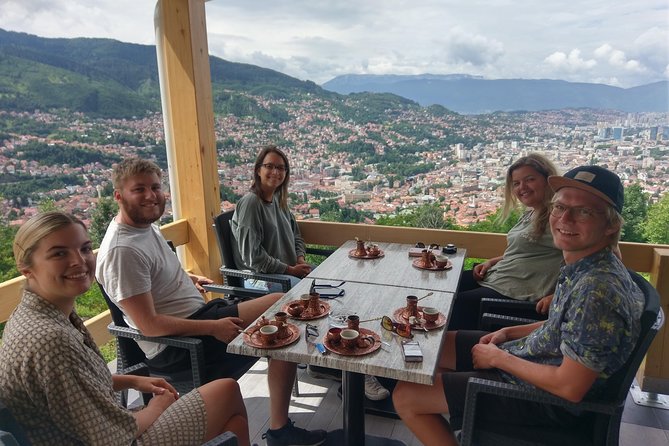
Next up is Zmajevac, with a panoramic view and an included learning moment about Bosnian coffee. The stop is about 1 hour, and admission ticket is listed as free.
This part of the tour is a smart pacing move. After Sniper Alley, you get a calmer stretch where you can look out over the city again, but with a different tone. Learning about coffee here is not random trivia. It fits the broader point of the tour: life continued, people still made rituals and conversation, even while the siege reshaped daily routines.
It also gives you something practical to do during the stop. When you are standing still and looking out, coffee talk is an easy way to turn the viewing into a memory you carry later. It can also help you connect the siege era to modern Sarajevo, because coffee culture is still alive.
If you enjoy food and small cultural details, this is one of the more human-feeling segments. You get scenery plus a story about why Bosnian coffee is famous, and you get that without needing another paid ticket.
1984 Bobsleigh Track Turned Artillery Position
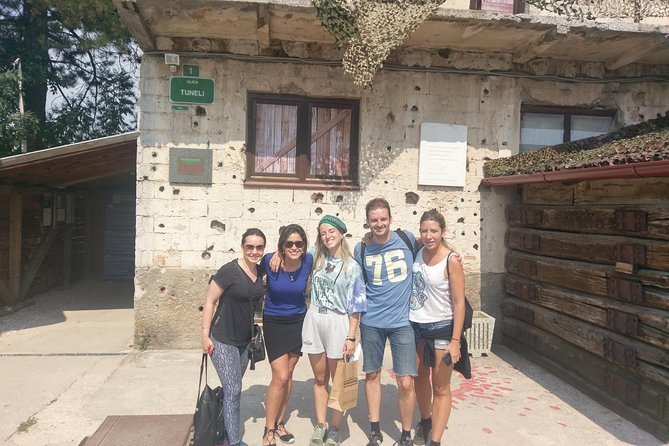
The Sarajevo Olympic bobsleigh and luge track is the next major stop, and it is about 1 hour. Admission is listed as free.
This is one of the most striking contrasts on the itinerary. The facility was built for the 1984 Olympic winter games, but during the Siege of Sarajevo it was used as an artillery position. That single fact turns a sports venue into a symbol of how quickly normal life can be repurposed under pressure.
For me, the value here is how it keeps the tour from feeling one-dimensional. Siege history can sometimes turn into only the supply routes and the shelters. Here you get a physical reminder that wartime needs shape the terrain, the buildings, and even the uses of places meant for celebration and sport.
Expect to spend time understanding how the track is laid out and why that mattered. Even when you do not see active military use, you can still understand the logic behind turning a prepared structure into something designed for wartime advantage. It is also a good stop if you like atmospheric ruins, because abandoned infrastructure often tells a story better than a photo.
Tunnel of Hope Museum: The Underground Lifeline
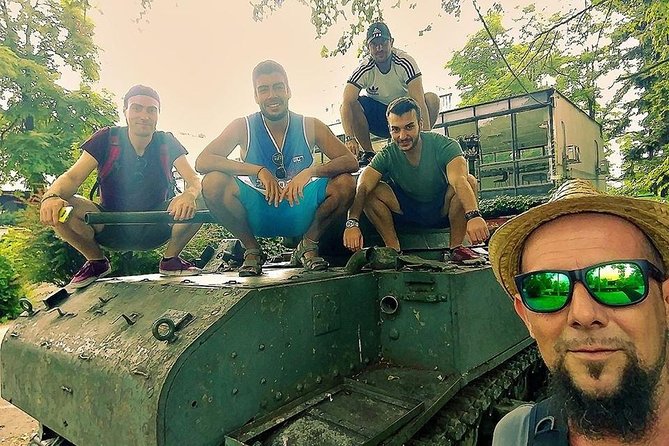
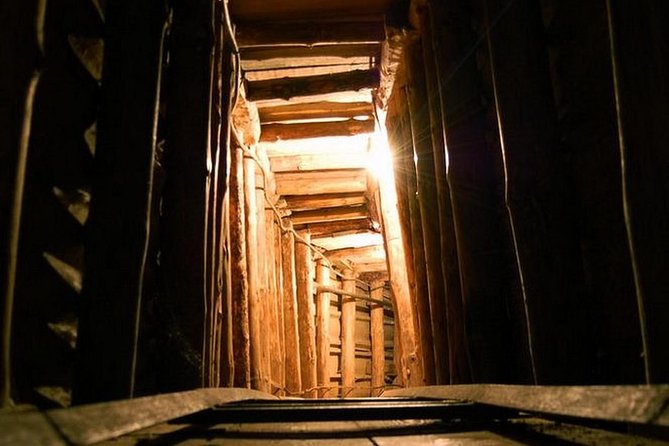
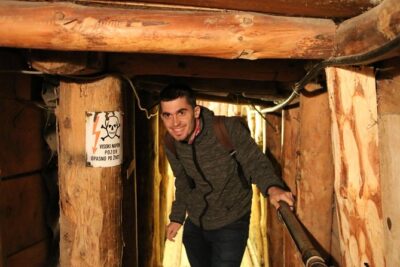
The centerpiece is the Sarajevo War tunnel, tied to the Tunnel of Hope museum. The tour description frames it as the only gate to the city during the 1992 to 1996 siege period, and calls it a significant monument of salvation. This is the stop where the tour shifts from explaining events to explaining survival.
Here is what the Tunnel of Hope actually was, in plain terms. It was an underground tunnel constructed between March and June 1993 during the Siege of Sarajevo. It connected Sarajevo neighborhoods of Dobrinja and Butmir with Bosnian-held territory on the other side of Sarajevo Airport, an area controlled by the United Nations.
That connection mattered because the city had been cut off by Serbian forces. The tunnel became a way to bring in food, war supplies, and humanitarian aid. It also allowed people to get out. And it played a role in bypassing the arms embargo, helping defenders bring in weaponry.
That is the part I think you should keep in your mind before you enter the museum area. You are not just visiting a tunnel. You are visiting a forced supply system built by people when official access was choked off. The story is about engineering under threat and logistics under siege.
Two key planning notes for this stop:
- Admission ticket for the Tunnel museum is not included in the tour price.
- The tour is designed so you arrive with context first, so the museum does not feel like random exhibits.
If the stories about survival are hard to stomach, give yourself permission to feel that. The emotional weight is part of why this site is so important.
What You Pay For With Travelplus, and What to Budget Extra
The price is $46.25 per person for a 3 to 4 hour tour. For Sarajevo, that is positioned as a value option because you are paying for guided interpretation, transportation, and part of the admissions.
Here is what is clearly included:
- Air-conditioned vehicle
- Coffee and/or tea
- Mobile ticket
- Sniper Alley admission ticket included
Admission details listed as free for other stops include Zmajevac and the Sarajevo Olympic bobsleigh and luge track. That helps keep costs controlled during the day.
The one cost not included is the entry ticket for the Tunnel museum. So if you want a smooth day, treat the tunnel entry as your main add-on expense. Even if the base tour feels like a deal, that museum ticket is the item that could surprise you if you are not expecting it.
In terms of value for history, I think the best comparison is this: you are not only getting places to tick off. You are getting guided explanations tied to views and physical sites. The combination of Tunnel of Hope, sniper-related viewpoints, and a wartime reuse of Olympic infrastructure gives you a more complete picture than a single museum visit.
Who This Sarajevo War Tour Fits Best
This tour is a great fit if you want to understand recent Sarajevo history without drowning in long lectures. The route balances viewpoint stops with the most important survival story on the itinerary.
You will likely enjoy it most if:
- You like guided tours with personal context, not only dates and names
- You are comfortable with serious subject matter, since siege history is not light
- You appreciate small-group interaction, where you can ask questions
- You want a mix of war history and city viewpoints, including a stop that includes a coffee-related cultural angle
You may want to think twice if you are looking for a purely recreational day with minimal emotional weight. This tour centers on survival and conflict, and it does not shy away from that.
Should You Book This Sarajevo War Tour With Travelplus?
If your goal is to understand Sarajevo’s siege era in a way that connects geography to lived experience, I would book it. The Tunnel of Hope is the anchor stop, and the rest of the route helps you frame what that tunnel meant, what visibility meant, and how even a sports venue could be repurposed during the siege.
Also, the guide approach seems to be the real differentiator. The repeated praise for Haris and the presence of Aida as a guide lead me to think you are choosing a tour where the human story is part of the product, not just a bonus.
Just plan one thing ahead: set aside money for the Tunnel museum entry ticket since it is not included. If you do that, you can enjoy a smooth, well-paced half-day that is both informative and emotionally memorable.
FAQ
How long is the Sarajevo War Tour with Travelplus?
The duration is listed as approximately 3 to 4 hours.
Where is the meeting point, and do we return there?
The tour starts at Hostel Vagabond Sarajevo, Ferhadija 21, Sarajevo 71000, and it ends back at the meeting point.
What does the tour cost, and is Tunnel museum entry included?
The price is $46.25 per person. Entry ticket for the Tunnel museum is not included.
What is included in the tour price?
The included items are an air-conditioned vehicle and coffee and/or tea. The tour also includes a mobile ticket, and the admission ticket for Sniper Alley is included.
How big is the group?
The tour has a maximum of 8 travelers.
Is free cancellation available?
Yes. You can cancel for a full refund up to 24 hours in advance. If it is canceled due to not meeting a minimum traveler number, you will be offered another date or a full refund.
More Tours Across Bosnia
The Full Bosnia Review Shelf
Sarajevo Siege History, Further Tours
Recently added to the Bosnia and Herzegovina shelf
- Walking Tour in Sarajevo★ 5.0 · 3 reviews
- Travnik, Jajce, Pliva Lakes & Mills –Medieval & Ottoman Bosnia Full Day Tour★ 5.0 · 3 reviews
- Tour of Herzegovina – From Sarajevo★ 5.0 · 3 reviews
- The Siege of Sarajevo Tour★ 5.0 · 3 reviews
- Srebrenica Genocide Tour from Sarajevo★ 4.5 · 3 reviews
- Sarajevo to Zagreb: One-Way Tour via Jajce, Travnik, Pliva Lake and Watermills★ 5.0 · 3 reviews
Sarajevo Siege History Tours, compared.
 ★ 5.0Fall of Yugoslavia, Sarajevo War Tour with Tunnel of Hope Museum and FrontlinesFrom $361,314 reviews
 ★ 5.0ROSES OF SARAJEVO (Official WAR + CITY tour)- Story of a SurvivorFrom $53770 reviews
 ★ 5.0Tunnel Museum: Bosnian & Yugoslav Wars Tour with War VeteranFrom $36551 reviews
 ★ 5.0Sarajevo War Tour: A Veteran’s Story of the Siege (fees included)From $48326 reviews
 ★ 5.0Sarajevo 1425 days under the siege – War TourFrom $48170 reviews
 ★ 5.0Tunnel of Hope Tour – Survival and ResilienceFrom $25118 reviews
 ★ 5.0Sarajevo Grand Tour: Old Town, War Tunnel, Olympic Sites & MoreFrom $4773 reviews
 ★ 5.0War Times Experience in Sarajevo – Half Day TourFrom $3561 reviews
Browse the lists this tour appears in