
REVIEW · SARAJEVO OLD TOWN WALKING TOURS
Crossroads of Cultures – Sarajevo Walking Tour
Sarajevo tells its story on foot. On this Crossroads of Cultures walking tour, I love how the route threads together the city’s faiths and power centers, and I also like the practical stops that help you understand Sarajevo beyond the postcards. One thing to plan for, some museum-style entrances are not included, so a couple of sights may cost extra.
You’ll go at a comfortable walking pace for about 2 hours, with a small group capped at 15. The tour runs in English, and you start and end back at the same meeting spot near Muvekita 7, so it’s easy to plug into a day in town.
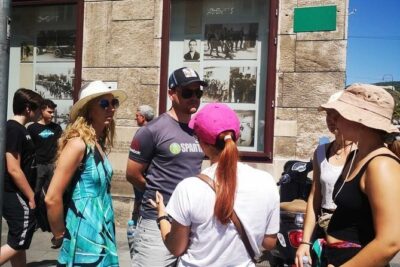
A big part of the fun is the guide. In the feedback I saw again and again, Adnan comes up as friendly, helpful, and genuinely good at making history feel personal, not stiff. If your visit includes a Bosnian coffee moment, take it, because it sets a relaxed tone before you start clocking serious landmarks.
In This Review
- Key highlights you should care about
- Why this Sarajevo walking tour works in real life
- Price and value: what’s covered, what you should budget for
- Getting started smoothly at Muvekita 7 (and how the timing feels)
- Step-by-step: cathedral to Jewish heritage, one guided storyline
- Mosques, the old clock tower, and Ottoman-era Sarajevo in glimpses
- Morica Han to Sebilj Fountain: market life and public space
- Kazandziluk and Bravadziluk: crafts streets and where to eat
- City Hall, Latin Bridge, and the Sarajevo Assassination context
- Serbian Orthodox Cathedral, Markale Market, and Eternal Flame
- Who should book this tour, and who might skip it
- Should you book Crossroads of Cultures in Sarajevo?
- FAQ
- How long is the Crossroads of Cultures Sarajevo Walking Tour?
- Where does the tour start?
- What time does the tour begin?
- Is the tour offered in English?
- What does the price include?
- Which entrances are not included in the tour price?
- Do I need a paper ticket?
- What is the cancellation policy?
Key highlights you should care about
- Small group size (up to 15), which keeps questions easy.
- Adnan-style guiding, with lots of clear context for Sarajevo’s mixed cultures.
- A tight 2-hour loop that covers faith sites, crafts, markets, and major 20th-century history.
- You get built-in structure, so you spend less time wandering and more time understanding.
- Food and coffee cues near the crafts streets, so you know where to try local staples.
- A mix of included and optional paid entrances, so you can plan your budget without surprises.
Different walks through the Sarajevo old town
- Sarajevo: 2 Hours Old Town Walking Tour With Local Guide
★ 5.0 · 505 reviews - Sarajevo Grand Walking Tour
★ 5.0 · 232 reviews - Sarajevo Grand Tour: Old Town, War Tunnel, Olympic Sites & More
★ 5.0 · 73 reviews - Delicious Sarajevo: Eat, Walk & Discover City Tour
★ 4.5 · 37 reviews
Why this Sarajevo walking tour works in real life
A good walking tour does one thing really well: it gives you a map made of meaning. This one is called Crossroads of Cultures for a reason. Sarajevo is the kind of city where neighbors share space, but not the same traditions, and that tension and harmony shows up in the buildings and street names you pass.
You’ll see major religious landmarks in a single arc, from a Catholic cathedral to an Orthodox cathedral and a central mosque, plus Jewish heritage sites and Ottoman-era remnants. That combination helps you understand how Sarajevo became a crossroads instead of a single-note city. You’re not just ticking attractions, you’re learning how the city’s story is written across different communities.
The tour also makes you look at details you might miss on your own. Even when stops are short, you’re given a reason to pay attention, whether it’s architectural style, the meaning behind a public square landmark, or why certain bridges and memorials changed how the world viewed Sarajevo.
Price and value: what’s covered, what you should budget for
The price is $24.08 per person, and for a 2-hour guided walk that covers a lot of ground, it’s a reasonable value. You’re paying mainly for the guide and the guided entry where it’s included, not just for access to a single museum.
What’s included:
- Tour guide
- Admission where the tour marks certain stops as included
- Several key photo stops and walk-by segments that do not require additional tickets
What’s not included:
- Entrance fees to museums
- Lunch
- A few specific sites are marked as ticket not included, including the Jewish Museum of Bosnia and Herzegovina, Sarajevo City Hall, and the Serbian Orthodox Cathedral
My practical take: even if you’re on a tight budget, the tour still feels worth it because the paid sites are only part of the story. You’ll get context at every stop, so you’re not paying just to walk past buildings. Still, if you want all the inside access, set aside some extra cash for those not included stops.
Getting started smoothly at Muvekita 7 (and how the timing feels)
The tour starts at 10:30 am. Your meeting point is Muvekita 7 in Sarajevo, and the tour ends back at the meeting point, which is handy when you’re juggling lunch plans or an afternoon transfer.
Duration is about 2 hours, so expect a focused sprint rather than a slow amble. That’s good news if you want to see Sarajevo’s highlights without losing half your day. It also means you’ll want comfy shoes. Sarajevo’s old areas include plenty of uneven sidewalks and curb edges, and this route squeezes in a lot of ground.
Group size is capped at 15, which helps the guide keep things moving while still answering questions. If you’re traveling with kids or you’re the type who likes to stop for photos but still wants progress, this size is a sweet spot.
Also helpful: you’ll receive a mobile ticket, and the tour is offered in English. Service animals are allowed, and it’s near public transportation, so you can reach the start point without a taxi if you want.
Step-by-step: cathedral to Jewish heritage, one guided storyline
The opening stretch sets the tone fast. You’ll start with Toureedoo – Sarajevo City Tours, where the guide meets you in front of their office. Then the tour begins with the Sacred Hearth Cathedral, a clear signal that you’re entering a city where faith architecture matters.
From there, you move toward the Jewish Museum of Bosnia and Herzegovina. Even without counting it as the only museum stop, this is one of the most important heritage stops on the route because it connects Sarajevo to the longer arc of Jewish presence and community life in the city. Since the museum entrance is marked as not included, you’ll likely decide based on your priorities and budget. If you care about Sarajevo’s layered identities, I’d treat this as a must-pay if you can.
Between the cathedral and the Jewish heritage stop, the tour gives you the framework for why Sarajevo is described as a place where East meets West. That matters because otherwise you’ll just see churches and mosques next to each other. With the guide’s context, you start noticing how the city’s layout and history made that coexistence visible in everyday life.
Other walks we have put boots to

Mosques, the old clock tower, and Ottoman-era Sarajevo in glimpses
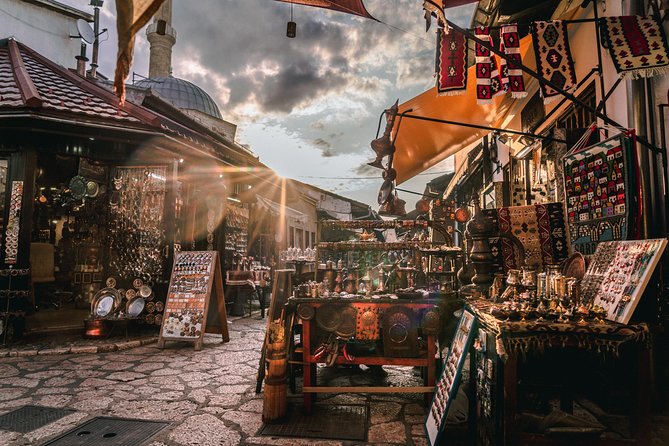
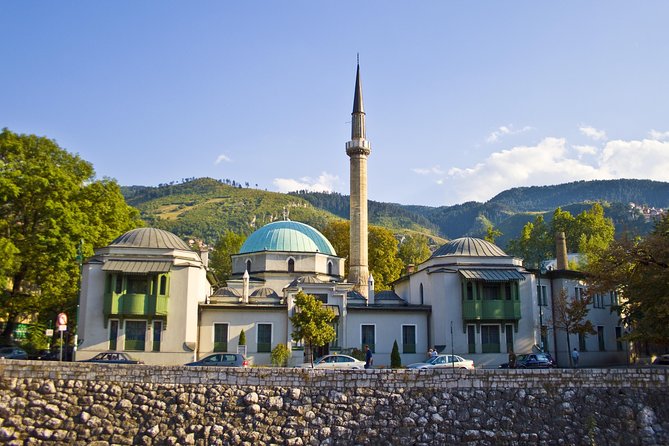
Next comes the Gazi Husrev-beg Mosque, a central religious landmark in Bosnia and Herzegovina. The key advantage here is that you’re not just taking exterior photos. You’re getting guided explanations about why this mosque is significant, which helps you appreciate it as more than a pretty building.
Then you’ll pause at the Old Sarajevo Clock Tower. Stops like this can feel quick on any walking tour, but they’re useful because they anchor you geographically and historically. A clock tower is more than a timepiece, it’s a reference point for the rhythm of old city life. With guidance, you’ll understand why people remembered it and how it relates to Sarajevo’s older urban center.
One practical tip: if you’re photographing, use the short pauses strategically. That way you’re not fumbling for the perfect angle while the group is moving. This tour is timed well, so it’s worth respecting the pace.
Morica Han to Sebilj Fountain: market life and public space
Morica Han is one of those stops that changes how you see a city. You’re visiting the only preserved han in Sarajevo, a surviving caravan-style inn that hints at older commercial life. It’s included, so you’re not forced to decide about a paid entrance at that moment. For me, these kinds of preserved Ottoman-era structures make the “crossroads” idea feel real, because they show how people moved, traded, and stayed.
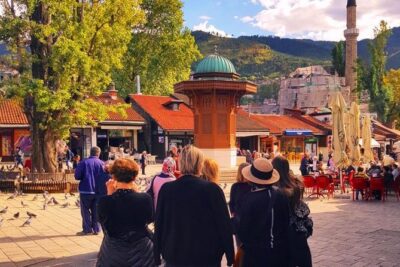
Then you reach Sebilj Brunnen, the iconic fountain often tied to Pigeon’s Square. This is the kind of Sarajevo landmark that anchors street life, because it’s central, recognizable, and tied to how people gather in public spaces. The included admission note here likely means you get access or a guided segment connected to the site.
If you’re sensitive to crowds, go easy on expecting solitude. But the upside is that the tour helps you interpret what you’re seeing, so you’re not just standing in a famous spot hoping you guessed right.
Kazandziluk and Bravadziluk: crafts streets and where to eat
This is where the tour quietly becomes more than sightseeing. You’ll spend time in Kazandziluk, a craft-focused area connected to old Sarajevo trades, and you’ll also hear about Bosnian coffee culture. Even if you think you already know what coffee means, this kind of guided explanation turns a simple drink into a cultural signal.
Then you’re directed toward Bravadziluk Street, with specific recommendations for where to taste cevapi and burek. Even if you decide to eat elsewhere, the value is that you’re getting local food guidance tied to the neighborhood you’re actually walking in.
Here’s my practical advice: if you’re hungry, don’t wait too long. Cevapi and burek are best when you eat them fresh. With a 2-hour schedule, it’s smart to line up your meal immediately after your final walking block, so you don’t end up turning lunch into a long search.
City Hall, Latin Bridge, and the Sarajevo Assassination context
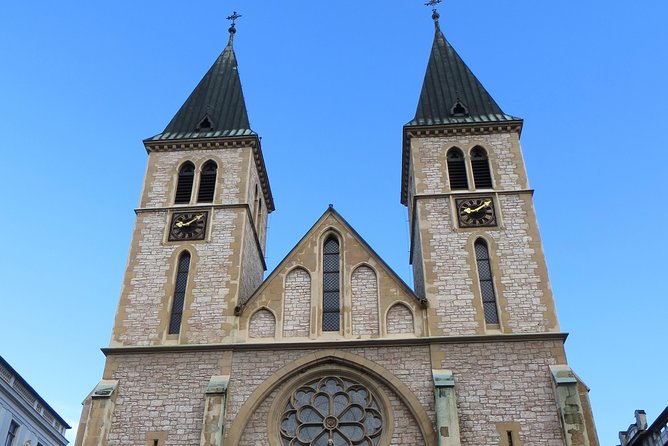
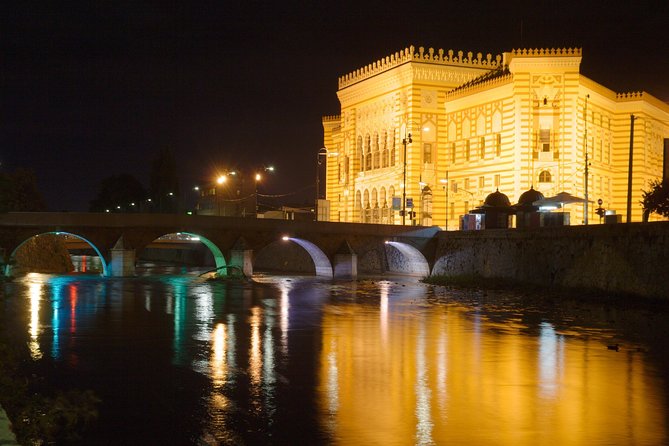
The tour also covers the Austro-Hungarian era through Sarajevo City Hall, which is marked as not included for entrance fees. This matters because you may want to prioritize whether you’re paying to go inside or keeping it strictly to the guided time outdoors. If you’re an architecture lover, this is worth budgeting for.
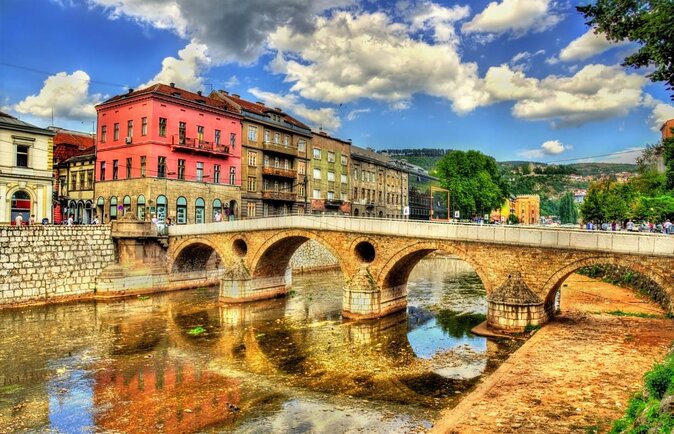
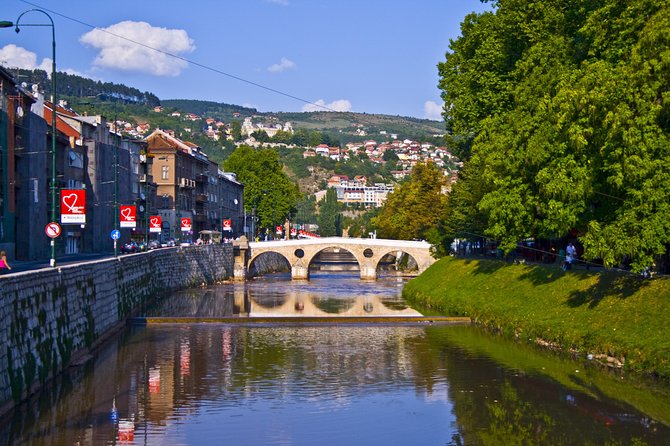
Then comes Latin Bridge, with a longer guided focus, including the event that shook the world in 1914. This is one of the most consequential historical points on the route. The bridge is famous, but what makes it hit harder is the guide’s explanation of what happened there and why it changed international history.
If you’re the type who likes to connect buildings to big moments, you’ll feel the tour does its job here. You stop seeing Sarajevo as just a pretty city and start understanding it as a place where global events had local stakes.
Serbian Orthodox Cathedral, Markale Market, and Eternal Flame
After Latin Bridge, you’ll head to the Serbian Orthodox Cathedral, marked as not included for entrance fees. As with City Hall, the key is your choice: do you want to pay for inside access, or do you prefer to keep your spend lower and focus on what the guide shares from outside and around the area?
Next is Pijaca Markale, the city market. This is the more everyday stop, where the conversation shifts from monumental history to daily life: fruits, vegetables, and meat products. A guided market stop is valuable because it trains you to look at how locals live and shop, not just what’s photographable.
Then the tour ends with the Eternal Flame, a WWII memorial monument. Stops like this can feel solemn, but they’re also important because they remind you Sarajevo’s story includes 20th-century conflict and resilience. The brief guided pause helps you leave with meaning, not just a snapshot.
Who should book this tour, and who might skip it
This tour is a strong match if you want:
- A structured first visit to Sarajevo with minimal guesswork
- A guide who explains why places matter, not just where they are
- A mix of religion, craft streets, markets, and major history in one go
- A small group experience with time for questions
You might skip or pair it with something else if:
- You only care about museum interiors, since a few entrances are not included
- You dislike walking a lot in two hours, because the schedule packs in many stops
- You have strict preferences for one type of attraction, like only religious sites or only museums, since this tour intentionally blends categories
Should you book Crossroads of Cultures in Sarajevo?
I’d book it if you’re aiming to understand Sarajevo fast and fairly. For $24.08, you’re buying a guide who has a track record for clear, friendly explanations, and the route covers the city’s most important “crossroads” themes: faith, coexistence, crafts, public life, and the historical events tied to Latin Bridge.
Before you decide, do two quick checks. First, decide if you’re comfortable paying extra for the not included sites like the Jewish Museum, City Hall, and the Serbian Orthodox Cathedral. Second, plan your shoes and energy for a 2-hour sprint across central neighborhoods.
If those check out, this is one of the more efficient ways to get oriented and feel the city’s layers without turning your trip into a scavenger hunt.
FAQ
How long is the Crossroads of Cultures Sarajevo Walking Tour?
The tour lasts about 2 hours.
Where does the tour start?
The meeting point is Muvekita 7, Sarajevo 71000, Bosnia and Herzegovina.
What time does the tour begin?
The start time is 10:30 am.
Is the tour offered in English?
Yes, it is offered in English.
What does the price include?
The included items are the tour guide, and admission is included for certain stops marked as included.
Which entrances are not included in the tour price?
Entrance fees to museums are not included, and specific sites marked as ticket not included include the Jewish Museum of Bosnia and Herzegovina, Sarajevo City Hall, and the Serbian Orthodox Cathedral.
Do I need a paper ticket?
No, you’ll have a mobile ticket.
What is the cancellation policy?
You can cancel for a full refund if you cancel at least 24 hours before the experience starts. If the tour is canceled due to poor weather, you’ll be offered a different date or a full refund.
More Tours Across Bosnia
The Full Bosnia Review Shelf
Walking Sarajevo, Other Routes
Recently added to the Bosnia and Herzegovina shelf
- Walking Tour in Sarajevo★ 5.0 · 3 reviews
- Travnik, Jajce, Pliva Lakes & Mills –Medieval & Ottoman Bosnia Full Day Tour★ 5.0 · 3 reviews
- Tour of Herzegovina – From Sarajevo★ 5.0 · 3 reviews
- The Siege of Sarajevo Tour★ 5.0 · 3 reviews
- Srebrenica Genocide Tour from Sarajevo★ 4.5 · 3 reviews
- Sarajevo to Zagreb: One-Way Tour via Jajce, Travnik, Pliva Lake and Watermills★ 5.0 · 3 reviews
Sarajevo Old Town Walking Tours, compared.
 ★ 5.0Sarajevo: 2 Hours Old Town Walking Tour With Local GuideFrom $14505 reviews
 ★ 5.0Sarajevo Grand Walking TourFrom $20232 reviews
 ★ 5.0Sarajevo Essential Full Walking TourFrom $18198 reviews
 ★ 5.0Sarajevo Grand Tour: Old Town, War Tunnel, Olympic Sites & MoreFrom $4773 reviews
 ★ 4.5Delicious Sarajevo: Eat, Walk & Discover City TourFrom $6837 reviews
 ★ 5.0PROFESSIONAL SARAJEVO WALKING TOUR – With guide who guided STING!From $3129 reviews
 ★ 5.0Sarajevo Full Day Tour: History, Culture, Nature, War & OlympicsFrom $11427 reviews
 ★ 4.5Sensational Sarajevo Sunset Walking TourFrom $1726 reviews
Browse the lists this tour appears in