
REVIEW · CROSS-BORDER TRANSFER TOURS
Sarajevo to/from Belgrade UNESCO Transfer Day Tour (Fees Incl.)
Road, rail, and rivers, all in one day. This one-way day tour turns a tough long transfer into a guided route with UNESCO sites, Ottoman architecture, Serbian Orthodox history, and two standout added extras that break up the drive.
I especially like how it’s door-to-door and organized, so you spend less brainpower figuring out transport. I also like the packed lineup of included experiences, especially the Šargan Eight steam-era railway ride and the Drina River boat cruise that make the scenery feel like a show, not just a drive-by.
The tradeoff is time. Expect 12 to 13 hours, lots of vehicle time, and a schedule with short stops that can feel intense if you prefer slower travel, plus windy roads that can be rough if you get motion sick.
In This Review
- Key highlights to know before you go
- A transfer day that feels like a guided route
- Timing, group size, and why the day runs long
- Rogatica and Borak Stećci: UNESCO tombstones in the woods
- Višegrad Bridge and the Drina River cruise: Ottoman beauty you can see twice
- Andrićgrad and Dobrun Monastery: literature, film, and faith stops
- Border crossing and Drvengrad (Küstendorf): a movie set that actually won awards
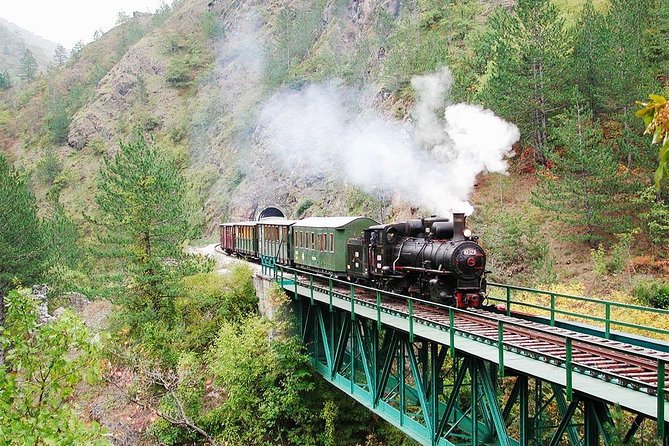
- The Šargan Eight steam-era railway: classic engineering plus a short ride
- Tara National Park and Banjska Stena: the viewpoint stop that earns its time
- Bajina Bašta and the House on the Drina: finishing with a small local icon
- Price and value: what you’re truly paying for
- Who should book this UNESCO transfer day, and who should skip it
- Should you book the Sarajevo to Belgrade UNESCO transfer tour?
- FAQ
- How long is the Sarajevo to Belgrade UNESCO transfer day tour?
- What time does the tour start?
- Is hotel pickup and drop-off included?
- Is the tour guided and in English?
- What is included in the price?
- Are meals and drinks included?
- What activities and stops are part of the day?
- Do I need a passport?
- How big is the group?
- What is the cancellation policy?
Key highlights to know before you go
- Door-to-door pickup and drop-off between Sarajevo and Belgrade, with hotel-friendly convenience
- UNESCO stećci necropolises near Rogatica and Borak Stećci in East Bosnia
- Mehmed Paša Sokolović Bridge in Višegrad plus a boat cruise on the Drina
- Andrićgrad stone town and the Ivo Andrić, Emir Kusturica cultural link
- Drvengrad (Küstendorf) and the Šargan Eight narrow-gauge train ride with a classic engineering vibe
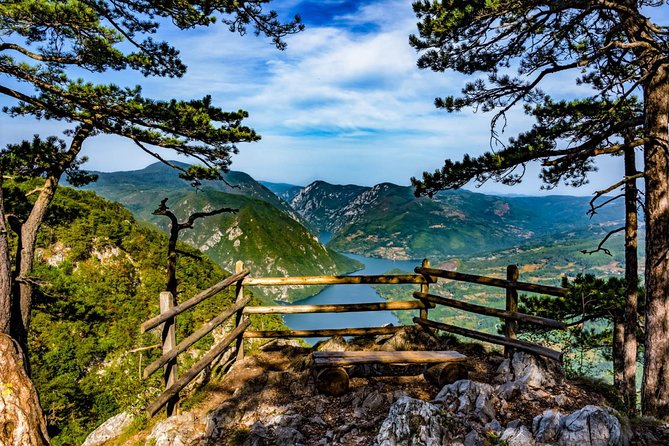
- Tara National Park and Banjska Stena viewpoint over Peručac Lake on the border rivers
Other transfers that double as a day tour
- Sarajevo to/from Dubrovnik Transfer Tour via Mostar & Herzegovina
★ 5.0 · 115 reviews - Sarajevo: Shuttle to/from Sarajevo Intl. Airport
★ 5.0 · 75 reviews - Sarajevo to Belgrade: Transfer With East Bosnia Tour
★ 5.0 · 63 reviews - Sarajevo to/from Belgrade UNESCO Transfer Day Tour (Fees Incl.)
★ 5.0 · 54 reviews
A transfer day that feels like a guided route
If you’ve ever faced the Sarajevo to Belgrade question, you know it can feel like either a long, boring drive or a messy patchwork of buses. This tour solves that by treating your transfer day like an itinerary, not a commute.
You leave Sarajevo early and then steadily work your way east through the Dinaric mountain region. The rhythm is built around short guided stops, each one adding a different layer: medieval Bosnian kingdom sites, Ottoman-era architecture, Orthodox monasteries, then Serbian nature and viewpoints before you roll into Belgrade near the evening.
It’s also designed for people who want value. You’re not just paying for transportation. You’re paying to “buy time back” on a day that would otherwise be harder to structure yourself, especially with included admission and two ticketed activities.
Timing, group size, and why the day runs long
Start time is 7:00 am, and the day runs about 12 to 13 hours. Your exact pace depends on traffic and border timing, but the structure stays the same: see multiple sites, ride multiple legs, and finish in Belgrade by around 8:00 pm.
The group is limited to 15 travelers, which matters. Smaller groups typically mean fewer delays when you’re walking from the bus to a viewpoint or waiting for your guide to issue the next instructions.
You also spend plenty of time on winding two-lane roads through the hills. One practical takeaway: if you’re prone to motion sickness, pack your own solution ahead of time. I’d rather you arrive focused than spending the afternoon feeling grim.
Rogatica and Borak Stećci: UNESCO tombstones in the woods
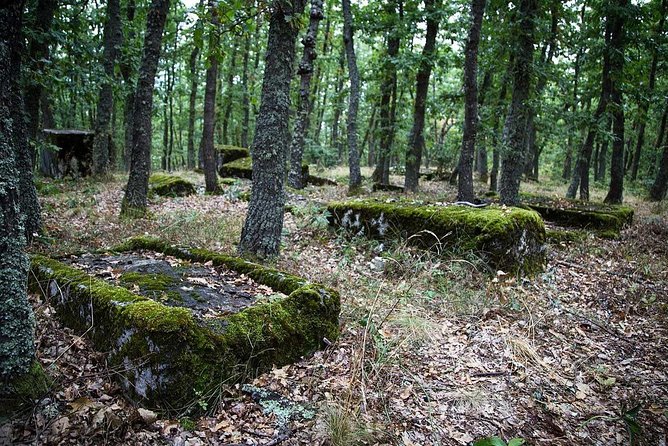
Your morning opens with a UNESCO experience that many people miss when they just rush to the big cities. The tour stops near Rogatica at a stećci necropolis, describing the medieval tombstone culture of Bosnia. You get about 45 minutes there, and admission is free.
Then you head toward Stjenice and walk a short trail through dense forest to the Borak Stećci necropolis near the Burati village area. This is the part where you get a little “get your feet moving” time, with about 30 minutes on site and another short drive between stops. Admission is also free.
Why this matters for your day:
- It’s UNESCO, yes, but it’s also atmospheric. These sites feel remote, not museum-remote. You’re surrounded by forest and misty mountain quiet, which makes the carved stone details easier to notice.
- Your guide can connect the dots between medieval Bosnian kingdom history and why these limestone blocks end up scattered across the region.
Watch-outs:
- It’s not a long hike, but it is a real walk on uneven ground. Comfortable shoes beat sneakers with weak grip.
Višegrad Bridge and the Drina River cruise: Ottoman beauty you can see twice
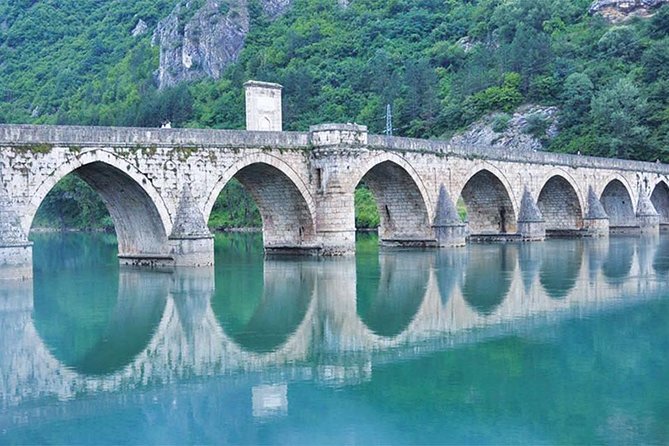
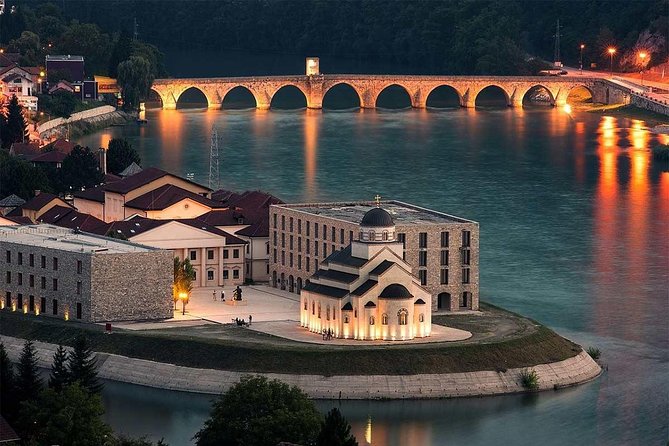
After the stećci stops, you climb into more dramatic mountain driving and then arrive in Višegrad, a town famous for its UNESCO-listed bridge. The stop centers on the Mehmed Paša Sokolović Bridge built in 1577.
You get about 45 minutes here, and admission is included. The guide frames the bridge’s architecture as a statement of proportion and monumental style, then gives you local and literary context. One of the big cultural threads is the novelist Ivo Andrić, who wrote about this place, and the idea that this bridge is both a physical landmark and a story magnet for the region.
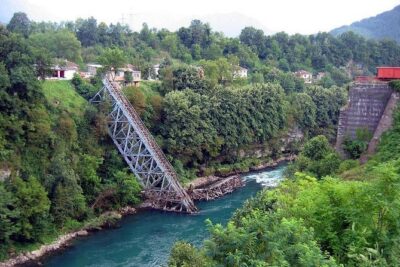
Then comes the part that turns architecture into a lived experience: a cruise on the green Drina River. The boat ride is included (ticket cost is listed), so you’re not stuck calculating extra fees during the day.
Practical tip:
- If you want photos, aim to take them both from the bridge area and from the boat. The angle makes the stonework feel different.
This is also a good “pace reset” stop. After forests and stone fields, the river gives you breathing room without adding hours of walking.
More trips with a driver of your own

Andrićgrad and Dobrun Monastery: literature, film, and faith stops
From the bridge and river cruise, you move to Andrićgrad. This is a small stone-built town dedicated to Ivo Andrić, inspired by the stories and legacy tied to this area.
You’ll have about 15 minutes here, and admission is free. In your short time, focus on two things:
1) the way the new stone town tries to look like it belongs to the old world around it, and
2) the entertainment-industry angle, because the site also interprets Yugoslav cinema through the lens of Emir Kusturica.
Is it a “must-see museum”? Not exactly. It’s more of a fast, cultural snapshot. But because your day is packed, it works as a mental refresh, especially if you enjoy art, film, and how modern culture grabs old stories.
Next is Dobrun Monastery, a Serbian Orthodox site. This stop is about 20 minutes, admission is free, and it’s described as initially built in 1343 with frescoes preserved to today.
What you’ll likely appreciate here is the combination of:
- religious art and preserved frescoes, and
- the surrounding nature that makes the monastery feel less like an enclosed stop and more like part of a landscape you’re passing through.
If you’re not into religious sites, I’d still give this stop a chance. It’s one of those places where even a short visit teaches you something about how locals see history.
Border crossing and Drvengrad (Küstendorf): a movie set that actually won awards
At some point you cross from Bosnia into Serbia. After that, you enter the Šargan-Mokra Gora nature park area.
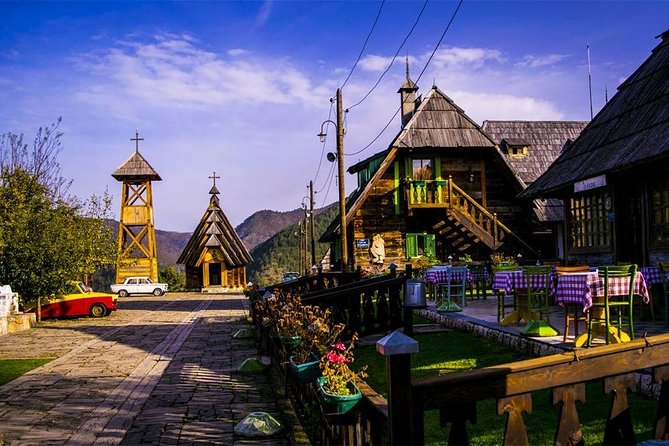
Your next scheduled stop is Drvengrad, also known as Timber Town or Küstendorf. The tour frames it as a village-town designed by Emir Kusturica for a film called Life is Miracle, with an architectural award recognition attached to its design.
You get about 1 hour here, and admission is included. Lunch may happen in this area, but drinks and food are not included on the tour, so budget for your own meal.
What makes Drvengrad worth it in the context of a transfer tour:
- It’s a break from “looking at the past” and instead shows how a creator imagined a cultural past in physical form.
- You can stretch your legs and reset your mind before the train ride.
Small reality check: one part of the day is unforgettable engineering, the other is a themed environment. If you go in expecting one single thing, you might feel “that’s it?” If you go in knowing it’s a change of pace, it lands better.
The Šargan Eight steam-era railway: classic engineering plus a short ride
After lunch time (or whenever your schedule lines up), you board the Šargan Eight. This is a narrow gauge steam railway that initially connected Sarajevo and Belgrade, with the name tied to the shape of the track looking like the number 8.
You’ll have about 45 minutes, and the train ticket is included.
The tour explains the engineering story clearly: it climbed around 300 meters over a short distance, used many tunnels and bridges, and worked through difficult terrain. You feel that on the ride because you’re not just rolling through a flat corridor. The track forces curves, changes in slope, and a constant sense that the engineers were fighting the mountain.
A caution if you’re a photo-nerd:
- One account from a past day said the locomotive did not match an old-time steam look for the full ride and that much of the track runs through woods, limiting scenic views. So go for the engineering and the experience, not for a nonstop postcard view.
Still, even if the view is partly wooded, the ride can be a fun compression of history. In a day already packed with UNESCO and monasteries, this is the moment where you slow down and let the route show itself.
Tara National Park and Banjska Stena: the viewpoint stop that earns its time
Once the train ride ends, you keep going toward Belgrade, but not before hitting Tara National Park.
The tour schedules time for a nature stop with a strong viewpoint payoff: Banjska Stena. This viewpoint looks out over Peručac Lake on the Drina River, a border river between Bosnia and Serbia.
You get about 30 minutes, and admission is free for the viewpoint portion.
If you’re deciding whether to do this part of the day, think of it as your “I need air and wide views” break. Before this stop, you’re in towns, stone structures, and short guided visits. Tara changes your pace and helps your brain stop processing facts for a moment.
What to bring:
- Sun protection. You’ll be outside for a chunk of time, and it’s the kind of stop where people naturally linger for photos.
Bajina Bašta and the House on the Drina: finishing with a small local icon
On the way toward Belgrade, there’s a short ride through Bajina Bašta and then a last stop at the House on the Drina. You’ll have about 15 minutes.
This one is brief by design. It’s meant as a last visual moment before the final push into Serbia’s capital city. It’s also free entry.
You’ll likely like it if you enjoy quirky regional landmarks. It’s not going to replace a major museum, but on a day that already includes several big-ticket cultural stops, a small, character-filled place is a nice final note.
Price and value: what you’re truly paying for
The price is $174.99 per person. That sounds like a lot until you map what you’re getting, because this is not just a bus transfer.
Here’s where value shows up:
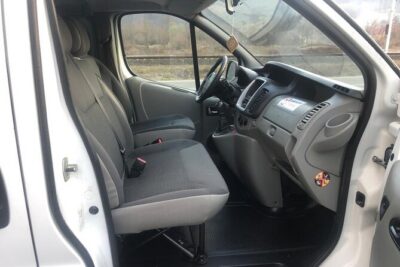
- Door-to-door transport with hotel pickup and drop-off, which saves you time and logistics stress.
- Guided stops across multiple UNESCO sites and cultural landmarks.
- Included ticketed experiences with listed per-person costs:
- Šargan Eight train ride
- Drina River boat cruise
- Drvengrad admission
- Admission fees for the essential attractions you visit, which prevents the usual end-of-day surprise.
What’s not included is equally important: drinks and food. Plan to buy your own lunch or snacks. If you assume everything is included, you’ll end up scanning menus while you’re already tired.
For me, the value equation works best if you want a structured day and you don’t want to stitch together your own transport across borders and countryside. If you enjoy DIY road trips and you already know the route, you might spend less money, but you’d also give up the curated stops and included admissions.
Who should book this UNESCO transfer day, and who should skip it
This tour fits best when:
- you want a real guided route between Sarajevo and Belgrade, not a basic transfer
- you enjoy UNESCO sites but also want variation, with Ottoman architecture, monasteries, and nature
- you like “added value” moments, like the river cruise and the Šargan Eight ride
You might skip it if:
- you hate long days and prefer slow travel with fewer stops
- you get motion sick easily and would rather control timing yourself
- you’re not interested in cultural stops and would rather spend more time in either Sarajevo or Belgrade instead of moving constantly
One more practical point: the walking is moderate, not extreme, but there is at least one short hike in the forest area to reach stećci. Bring shoes you trust.
Should you book the Sarajevo to Belgrade UNESCO transfer tour?
I’d book it if you want to turn a long transfer into a full day with built-in structure, included activities, and multiple UNESCO and cultural stops along the way. This is the kind of itinerary that makes sense on a first visit to the region, because it gives you a guided sampler that would take hours of planning to match.
I wouldn’t book it if your priority is resting, because the day is packed and the roads are curvy. But if you can handle a full itinerary and you’re excited by the mix of stone tombstones, bridge stories, monastery frescoes, and a quirky train ride, this is a strong value play.
Go in with realistic expectations: it’s a long day, and the schedule keeps moving. If that sounds fine, you’ll likely come away feeling like you truly traveled across the region, not just between two cities.
FAQ
How long is the Sarajevo to Belgrade UNESCO transfer day tour?
It runs about 12 to 13 hours.
What time does the tour start?
The start time is 7:00 am.
Is hotel pickup and drop-off included?
Yes, it offers door-to-door transfers with hotel pickup and drop-off, and it ends with drop-off at your desired address in Belgrade.
Is the tour guided and in English?
Yes, it includes a professional English-speaking guide and driver.
What is included in the price?
The tour includes admission fees to essential attractions, and it specifically lists the Šargan Eight train ride, Drina River boat cruise, and Drvengrad admission as included, plus all fees and taxes.
Are meals and drinks included?
No. Drinks and food are not included.
What activities and stops are part of the day?
The day includes stećci necropolises, a stop at Mehmed Paša Sokolović Bridge in Višegrad plus a Drina River boat cruise, Andrićgrad, Dobrun Monastery, Drvengrad, the Šargan Eight train ride, Tara National Park viewpoint time at Banjska Stena, and a last stop at House on the Drina.
Do I need a passport?
Yes, a current valid passport is required on the day of travel.
How big is the group?
There is a maximum of 15 travelers.
What is the cancellation policy?
Free cancellation is available up to 24 hours in advance for a full refund.
More Tours Across Bosnia
The Full Bosnia Review Shelf
Transfers That Double as Day Tours
Recently added to the Bosnia and Herzegovina shelf
- Walking Tour in Sarajevo★ 5.0 · 3 reviews
- Travnik, Jajce, Pliva Lakes & Mills –Medieval & Ottoman Bosnia Full Day Tour★ 5.0 · 3 reviews
- Tour of Herzegovina – From Sarajevo★ 5.0 · 3 reviews
- The Siege of Sarajevo Tour★ 5.0 · 3 reviews
- Srebrenica Genocide Tour from Sarajevo★ 4.5 · 3 reviews
- Sarajevo to Zagreb: One-Way Tour via Jajce, Travnik, Pliva Lake and Watermills★ 5.0 · 3 reviews
Cross-Border Transfer Tours, compared.
 ★ 5.0Sarajevo to/from Dubrovnik Transfer Tour via Mostar & HerzegovinaFrom $181115 reviews
 ★ 5.0Sarajevo: Shuttle to/from Sarajevo Intl. AirportFrom $3075 reviews
 ★ 5.0Sarajevo to Belgrade: Transfer With East Bosnia TourFrom $15663 reviews
 ★ 5.0Private transfer Dubrovnik and MostarFrom $22842 reviews
 ★ 5.0From Dubrovnik: 1-Way Tour to Sarajevo via Mostar and KonjicFrom $42432 reviews
 ★ 5.0Sarajevo to Split (or opposite): Transfer With Herzegovina TourFrom $15628 reviews
 ★ 5.0Transfer Mostar to Dubrovnik with Kravice Waterfalls, Blagaj and Počitelj tourFrom $15027 reviews
 ★ 5.0Private Transfer between Trebinje and DubrovnikFrom $11327 reviews
Browse the lists this tour appears in