
REVIEW · BOSNIA DAY TRIPS FROM DUBROVNIK
Sarajevo to/from Dubrovnik Two-day Transfer Tour via Mostar
Herzegovina in two packed, story-rich days. You get a door-to-door transfer between Sarajevo and your chosen end point, plus a Mostar overnight, so your holiday doesn’t turn into hours of guessing directions. I like that the day is built around real places with included entry fees, not a string of quick photo pulls.
My other big win is the balance: calm nature stops like Buna spring in Blagaj and Kravice Falls, mixed with history you can actually stand inside, like Tito’s Nuclear Bunker. One drawback to think about is pacing. This is a two-day run with many stops, so if you want long meals and slow wandering, you might feel a bit rushed, and meals are not included.
In This Review
- Key highlights in this Sarajevo to Mostar transfer tour
- How this door-to-door transfer actually helps your trip
- Konjic first stop: a bridge with WWII weight
- Tito’s Nuclear Bunker: history you can stand inside
- Jablanica and the Neretva canyon views
- Blagaj: Buna spring water and the Tekke next door
- Mostar at walking pace: Old Bridge, Old Bazaar, and evening calm
- Počitelj hill town: Ottoman-era fortifications above the Neretva
- Kravice Falls: a Niagara-style break in the middle of the drive
- Wine cellar Brkic: biodynamic tasting without the tourist fluff
- Medjugorje: short, focused pilgrimage time
- Radimlja necropolis near Stolac: UNESCO stećci mystery
- Vjetrenica Cave: biodiverse underground life
- Price, included tickets, and whether it feels worth it
- Who this tour suits best, and who should skip it
- Quick, practical tips before you go
- Should you book this Sarajevo to Dubrovnik via Mostar tour?
- FAQ
- How long is the Sarajevo to Dubrovnik two-day transfer tour via Mostar?
- What time does the tour start?
- Do you stay overnight in Mostar?
- Is hotel and breakfast included?
- What activities or attractions have admission fees included?
- Are meals included?
- What is the maximum group size?
- What is the cancellation policy?
Key highlights in this Sarajevo to Mostar transfer tour
- Konjic’s 6-arch bridge and WWII stories above the Neretva River
- Tito’s Nuclear Bunker underground, 270 m down, built for 350 people
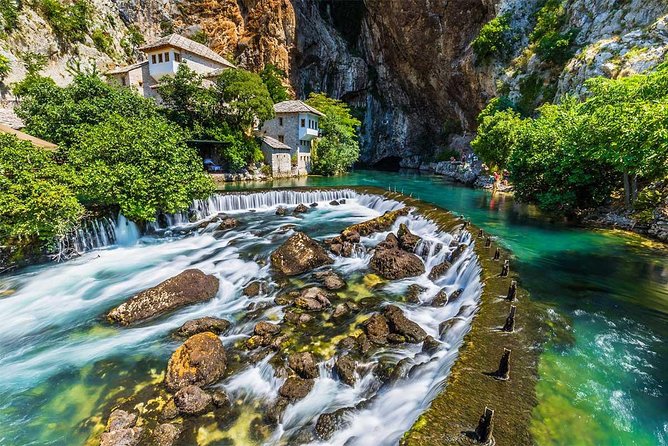
- Blagaj’s Buna spring and Blagaj Tekke (Dervish house), tied to Ottoman-era Islamic architecture
- Mostar Old Bridge and Old Town walking time, with evening free time after crowds
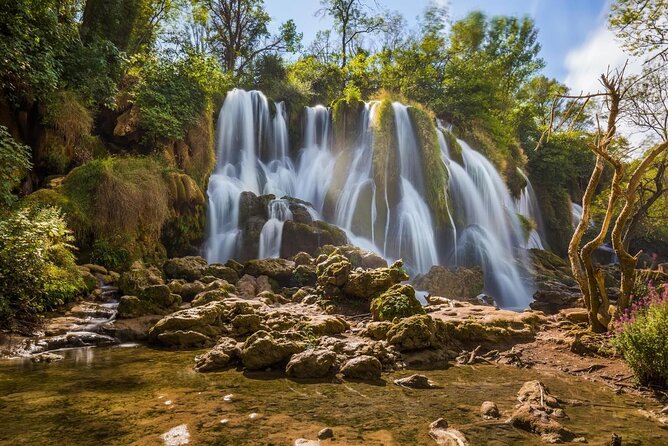
- Kravice Falls, plus a summer swim option (June to September)
- UNESCO Radimlja necropolis and Vjetrenica Cave, stećci tombstones and a biodiverse cave
More Bosnia runs that leave from Dubrovnik
- Sarajevo to/from Dubrovnik Transfer Tour via Mostar & Herzegovina
★ 5.0 · 115 reviews - Sarajevo to Dubrovnik: Transfer With Herzegovina Tour
★ 5.0 · 26 reviews - Sarajevo: One-Way Tour to Dubrovnik via Mostar
★ 4.6 · 19 reviews - Sarajevo to Dubrovnik: One-Way Tour via Mostar, Kravica Falls, Blagaj & Pocitelj
★ 5.0 · 12 reviews
How this door-to-door transfer actually helps your trip
This tour works well if your real goal is to see Herzegovina, not just pass through it. The itinerary is designed so you move between major cities, yet your sightseeing is anchored in specific places that explain the region. You also get a small-group cap of up to 8 travelers, which matters when roads are tight and time is moving.
Another practical plus is that your biggest friction points are reduced. Pickup is offered, you receive a mobile ticket, and key admissions are included. That means fewer cash-only surprises and less time spent waiting in lines you can avoid.
Still, I’d treat it as an active “see a lot, learn a lot” format. Expect walking in towns and enough driving that your day is structured. If you’re the type who wants to linger for hours, you’ll want to plan extra days in Sarajevo or along the Adriatic afterward.
Konjic first stop: a bridge with WWII weight
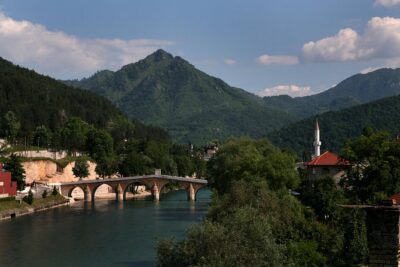
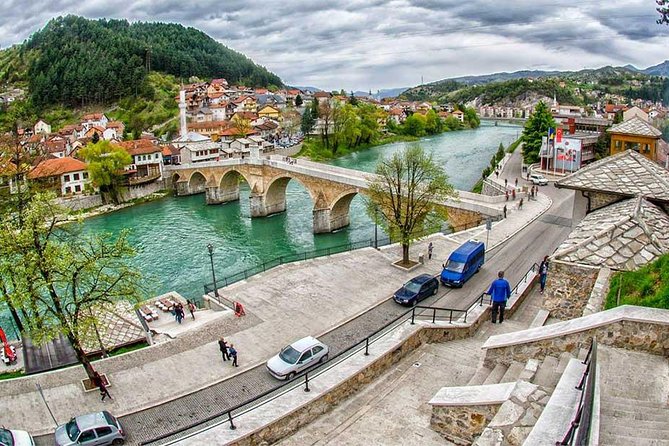
Konjic is a smart opening act because it sets themes early: the Neretva River, the town’s character, and the war history that echoes through the landscape. You start in the old part of town, where the 17th-century 6-arch Old Bridge sits high over the river. It’s a photogenic start on a usually sunny stretch, and it instantly tells you the region isn’t just scenic, it’s layered.
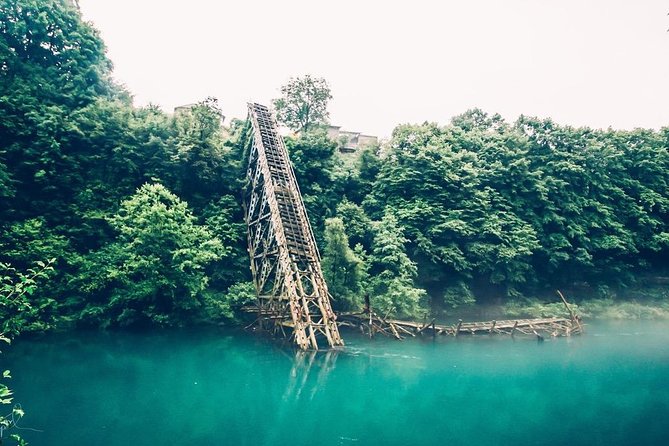
What I like here is how the guide’s stories connect dots. You learn about the bridge’s destruction during WWII’s final days as Nazi forces withdrew, and you hear why it’s often described as a monument to human stupidity type of warning. Konjic also tees up other local themes like Tito’s Bunker, rafting in the upper Neretva region, and Boracko Lake. Even if you don’t have time for every activity, you leave with a mental map of what the area is known for.
One note for comfort: the viewing points can involve short walks and time spent outdoors, so bring sun protection even if the day looks mild.
Tito’s Nuclear Bunker: history you can stand inside
Then comes the part most people talk about afterward: ARK D-0, Tito’s Nuclear Bunker. This is the kind of attraction that makes theory feel real. It was ordered in the early 1950s, designed as a secret survival site for the ruling class during a nuclear attack, and it sits about 270 m (900 feet) underground.
The scale is part of the story. The project took 26 years, finished in 1979, and the budget is quoted as roughly equivalent to just under £3 billion (about $4.6 billion). It was planned for 350 people to live and work for six months without coming outside if the worst happened.
Why this fits a transfer tour: it’s not “just a museum.” It’s a strong guided reset for understanding Yugoslav-era politics, fear, and engineering. You get the full emotional impact of the place without needing extra days.
Jablanica and the Neretva canyon views
After Konjic, the drive follows a dramatic route along the dammed Jablaničko Lake and the Neretva river canyon. There’s usually a short stop in Jablanica, which gives you a WWII context stop tied to the Neretva Battle. You’ll also get a look at local food culture with a story about the roasted lamb on a spit, which helps balance heavy topics with something you can taste later on your own.
This is also where the day gives you real scenery time. The views of the lake and the Prenj mountain area are the kind that make the bus window feel too small. Sometimes you might get an extra short photo break at Jablaničko Lake and the canyon, so you can grab images without feeling like you’re losing the day.
If you’re prone to motion sickness, it can still be a winding route. Packing a bit of remedy and keeping water handy is a good idea, even if nothing is advertised as difficult.
Other transfers that double as a day tour

Blagaj: Buna spring water and the Tekke next door
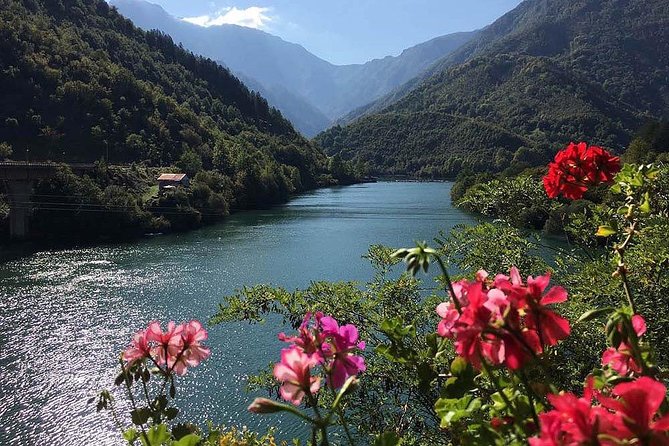
Blagaj is one of those places where nature and culture sit side-by-side. The highlight is Buna river spring, described as Europe’s most powerful, clean, and drinkable karst spring. Water comes out of a cave system beneath a few hundred meters of rock, with a quoted flow around 43 cubic meters per second.
I love stops like this because they reset your senses. After WWII-heavy storytelling earlier in the day, you get a wide-open feel, cool air, and the kind of soundscape that makes you slow down. And because it’s a spring, it has that steady “always-on” quality.
Right next to it is Blagaj Tekke, a Dervish house tied to early Ottoman-era Islamic architecture. It’s likely dating from the early or mid-1500s, which makes it a long-lasting part of the region’s religious life. The Tekke is also the place where prayers are hosted five times a day, so it connects you to living tradition, not just abandoned ruins.
Timing is generous here, so you can take your time without feeling like you need to rush through.
Mostar at walking pace: Old Bridge, Old Bazaar, and evening calm
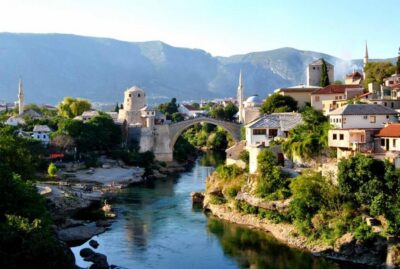
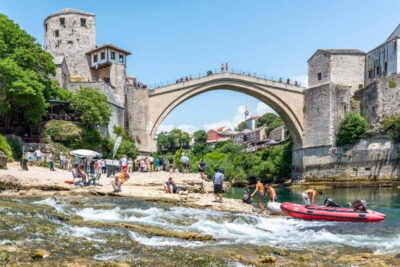
When the tour reaches Mostar, you check into Hotel Eden 4 in the Mostar area (or a similar 4-star property) and then start a 2-hour walking tour. This part is built for orientation. You cover the Mostar Old Bridge, the Old Bazaar, and the surrounding Old Town, so you get both landmarks and the story behind them.
The bridge is the centerpiece, but the tour doesn’t stop at postcards. You learn how the bridge rose, was destroyed, and then rose again after the Siege of Mostar. You also get context for why it’s called Mostar and who Mostarians are. That kind of explanation matters, because it turns what you see into something you understand.
The evening is where Mostar often shines, and this tour gives you time for it. You can enjoy the city in late hours when crowds thin out, then choose dinner on your own or with the group. Having free time right after the walking tour is a smart touch because you can return to what caught your eye while it’s still fresh in your head.
Practical note: Mostar walking is real walking. Wear comfortable shoes, and expect stairs or uneven surfaces around the old streets.
Počitelj hill town: Ottoman-era fortifications above the Neretva
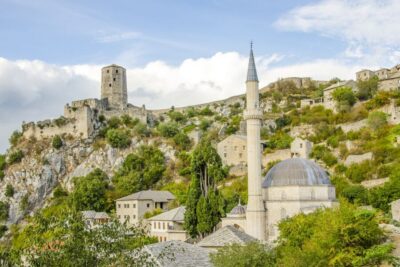
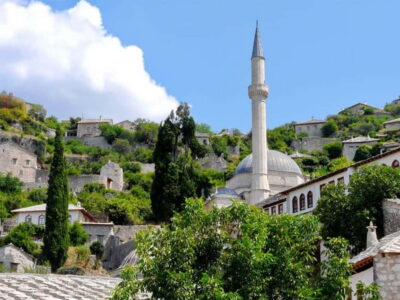
Day two starts with Počitelj, perched above the Neretva River. This town is built into the hillside, so you’ll do an uphill walk that takes about an hour. Počitelj is known for a longwritten history, quoted as 600 plus years, and a strategic role during that time.
What I like about Počitelj is the way it’s presented as an intact urban ensemble. It’s described as one of the few preserved towns in Bosnia and Herzegovina where Ottoman-Mediterranean style architecture remains coherent.
You visit key spots like Hajji Alija Mosque, the Clock Tower, and the Gavrankapetanović tower. It’s not just photo stops. You get the sense of why the town’s position mattered, and the viewpoints from above help you understand the geography.
If you have mobility limits, this section may be the hardest day part, since uphill walking is explicitly part of the experience.
Kravice Falls: a Niagara-style break in the middle of the drive
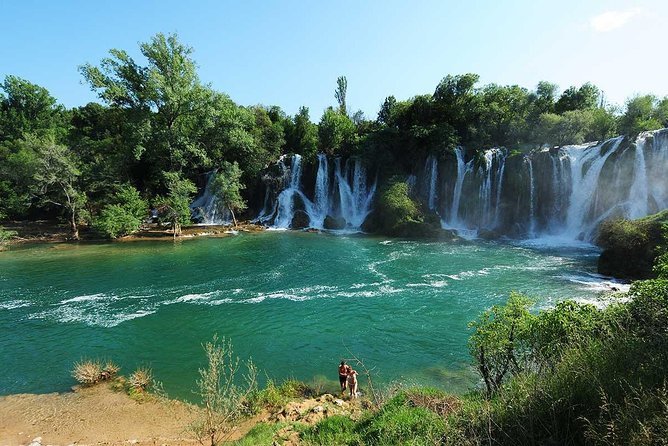
Then you get the highlight nature stop: Kravice Falls. This is near Ljubuški, where the Trebižat River flows over travertine sedimentations, creating waterfalls with an amphitheater feel below. The advertised height range is 26 to 28 meters, and the water spreads across a roughly 120-meter wide drop area.
It’s one of those places where a one-hour stop feels just right. You get time to enjoy views, take photos, and cool down. And there’s an extra perk in summer: between June and September, you can bring a swimsuit and swim, or at least cool your feet.
Why this works in a transfer tour: it breaks up the day so you’re not stuck in only museums and towns. It’s a “reset your brain” moment before more culture stops.
Wine cellar Brkic: biodynamic tasting without the tourist fluff
After waterfalls, you head into West Herzegovina wine country for a tasting at the Brkic wine cellar. The area is known for local wine traditions, and the tour includes a tasting described as four sorts of local authentic wines plus snacks.
The tasting focuses on Blatina (red) and Zilavka (white). You also learn about biodynamic wines and why they are still a rarity today, plus how winemaking in Herzegovina has evolved and where it aims now.
One smart detail is choice. If you’re not into wine tasting, the tour can organize an alternative local lunch option instead. That’s helpful because it respects different travel styles without forcing a wine-focused experience on everyone.
This stop adds real value to the price because it’s not only paying for entry somewhere. You’re paying for guided food culture, tasting, and the chance to try a couple of regional styles that you may not find easily on your own.
Medjugorje: short, focused pilgrimage time
Next comes Medjugorje, the well-known Catholic pilgrimage site linked to Virgin Mary apparitions since 1981. The tour allocates about 45 minutes, which makes it a short cultural stop rather than an all-day event.
This is a place where you’ll feel the visitor mix, so go with flexible expectations. If you’re interested in religion, it’s a straightforward way to understand why the site attracts people from around Europe. If you’re not, treat it as a quick stop to see how devotion shapes a town.
Radimlja necropolis near Stolac: UNESCO stećci mystery
Then you move to East Herzegovina and the Radimlja necropolis near Stolac, a UNESCO World Heritage site. This is where the tour turns academic in a good way, because stećci tombstones are one of the region’s great mysteries.
You learn that stećci appear in the mid-12th century, with an early phase in the 13th, reaching a peak in the 14th and 15th centuries. They disappear during Ottoman occupation in the early 16th century.
The tour also explains the questions people still argue about, like the origin of the tombstones, the origin of the people buried beneath them, and the symbolic messages carved into the stone. Those are the kinds of mysteries you can actually feel standing in front of the monuments, since the carvings look personal, not random.
Time is short, about 15 minutes, so think of this stop as a focused introduction. You can always return later if you want deeper study.
Vjetrenica Cave: biodiverse underground life
The day ends with Vjetrenica Cave, described as one of the world’s most biodiverse caves. You get about one hour inside, and the emphasis is on the cave’s life and variety.
Caves are a strong capstone after a day of history and waterfalls because they change your senses again. If you tend to love geology, unique ecosystems, and offbeat science, this is a great closing stop.
Bring something practical: it’s a cave, so conditions can feel cooler than outside, even if the region is warm.
Price, included tickets, and whether it feels worth it
The price is $515.63 per person for an approx. two-day experience. On first glance, that number looks big, but when you break down what’s included, it shifts from “just transportation” into a full guided package.
Here’s why it can feel good value:
- Hotel and breakfast for 1 night in Mostar at a 4-star property (Hotel Eden 4 or similar)
- Included admissions to major paid stops like Tito’s Bunker, Blagaj Tekke, and Kravice Falls
- Wine tasting at a local winery with four wine sorts and snacks
- Included UNESCO site time at Radimlja necropolis
- Included Vjetrenica Cave entrance and Bosnaseum Museum entry fee
Meals are not included, so you’ll still budget for lunch and dinner. But the structure removes a lot of decision fatigue. You’re not juggling which ticket to buy, which museum hours work, or how to connect all these places efficiently across Herzegovina.
If you’re someone who likes to understand what you’re seeing and you’d rather pay once for a guided flow than spend your day planning, this price can make sense.
Who this tour suits best, and who should skip it
This tour is a strong fit if you:
- Want a guided “best-of Herzegovina” experience with multiple entry sites
- Like history that comes with locations, not just lectures
- Appreciate a mix of nature, food culture, and religious sites
- Prefer a small group pace over a huge bus crowd
You might want a different style if you:
- Hate fast timing and frequent transitions
- Need a fully independent itinerary with long free hours every day
- Are very sensitive to walking uphill or uneven old-street surfaces
Quick, practical tips before you go
- Wear comfortable shoes for Mostar and Počitelj hill walking.
- Bring a light layer for the cave and keep water handy on transfer days.
- If you’re doing Kravice Falls in summer, pack a swimsuit for the swim option between June and September.
- Since meals are not included, plan on budgeting for lunch and dinner, and consider the lunch option if you skip wine tasting.
Should you book this Sarajevo to Dubrovnik via Mostar tour?
I’d book it if your goal is to connect Sarajevo and the Adriatic with meaningful Herzegovina stops, and you want a guide to stitch the stories together. The biggest selling point is that it’s not only sightseeing, it’s sightseeing with admissions handled and a solid Mostar night so the city isn’t just seen in passing.
Skip it if you want a slow pace, lots of downtime, or you dislike packed schedules. Also consider adding extra days in Sarajevo, Mostar, or your Adriatic destination if you want time to repeat the places you like most.
If you’re okay with active days and you want value from included tickets and a real guided route, this tour is a smart way to see a lot of Bosnia and Herzegovina without turning your trip into a logistics project.
FAQ
How long is the Sarajevo to Dubrovnik two-day transfer tour via Mostar?
It runs for approximately 2 days.
What time does the tour start?
The start time is 8:00 am.
Do you stay overnight in Mostar?
Yes. You stay one night in Mostar at a 4-star hotel with breakfast, such as Hotel Eden 4* or a similar property, in twin or double sharing.
Is hotel and breakfast included?
Hotel (4-star) and breakfast for 1 night in Mostar are included.
What activities or attractions have admission fees included?
Included admissions cover Tito’s Bunker (10 EUR), the Dervish House in Blagaj (5 EUR), Bosnaseum Museum (5 EUR), Kravice Waterfalls (10 EUR), Radimlja Necropolis (3 EUR), and Vjetrenica Cave (10 EUR). Wine tasting at a local Herzegovina winery is also included.
Are meals included?
No, meals are not included. There is an alternative local lunch option for guests who do not want wine tasting.
What is the maximum group size?
The tour has a maximum of 8 travelers.
What is the cancellation policy?
Free cancellation is available, and you can cancel up to 24 hours in advance for a full refund.
Multi-Day Routes Through Bosnia and the Balkans
Transfers That Double as Day Tours
Leaving From Dubrovnik? More Bosnia Trips
Recently added to the Bosnia and Herzegovina shelf
- Walking Tour in Sarajevo★ 5.0 · 3 reviews
- Travnik, Jajce, Pliva Lakes & Mills –Medieval & Ottoman Bosnia Full Day Tour★ 5.0 · 3 reviews
- Tour of Herzegovina – From Sarajevo★ 5.0 · 3 reviews
- The Siege of Sarajevo Tour★ 5.0 · 3 reviews
- Srebrenica Genocide Tour from Sarajevo★ 4.5 · 3 reviews
- Sarajevo to Zagreb: One-Way Tour via Jajce, Travnik, Pliva Lake and Watermills★ 5.0 · 3 reviews
Bosnia Day Trips from Dubrovnik, compared.
 ★ 4.7From Dubrovnik: Mostar and Kravica Waterfall Day TripFrom $344,709 reviews
 ★ 4.5Dubrovnik: Kravica Waterfalls, Mostar and Pocitelj Day TripFrom $353,045 reviews
 ★ 4.8Dubrovnik: Mostar & Kravica Waterfalls Day TripFrom $351,970 reviews
 ★ 4.8Dubrovnik: Mostar and Kravice Waterfalls Small-Group TourFrom $1101,194 reviews
 ★ 4.4From Dubrovnik: Mostar and Medjugorje Full-Day TourFrom $100898 reviews
 ★ 4.0From Dubrovnik: Day Trip to Mostar and Kravice FallsFrom $70445 reviews
 ★ 4.7From Dubrovnik: Mostar & Kravica Waterfalls Small-Group TourFrom $34268 reviews
 ★ 4.3Mostar & Kravice Waterfalls: Guided Day Trip from DubrovnikFrom $66134 reviews
Browse the lists this tour appears in