
REVIEW · SARAJEVO OLD TOWN WALKING TOURS
Sarajevo for beginners
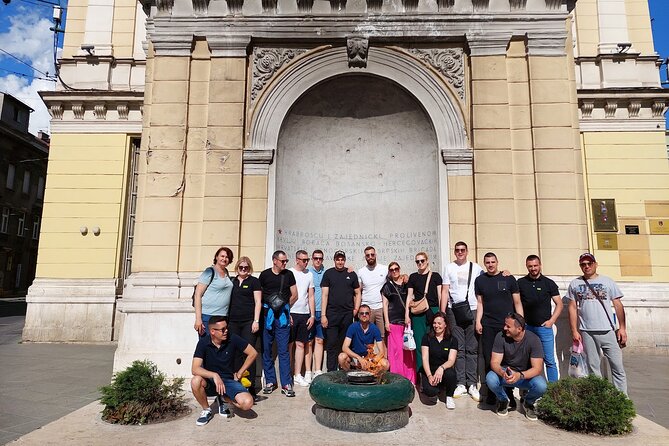
Sarajevo tells a story fast. This beginner-friendly walk strings together key sites in Sarajevo, mixing Ottoman and Austro-Hungarian sights with major world history, all explained in English. You also get a small coffee or tea break along the way, which is nice when you are doing a lot of looking in a short time.
I especially like how the route gives you clear orientation. You move from famous landmarks like Latin Bridge and Baščaršija to lesser-known corners such as Tašlihan remains and Kazandžiluk, so you do not leave with a handful of photos, you leave with a mental map.
The second thing I like is the local guide energy. I have seen first-rate feedback about Samra and Irfan for their humor, sharp answers, and stories that make you notice things you would otherwise walk past. One possible drawback: most stops are quick exterior views, and admission tickets are not included, so if you want to go inside every site, plan on extra costs.
In This Review
- Key highlights worth showing up for
- A 2-hour Sarajevo sampler for first-timers
- Price and value: what $34.92 buys you in real life
- Getting started at Trg fra Grge Martića (and why the start matters)
- Katedrala Srca Isusova: learning what Sarajevo looks like at a glance
- Orthodox Church of the Nativity of the Theotokos: the second layer of faith
- Hotel Europe: why Sarajevo’s oldest hospitality matters
- Tašlihan remains and the market skeleton under the streets
- Gazi-Husrev Beg’s Bezistan: Sarajevo’s original shopping mall
- The Sarajevo assassination location: where the world changed
- Latin Bridge: three names and one unforgettable landmark
- Emperor’s Mosque, Inat kuća, and the bridges you feel in your legs
- Sarajevo City Hall and Bravadžiluk street: Ottoman meeting Austro-Hungarian
- Kazandžiluk, Sebilj, and Baščaršija: learning where people gather
- Morića Han photo-copy story and the Gazi Husrev-beg Mosque stop
- Jewish Museum of Bosnia and Herzegovina: a story that changes with time
- Practical tips for beginners on this route
- Who should book Sarajevo for beginners with Cooltour Sarajevo?
- Should you book this beginner-friendly Sarajevo walk?
- FAQ
- What is the duration of the Sarajevo for beginners tour?
- Where does the tour start and end?
- What language is the tour offered in?
- Is admission included for the stops?
- Is coffee or tea included?
- How big is the group?
Key highlights worth showing up for
- Samra or Irfan-led storytelling that keeps the pace lively and understandable
- Real Old Town variety, from churches and mosques to bazaars and bridge names
- Coffee and/or tea included, a simple comfort break during the walk
- World history stops paired with everyday street life, so the context sticks
- Small group size with a max of 18 people, which helps questions and conversation
Different walks through the Sarajevo old town
- Sarajevo: 2 Hours Old Town Walking Tour With Local Guide
★ 5.0 · 505 reviews - Sarajevo Grand Walking Tour
★ 5.0 · 232 reviews - Sarajevo Grand Tour: Old Town, War Tunnel, Olympic Sites & More
★ 5.0 · 73 reviews - Delicious Sarajevo: Eat, Walk & Discover City Tour
★ 4.5 · 37 reviews
A 2-hour Sarajevo sampler for first-timers
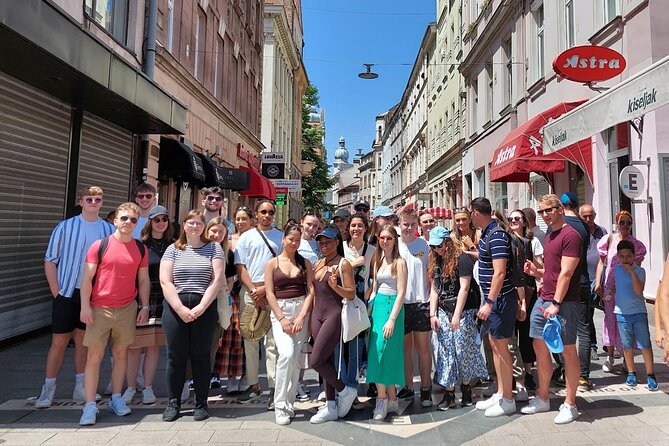
If Sarajevo is new to you, the biggest risk is ending up with a list of sights and no story connecting them. This walk is built to fix that. In about two hours, you cover a tight chunk of central Sarajevo, enough to understand how the city’s layers sit on top of each other.
The best part for beginners is that the stops are not random. You start with major religious landmarks, then you shift into Ottoman-era commercial life, and finally you hit the bridges and squares that shaped modern Sarajevo’s identity. The pace is also beginner-friendly, with each stop timed for short viewing and explanation.
Because it is designed for newcomers, you will also get practical context. You learn not just what a place is, but why the name matters and what to look for in the surrounding streets. That turns a quick walk into a “now I get it” experience.
Price and value: what $34.92 buys you in real life
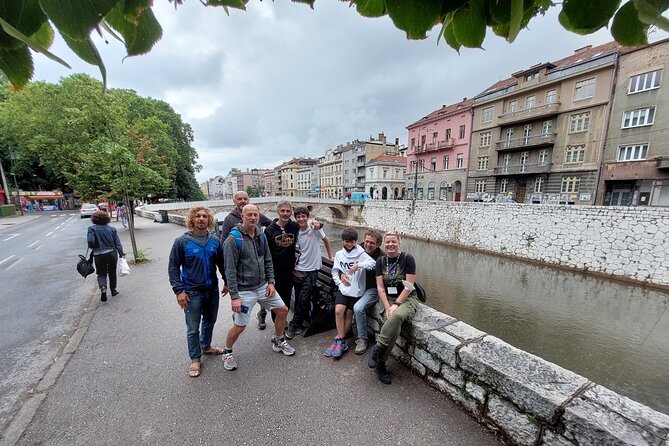
At $34.92 per person, you are paying for guidance, interpretation, and the chance to see a lot without planning a route yourself. For two hours, that is fairly strong value when you consider the number of named sights you pass and the fact that the tour includes coffee and/or tea.
You should also budget realistically. Admission tickets are not included at the stops, so churches, mosques, and museums you might want to enter will likely require separate tickets. Still, even when you are looking from outside, these are places where the details matter, and having someone point them out saves you time and confusion.
Think of this as a guided orientation and story pass through central Sarajevo. If you plan to spend more time later on your own, this tour helps you choose where to return.
Getting started at Trg fra Grge Martića (and why the start matters)
The walk begins at Trg fra Grge Martića, Sarajevo, starting at 9:00 am. Since it ends back at the same meeting point, it is easy to plug into a broader day without worrying about transit back to your lodging.
This is also a practical move for first-timers because the Old Town area can be confusing if you are jumping between spots by taxi. Starting centrally and ending centrally keeps your day smooth.
You will have a mobile ticket, which is convenient. The tour is offered in English, and there is a small maximum group size of 18 travelers, so it feels more like a focused walk with a guide than a high-volume production.
Katedrala Srca Isusova: learning what Sarajevo looks like at a glance
You begin at Katedrala Srca Isusova, a cathedral that is simple but beautiful. It is not the kind of stop where you need a long visit to appreciate it. Instead, it works as a first visual anchor, helping you understand the city’s religious presence right away.
For beginners, the value here is orientation. When you see the cathedral and hear what makes it important, the rest of the walk stops feeling like separate postcards. You start to notice patterns in architecture and city planning as you move toward Ottoman-era landmarks later.
If you are the type who likes quick wins, this first stop sets you up well. If you want long museum-style viewing, this might feel short, but the tour is built for understanding the big picture fast.

Orthodox Church of the Nativity of the Theotokos: the second layer of faith
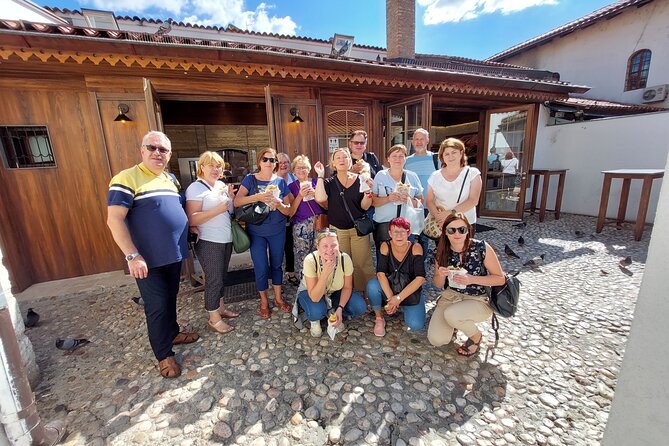
Next up is the Orthodox Church of the Nativity of the Theotokos. Like the cathedral, it is described as a Serbian Orthodox church, and the stop is brief. The goal is not a deep dive into liturgy, it is to show how multiple communities shaped Sarajevo side-by-side.
Even in a short window, you can often read the style, materials, and placement in the streets. And when your guide ties it back to how Sarajevo developed, the church becomes more than a backdrop.
If you are sensitive to how quickly the pace can feel “compressed,” plan to slow down your photos here. This is the moment to capture the details that you might miss when you are in motion.
Hotel Europe: why Sarajevo’s oldest hospitality matters
Then you reach Hotel Europe, described as the first hotel in Sarajevo and the oldest in South-East Europe. That kind of claim is easy to ignore, but it is exactly the sort of detail that makes a city feel lived-in, not staged.
For beginners, historic hotels help you understand how Sarajevo connected to broader travel and politics. Even if you do not go inside, the name and the setting help explain why Sarajevo mattered beyond the local level.
A short stop can still be meaningful here because the surrounding context is strong. You will likely feel the contrast between “old lodging landmark” and the more market-like streets you visit soon afterward.
Tašlihan remains and the market skeleton under the streets
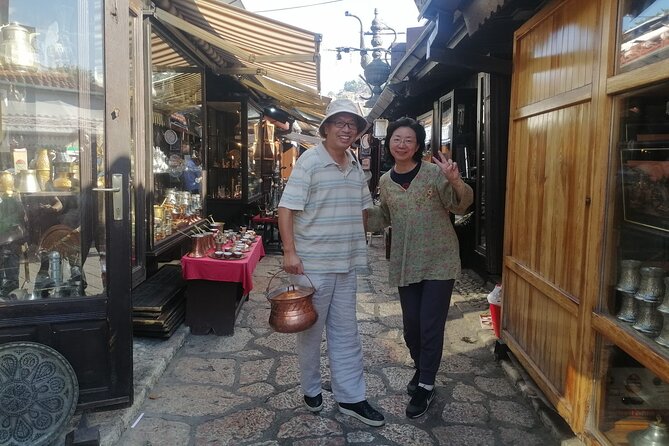
You then move to Tašlihan, with time set for the remains. This stop is a reminder that markets were not just places to buy things. They were also structures that shaped daily movement, social life, and economic power.
You might not get a full historical building experience in a short visit, but learning what Tašlihan was can change how you view nearby streets. Instead of walking past stones and walls, you start seeing a grid of how people once moved through commerce.
This is also a great stop for beginners who enjoy “how cities work.” A few minutes here can help you understand the logic behind the old quarter’s layout.
Gazi-Husrev Beg’s Bezistan: Sarajevo’s original shopping mall
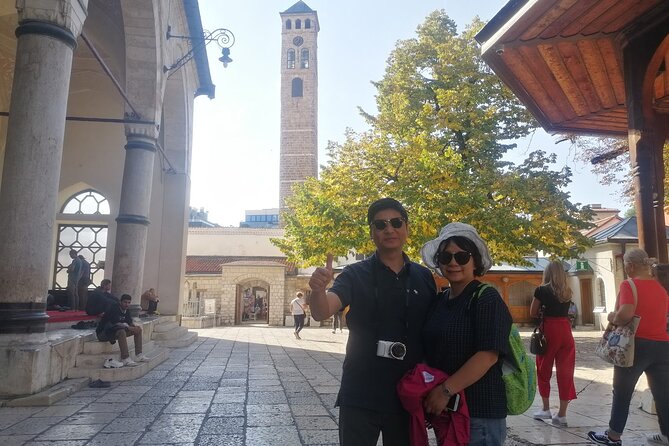
Next is Gazi-Husrev Beg’s Bezistan, described as the original shopping mall in Sarajevo. The word Bezistan is basically your clue that you are stepping into a commercial hub, not just a landmark block.
Even when the stop is short, you should come away with a sense of what a covered trading space means in a city like Sarajevo. It helps you understand why markets feel central to Ottoman-era life, and why today’s streets still echo that pattern.
If you like practical city history, this is one of the best stops. It links architecture to daily behavior, which makes the city easier to navigate later on your own.
The Sarajevo assassination location: where the world changed
Now the walk turns toward one of the most heavy-hitting historical moments connected to the city: the Location of Sarajevo Assassination. The stop is timed for about 15 minutes, which is longer than several other stops on the route for a reason.
For beginners, the key is context. This is not just a point on a map. Your guide explains why the moment mattered and how it reshaped international events. It can be emotionally intense, so it helps that the guide’s pacing is structured and clear.
If you are visiting for the story as much as the sights, do not rush this one. Even from outside, the explanation is the main value.
Latin Bridge: three names and one unforgettable landmark
From there, you head to Latin Bridge, described as a bridge with three names. Bridges are great “beginner” landmarks because they are physical and memorable. You can’t miss them, and they often connect multiple stories at once.
What makes this stop useful is how the bridge functions as a marker of change. Naming, renaming, and different languages all point to shifting eras and influences. Once you hear the naming story, the bridge becomes a cultural reference point, not just a photo stop.
Take a moment to look at the surrounding river area and the approach routes. You will likely understand the city’s structure better after this.
Emperor’s Mosque, Inat kuća, and the bridges you feel in your legs
This part of the walk shifts back to everyday Sarajevo details. You visit the Emperor’s Mosque, described as the oldest mosque in Sarajevo, then you continue to Inat kuća, where you learn what inat is.
That inat stop matters because it is not abstract. It is about attitude, and it is tied to local sayings and behavior. When you understand that, the city’s humor and stubborn pride make more sense.
Then you cross to Seher Cehaja’s bridge, described as the oldest bridge in Sarajevo and the second built. Bridges are perfect for building spatial memory. You start mapping how neighborhoods and key sites connect without needing your phone to tell you everything.
This whole segment balances big landmarks with human scale. It is also a good stretch mentally because it moves from history back into identity and culture.
Sarajevo City Hall and Bravadžiluk street: Ottoman meeting Austro-Hungarian
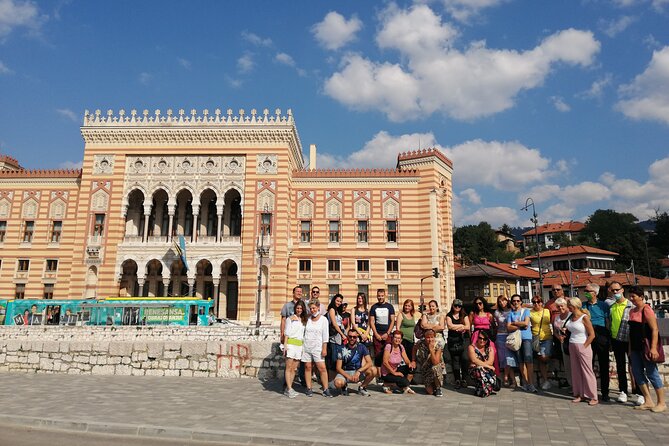
You then reach Sarajevo City Hall, built during Austro-Hungarian times and fitting with Ottoman architecture in the center of the Old part of town. This is one of those locations where the city’s mixed influences feel obvious rather than academic.
Nearby, you also hear the story of the development of Bravadžiluk street. For beginners, streets like this are where you learn the city’s rhythm. The architecture and the shop-front style are clues, and a guide turns those clues into an explanation.
This section helps you stop thinking in eras and start seeing Sarajevo as a layered living place. That mindset makes later self-guided exploration much easier.
Kazandžiluk, Sebilj, and Baščaršija: learning where people gather
Next, you visit Kazandžiluk, described as one of the most authentic streets in Sarajevo. The word authentic gets thrown around a lot, but here it is tied to the feel of a traditional street and how the city trades and crafts work on a human scale.
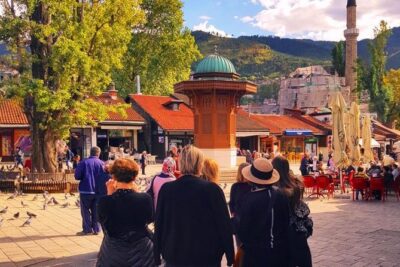
Then comes Sebilj, the meeting place for many. A square like Sebilj functions like a social hub, and it is ideal for beginners because it gives you a reset point. If you want to locate yourself mentally later, squares like this help.
Finally, you spend time at Baščaršija, described as the main square of Sarajevo. This is where the walk becomes most alive in a visual sense. You see the heart of the old quarter and start recognizing why people come back here again and again.
If you enjoy craft markets and street atmosphere, Baščaršija is where you will feel it most. If you prefer quiet, just remember you can pause for your own focus once your guide has set the context.
Morića Han photo-copy story and the Gazi Husrev-beg Mosque stop
You also visit Fotokopirnica Morića Han, described as probably the coolest place in Sarajevo. The stop is brief, but it points to something important: Sarajevo is not only monuments and museums. It also has modern, slightly quirky spaces that show the city in use today.
Then the walk brings you to the Gazi Husrev-beg Mosque, described as the central mosque in Sarajevo. This is a major religious landmark, and it closes a loop back to the faith sites you saw at the beginning. Now you can better compare styles, placement, and the city’s overall design logic.
For beginners, ending on a mosque landmark is helpful because it ties together earlier religious stops with the wider Old Town area. You leave with a sense of how sacred spaces relate to streets and commerce around them.
Jewish Museum of Bosnia and Herzegovina: a story that changes with time
The walk ends with time at the Jewish Museum of Bosnia and Herzegovina, where you see the square and hear the story of Jews in Bosnia and Herzegovina. Your guide frames it as a different time, different story, which is exactly the right approach for this stop.
The value here is context. Without guidance, a museum or a square can feel like a static stop. With the explanation, it becomes part of the broader Sarajevo narrative you have been building through the churches, mosques, markets, bridges, and historical events.
Even if you do not go deep into exhibits during a quick stop, the understanding you gain can make later reading feel less random. It also helps you appreciate Sarajevo as a city of multiple communities and shifting eras.
Practical tips for beginners on this route
Here are a few ways to get the most from the walk without turning it into a checklist.
First, pace your photos. With many stops running around 5 to 15 minutes, it is easy to take pictures and forget to look closely. Give yourself one careful moment at each main landmark, then move on.
Second, ask questions at the overlaps. The most useful moments often happen right after your guide explains why two places feel connected. When you hear the bridge naming story, then you walk into the Old Town streets, your understanding jumps.
Third, be ready for quick exterior viewing. Since admission tickets are not included, assume some stops are mainly for seeing and learning from outside. If you want to enter specific sites, you can plan separate time later.
Finally, use the included coffee or tea break as your reset. It is a small thing, but in a 2-hour morning walk, that pause helps you keep your attention sharp.
Who should book Sarajevo for beginners with Cooltour Sarajevo?
This tour is a good fit if you want a structured introduction to central Sarajevo without doing map math. The English guidance, small group limit of 18, and the stop-by-stop storytelling are ideal for first-timers, solo travelers, and couples who like to learn while walking.
It is also a strong option if you enjoy historical context but do not want a long, museum-heavy day. You get major events and major landmarks in a compact time window, and you can continue exploring afterward on your own.
If you prefer long time inside buildings, you might find the quick timing frustrating. But you can still use this as a foundation. Then you pick 1 or 2 places you care about most and return.
Should you book this beginner-friendly Sarajevo walk?
Yes, if your goal is orientation with real local storytelling. The best reason to book is that the walk builds meaning, not just motion. You get key Sarajevo touchstones like Latin Bridge, Baščaršija, the Gazi Husrev-beg Mosque, and the assassination site, and your guide ties them together in a way that makes the city easier to understand right away.
Book it especially if you want English explanations, a small group feel, and an easy morning plan starting at Trg fra Grge Martića. Just remember admission tickets are not included at the stops, so budget a little extra if you want to enter sites.
FAQ
What is the duration of the Sarajevo for beginners tour?
It lasts about 2 hours.
Where does the tour start and end?
It starts at Trg fra Grge Martića and ends back at the same meeting point.
What language is the tour offered in?
The tour is offered in English.
Is admission included for the stops?
No, admission tickets are not included at the stops listed.
Is coffee or tea included?
Yes, coffee and/or tea is included.
How big is the group?
The tour has a maximum of 18 travelers.
The Full Bosnia Review Shelf
Walking Sarajevo, Other Routes
Recently added to the Bosnia and Herzegovina shelf
- Walking Tour in Sarajevo★ 5.0 · 3 reviews
- Travnik, Jajce, Pliva Lakes & Mills –Medieval & Ottoman Bosnia Full Day Tour★ 5.0 · 3 reviews
- Tour of Herzegovina – From Sarajevo★ 5.0 · 3 reviews
- The Siege of Sarajevo Tour★ 5.0 · 3 reviews
- Srebrenica Genocide Tour from Sarajevo★ 4.5 · 3 reviews
- Sarajevo to Zagreb: One-Way Tour via Jajce, Travnik, Pliva Lake and Watermills★ 5.0 · 3 reviews
Sarajevo Old Town Walking Tours, compared.
 ★ 5.0Sarajevo: 2 Hours Old Town Walking Tour With Local GuideFrom $14505 reviews
 ★ 5.0Sarajevo Grand Walking TourFrom $20232 reviews
 ★ 5.0Sarajevo Essential Full Walking TourFrom $18198 reviews
 ★ 5.0Sarajevo Grand Tour: Old Town, War Tunnel, Olympic Sites & MoreFrom $4773 reviews
 ★ 4.5Delicious Sarajevo: Eat, Walk & Discover City TourFrom $6837 reviews
 ★ 5.0PROFESSIONAL SARAJEVO WALKING TOUR – With guide who guided STING!From $3129 reviews
 ★ 5.0Sarajevo Full Day Tour: History, Culture, Nature, War & OlympicsFrom $11427 reviews
 ★ 4.5Sensational Sarajevo Sunset Walking TourFrom $1726 reviews
Browse the lists this tour appears in