
REVIEW · TRAVNIK, JAJCE & CENTRAL BOSNIA
Jajce, Travnik and Pliva watermills – Day Tour from Sarajevo
Medieval towers and waterfalls in one long day. I like the small-group size (max eight) and the way you get time at the Pliva watermills and lakes. It feels like the best kind of day plan, fortress viewpoints in Travnik, layered Ottoman and medieval spots in Jajce, then a calmer finish by the water.
One thing to plan around: this is a long day, about 8 to 10 hours, and lunch isn’t included, so eat early or bring your own snack mindset.
In This Review
- Key Highlights That Matter on the Day
- From Sarajevo Morning Pickup to Travnik’s Old Fort Walls
- Plava Voda Coffee Break, When the River Runs Next to You
- Sarena Dzamija, a Multi-Colored Mosque Stop That’s Quick but Specific
- Jajce Fortress, the King City Vantage Point
- The Catacombs of Jajce, a Rock-Cut Church That’s Not Really a Catacomb
- Crkva Sv. Marije, One Building With Centuries of Swaps
- Esma Sultana Mosque, Bosnia’s Only Mosque Named After a Woman
- Pliva Waterfall, 17 Meters of Town-Center Power
- Mlincici Watermills, 20 Little Huts From the Austro-Hungarian Era
- Pliva Lakes Finish, Crystal Water and Calm Views
- What You’re Actually Paying For, and Why It’s Reasonable
- Timing and Pace, Expect the Long Road Legs
- Guides Bring the Day to Life, From Senad to Emir
- Who This Tour Is For, and Who Might Skip
- Should You Book This Jajce, Travnik and Pliva Watermills Day Tour?
- FAQ
- How long is the Jajce, Travnik and Pliva Watermills day tour?
- What time does the tour start?
- Do they pick me up from my hotel in Sarajevo?
- What language is the tour offered in?
- What group size is this tour?
- Is lunch included in the price?
- Are tickets included for all stops?
- What are the admission fees I should expect?
- Is WiFi and water provided?
- Do I need a paper ticket?
Key Highlights That Matter on the Day
- Max eight people keeps the pace human, and the guide can actually answer questions.
- Private transportation + WiFi + bottled water makes the long road legs feel less painful.
- Fortress entries are the only paid ones, with the rest marked free on the stops.
- Pliva waterfall and Pliva lakes are built into town life, not a distant side quest.
- Mlincici watermills give you that storybook village feeling, right by the lake.
More of central Bosnia: Travnik, Jajce, Visoko
- From Sarajevo: Travnik, Jajce, Pliva Lakes & Watermills Tour
★ 5.0 · 213 reviews - Jajce, Travnik, Pliva lake and Watermills Tour
★ 5.0 · 104 reviews - Travnik, Jajce & Pliva Lakes Day Tour From Sarajevo (fees Incl.)
★ 5.0 · 50 reviews - Sarajevo: Day Trip to Bosnian Castles Vranduk, Tešanj & Srebrenik
★ 5.0 · 21 reviews
From Sarajevo Morning Pickup to Travnik’s Old Fort Walls
The day starts early, with pickup from any hotel in Sarajevo at 8:00 am. If you’re the type who hates rushing, this is the tradeoff: you’re out early so you can fit medieval towns and nature views without turning everything into a quick photo sprint.
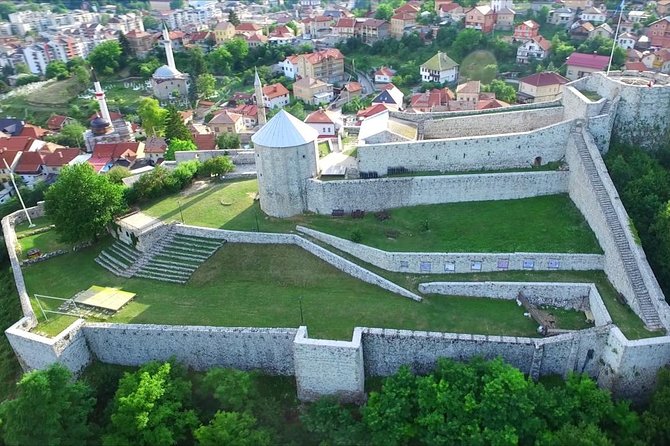
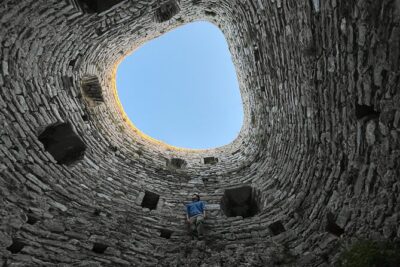
You drive into Travnik first and get a look at the Old Fort in the city. Expect about 40 minutes here, with the main focus on the fortress itself, its defensive position, and the way later eras left visible layers. For me, the value is not just seeing stones, but understanding that Bosnia’s borders and rulers shifted again and again, and the fortifications show it.
Practical tip: this is one of those places where comfortable walking shoes matter. Even if the time is “only” forty minutes, you’ll want to move at your own pace and actually look outward from the walls.
Plava Voda Coffee Break, When the River Runs Next to You
Between the fortress and the next religious landmark, you’ll get a break in Travnik for coffee, about 30 minutes. The stop is at Plava voda, where the river runs right next to and under you.
This is a small stop, but it’s one of the best kinds of pauses on a long day tour: you get a local coffee moment without it turning into a 45-minute tourist trap. If you’re sensitive to timing, use this break to reset, refill water if you want, and decide what you’ll do for lunch later since lunch isn’t included.
Sarena Dzamija, a Multi-Colored Mosque Stop That’s Quick but Specific
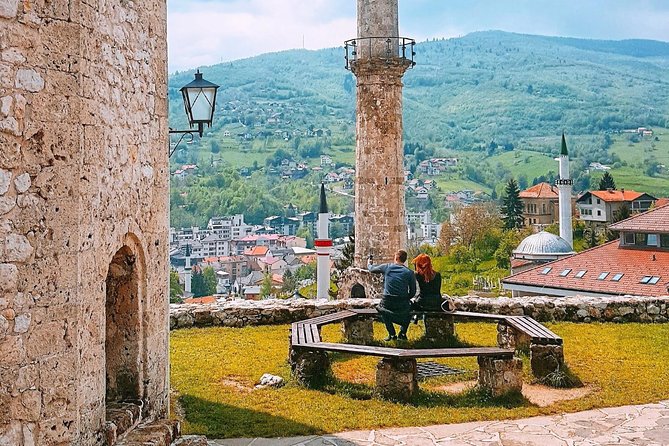
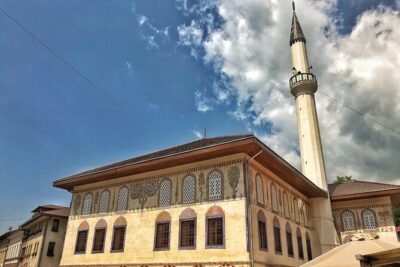
Next up is Sarene Dzamija (also known as the Multi-Coloured Mosque), built in 1757 during the Ottoman era. You only get about 5 minutes here, and tickets are free.
That short time box is exactly why I like this stop for a day tour. You see one clear Ottoman-era marker without the visit stretching into a long museum-style timeline. The key is to pay attention to the details quickly, because you won’t have an hour to stare.
If you care about architecture, this is also a good moment to ask your guide one question like, What makes it multi-colored here, and how does that style relate to Ottoman building elsewhere in the region?
Jajce Fortress, the King City Vantage Point
After Travnik, you head to Jajce for the big medieval feel. The first Jajce stop is the Fortress of Jajce, about 30 minutes. Admission is not included, so you’ll pay on site (listed as €2.50 per person).
Jajce is often called the King city, and the fortress fits that nickname. It’s described as one of the best-preserved fortified capitals of the Bosnian Kingdom, and it sits as a last stronghold before the kingdom dissolved under Ottoman pressure. On a practical level, what you’ll notice first is the view range and the way the fort dominates the town.
A caution I’d give you: fortresses tempt you to linger, but the tour is built on moving from one focus point to the next. If you want more time on the walls, tell your guide early and you can usually adjust within the day’s rhythm.

The Catacombs of Jajce, a Rock-Cut Church That’s Not Really a Catacomb
You’ll also stop at the Catacomb of Jajce for about 5 minutes. The important nuance here is that locals call it a catacomb, but it’s not a true catacomb in the strict sense. The site is a small underground Christian church carved into rock, with late Romanesque style.
This is the kind of stop that pays off when you don’t rush it. Even in five minutes, you can spot the idea of a carved space used for worship, and it makes Jajce feel older than the Ottoman and mosque stops that come later.
If you’re short on patience for underground spaces, keep your expectations realistic. This is brief, and it’s more of a quick historical snapshot than a long crawl.
Crkva Sv. Marije, One Building With Centuries of Swaps
One of the most gripping stops is the church known as Crkva Sv. Marije Jajce. You’ll have about 5 minutes and it’s free to enter.
Here’s what makes it so worth seeing, even if it’s quick: the building changed roles across major eras. In the early 15th century, the older Romanesque church was adapted into a Gothic style when Jajce was promoted to the capital of the Bosnian kingdom. Later, the story ties in Stjepan Tomašević’s marriage in 1459 and the arrival of relics of St. Luke in 1453.
Then the Ottoman era changes everything. In 1528 the church became a mosque, named after Sultan Suleiman I. Fires destroyed the decoration multiple times, with major damage recorded in 1658, and by 1832 only the walls remained. It’s been unused since then.
That’s a lot for one stop, so here’s my advice: don’t try to memorize the full timeline. Instead, look for the obvious physical changes and ask your guide how to connect the dates to what you’re seeing. A good guide turns this from a paragraph into a place you understand.
Esma Sultana Mosque, Bosnia’s Only Mosque Named After a Woman
Next is Esma Sultana Mosque (also called Čaršija Mosque). You get about 10 minutes here and entry is free.
This mosque is located on the main street that connects the Travnička and Banja Luka gates in Jajce. The standout fact is that it’s the only mosque in Bosnia and Herzegovina named after a woman. It’s also listed as a national monument.
For a practical day tour, this is a smart stop because it gives you a second Ottoman-era view in a different way than the earlier church that became a mosque. You start comparing, and that’s where history sticks.
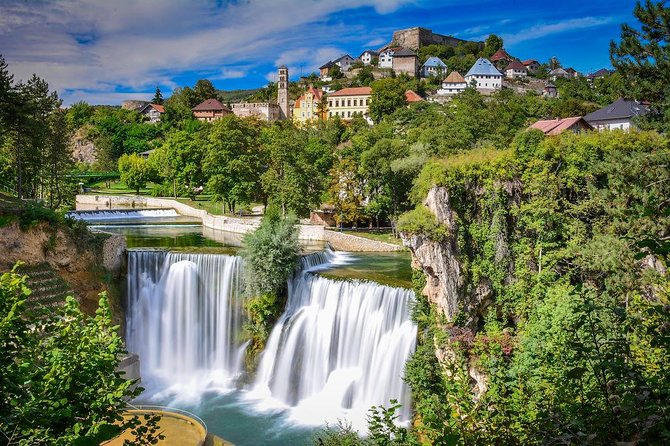
Pliva Waterfall, 17 Meters of Town-Center Power
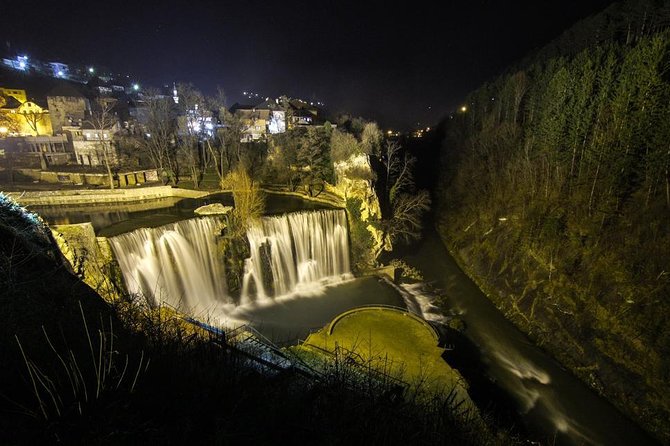
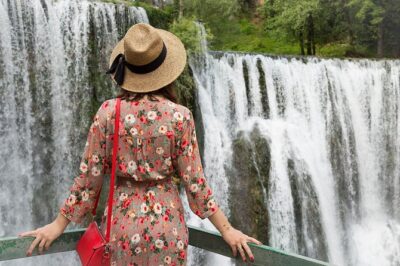
No day trip to Jajce feels complete without the Pliva Waterfall. You’ll have around 30 minutes, and it’s free.
The waterfall is about 17 meters high and sits in the center of town, so you don’t need to travel for it. It’s also noted as one of twelve most beautiful waterfalls in the world, and it has a rare feature: it’s the only waterfall in the world described as forming an estuary where the Pliva River joins the Vrbas River.
What this means for you on the day is simple. You get classic waterfall drama, plus you can look down from viewpoints and also imagine the water continuing as it meets the other river. If you like photos, you’ll find multiple angles without needing to hike far.
Minor heads-up: if you care about the view being perfectly straight on, choose where you stand carefully. Some viewpoints can give an angled view depending on the spot you reach.
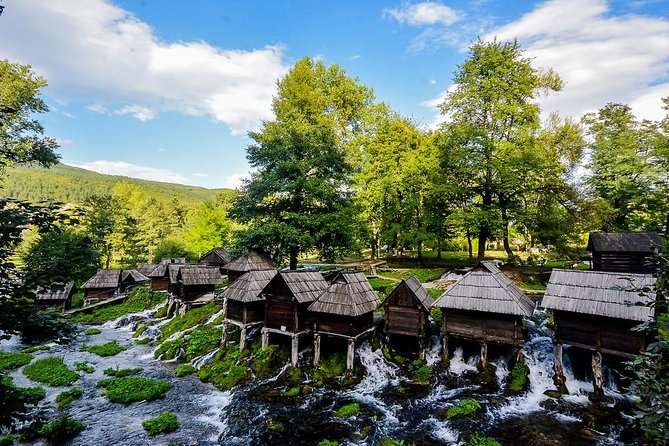
Mlincici Watermills, 20 Little Huts From the Austro-Hungarian Era
After the waterfall, the itinerary moves toward the Pliva lakes area and the Mlincici watermills. This is a highlight for a reason, with about 30 minutes here.
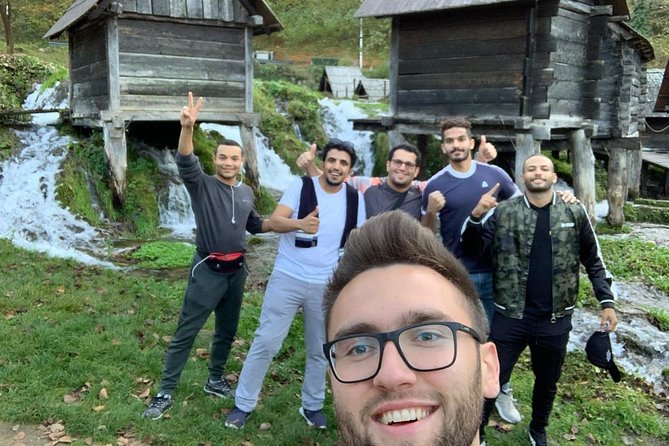
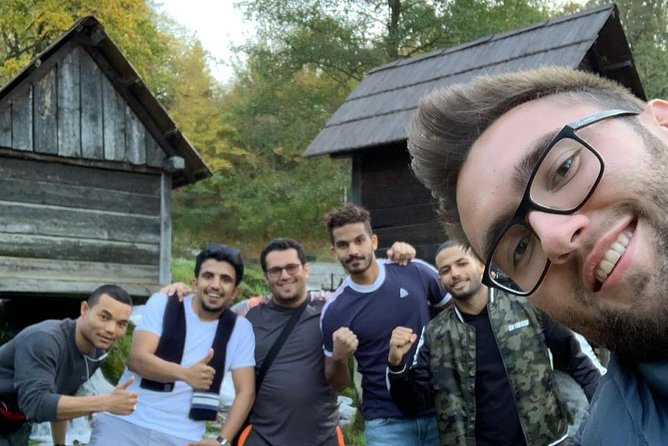
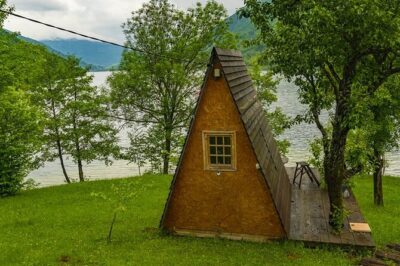
Mlincici is described as a collection of around 20 little huts that once served as watermills for local farmers. Many of the huts date to the Austro-Hungarian period, roughly 1867 to 1918. Walking around them feels like stepping into a small storybook village, because the setting is right by the water and you’re not stuck in a fenced-off viewing platform.
This is where the day shifts from “look at history” to “feel the place.” The tour also builds in time right here for lunch, since you’ll be eating around the lake area.
Practical advice: even if the huts themselves aren’t long visits, give yourself time to watch the water and slow down. It’s the best antidote to a long driving day.
Pliva Lakes Finish, Crystal Water and Calm Views
Then you get one more hit of nature at the Pliva Lakes. The stop is short, about 10 minutes, and entry is free.
The key detail is the water clarity, described as crystal clear. The lakes create those fairytale-like scenes that match Jajce’s symbols, and the setting can give your eyes a rest after fortresses and churches.
If you’re trying to make the day feel balanced, this is the perfect place to end your active attention. After this, you’re getting ready to return to Sarajevo.
What You’re Actually Paying For, and Why It’s Reasonable
The tour price is listed at $95.58 per person, for a day running about 8 to 10 hours. What makes the value make sense is what’s included, versus what you pay at the stops.
Included:
- private transportation
- WiFi on board
- bottled water
Not included:
- lunch
- admission for Fortress of Travnik (€2.00 per person) and Fortress of Jajce (€2.50 per person)
Everything else listed in the sequence is free at the stops, including the waterfall, mosques, lakes, and the church/monuments. In other words, most of your major sightseeing time is covered, and the few paid sites are inexpensive.
So the real “cost” to budget is lunch plus a small amount for fortress entries. If you’ve got only one day from Sarajevo and you want transport plus a guided thread through multiple eras, this is the kind of deal that can beat DIY, especially if you don’t want to fuss with intercity schedules and ticket timing.
Timing and Pace, Expect the Long Road Legs
This is a full day. You start at 8:00 am and you’ll be moving between towns and sites all day. One of the practical realities of touring central Bosnia from Sarajevo is that road time adds up.
You’ll want to dress for a long day in mixed conditions. Bring a light layer, because mornings can feel cooler, and you’ll be outside at forts and viewpoints for short windows. Also, plan around the fact that you won’t have a guaranteed long lunch slot, since lunch is the one major item not included.
I’d also bring something small to snack on, even if you’re planning to eat at the lake. It keeps you comfortable if timing shifts or if you find yourself running later than expected.
Guides Bring the Day to Life, From Senad to Emir
The biggest pattern in the guide experience is that you’re not stuck with a voice reading off a card. Names that come up again and again include Senad, Kenan, Emir, Mufid, Ken, and Ben. The common theme is clear explanations, friendly interaction, and a sense of humor that keeps the day from feeling like school.
What you should do to get the most from it is simple: ask questions while you’re in the car. You’re passing through places tied to the Bosnian Kingdom, Ottoman rule, and later changes, and your guide can connect the dots as you go. This matters most at stops like Crkva Sv. Marije, where the building’s timeline is long and easy to lose if you only read a sign.
A good guide also helps you pace yourself. Fortresses and viewpoints reward patience, but the tour still has to run on time. If you speak up politely, you can usually find the right balance of photos and real looking.
Who This Tour Is For, and Who Might Skip
This tour fits you if you want:
- a single day that covers Travnik plus Jajce plus Pliva watermills
- a mix of medieval fortifications, Ottoman-era architecture, and nature sights
- a small-group pace where you can talk, not just follow
It might be less ideal if you’re the type who hates long days and prefers a slow, flexible schedule with lots of downtime. This route is built to keep moving, so if you’re seeking a quiet afternoon, you’ll have to book a different style of outing.
Also, if you’re very focused on one niche topic, like only Ottoman architecture or only waterfalls, you might feel the itinerary is too broad. The upside is that the broader mix gives you a more complete sense of how Bosnia’s layers show up in real places.
Should You Book This Jajce, Travnik and Pliva Watermills Day Tour?
If you’re in Sarajevo and you want one day that delivers both famous scenery and meaningful places, I’d book it. The Pliva watermills and Pliva waterfall are the kind of sights that land in your memory even if you forget every date and name. Add in Travnik’s fort views and Jajce’s layered religious landmarks, and you get a day that feels full without being chaotic.
Book it if:
- you value a small-group feel
- you want transport handled for you
- you’re okay with a long day and paying small fortress admission fees
Skip it or choose another plan if:
- you can’t handle 8 to 10 hours with lots of short stops
- you need lunch included and prefer not to budget extra meals
FAQ
How long is the Jajce, Travnik and Pliva Watermills day tour?
It runs about 8 to 10 hours.
What time does the tour start?
The start time is 8:00 am.
Do they pick me up from my hotel in Sarajevo?
Yes, pickup is offered from any hotel in Sarajevo.
What language is the tour offered in?
It is offered in English.
What group size is this tour?
It has a maximum of eight travelers.
Is lunch included in the price?
No, lunch is not included.
Are tickets included for all stops?
Most stops are free, but the Fortress of Travnik and the Fortress of Jajce have admission fees not included.
What are the admission fees I should expect?
Fortress of Travnik is €2.00 per person, and Fortress of Jajce is €2.50 per person.
Is WiFi and water provided?
Yes, bottled water and WiFi on board are included.
Do I need a paper ticket?
No, the tour uses a mobile ticket.
More Tours Across Bosnia
The Full Bosnia Review Shelf
Central Bosnia, Beyond Travnik and Jajce
Recently added to the Bosnia and Herzegovina shelf
- Walking Tour in Sarajevo★ 5.0 · 3 reviews
- Travnik, Jajce, Pliva Lakes & Mills –Medieval & Ottoman Bosnia Full Day Tour★ 5.0 · 3 reviews
- Tour of Herzegovina – From Sarajevo★ 5.0 · 3 reviews
- The Siege of Sarajevo Tour★ 5.0 · 3 reviews
- Srebrenica Genocide Tour from Sarajevo★ 4.5 · 3 reviews
- Sarajevo to Zagreb: One-Way Tour via Jajce, Travnik, Pliva Lake and Watermills★ 5.0 · 3 reviews
Travnik, Jajce & Central Bosnia, compared.
 ★ 5.0From Sarajevo: Travnik, Jajce, Pliva Lakes & Watermills TourFrom $84213 reviews
 ★ 5.0Jajce, Travnik, Pliva lake and Watermills TourFrom $84104 reviews
 ★ 5.0Travnik, Jajce & Pliva Lakes Day Tour From Sarajevo (fees Incl.)From $9650 reviews
 ★ 5.0Sarajevo: Day Trip to Bosnian Castles Vranduk, Tešanj & SrebrenikFrom $14921 reviews
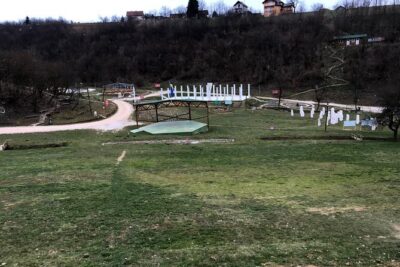 ★ 5.0From Sarajevo: Visoko And Bosnian Pyramid MisteryFrom $5818 reviews
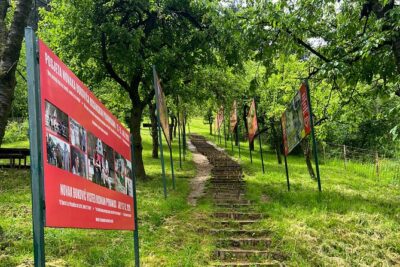 ★ 5.0BOSNIAN PYRAMIDS TOUR (nature, history & archeology)From $7017 reviews
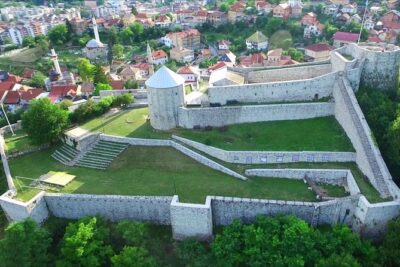 ★ 5.0CENTRAL BOSNIA | A medieval tour (Jajce + Travnik + Pliva lakes)From $9011 reviews
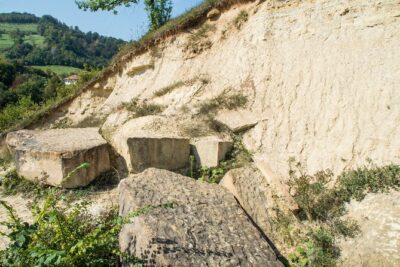 ★ 5.0Mysterious Visoko Pyramids Driving and Walking TourFrom $607 reviews
Browse the lists this tour appears in