
REVIEW · TRAVNIK, JAJCE & CENTRAL BOSNIA
CENTRAL BOSNIA | A medieval tour (Jajce + Travnik + Pliva lakes)
Bosnia’s Middle Ages feel close, not distant. This Travnik and Jajce medieval tour strings together fortified towns, Ottoman-era highlights, and real time for nature at Pliva Lakes, with lunch along the way. I like how the day balances stone history with breaks outdoors, and I especially enjoy the moment-to-moment variety, from old-town lanes to the Pliva waterfall area.
One thing to plan for: entry tickets are not included at the Old Fort (Tvrdava Stari grad) and the Fortress of Jajce. Some other stops are free, but those two can add cost, so check prices when you book and expect a couple of pay-on-site moments.
In This Review
- Key things I’d circle before you go
- A medieval day with real pacing, not a checklist
- Travnik’s old town lanes: Stari Grad and the żupa Lašva story
- Sarena Dzamija: the Multi-Colored Mosque, built in 1757
- Tvrdava Stari grad Old Fort: medieval walls, missing answers
- Jajce Fortress: 470 meters up, and the royal portal
- Pliva waterfall: 17 meters, a rare kind of meeting of rivers
- Pliva Lakes and Mlincici watermills: time to breathe, eat, and wander
- Guide and group size: why the day feels smooth
- Price and value: how $90.31 fits this route
- Who this tour suits best, and who should skip it
- Should you book Central Bosnia: Jajce + Travnik + Pliva Lakes?
- FAQ
- Where does the tour start and end?
- What time does the tour begin?
- How long is the tour?
- What is included in the price?
- Are entrance fees included?
- What language is the tour offered in?
- How big is the group?
- Is the tour dependent on weather?
- What is the cancellation window?
Key things I’d circle before you go
- Small group size: max of 5 people, which keeps the pace human and makes questions easy.
- A strong medieval through-line: you move between Travnik’s fortified-town story and Jajce’s castle complex.
- Sarene Dzamija details: bright colors, flower motifs, and a very unusual layout with a first-floor prayer room.
- Pliva Waterfall and lakes: a 17-meter waterfall plus time at the Great and Small Pliva Lakes for outdoors.
- Time for lunch: you’ll sample local cuisine as part of the day, not just grab-and-go sightseeing.
More of central Bosnia: Travnik, Jajce, Visoko
- From Sarajevo: Travnik, Jajce, Pliva Lakes & Watermills Tour
★ 5.0 · 213 reviews - Jajce, Travnik, Pliva lake and Watermills Tour
★ 5.0 · 104 reviews - Travnik, Jajce & Pliva Lakes Day Tour From Sarajevo (fees Incl.)
★ 5.0 · 50 reviews - Sarajevo: Day Trip to Bosnian Castles Vranduk, Tešanj & Srebrenik
★ 5.0 · 21 reviews
A medieval day with real pacing, not a checklist
This is a 10-hour day tour that runs from 8:00 am and returns you to the same Sarajevo meeting point at Đulagina 2. The format is practical: the guide handles transport and timing, you get a set route with clear stops, and you don’t spend the whole day stuck in a single town. It’s also offered in English, and you get a mobile ticket.
The value here is not just the places. It’s the way the day flows. You start in Travnik’s old-town orbit, continue to Jajce’s fortress world, and then switch gears to the Pliva area where you can actually breathe. That mix helps history feel less like memorizing dates and more like seeing how people lived, prayed, defended, traded, and relaxed.
I also like that the tour includes bottled water. In a long day, that small inclusion saves you from making awkward mid-trip purchases, especially when you’re moving between towns.
Travnik’s old town lanes: Stari Grad and the żupa Lašva story
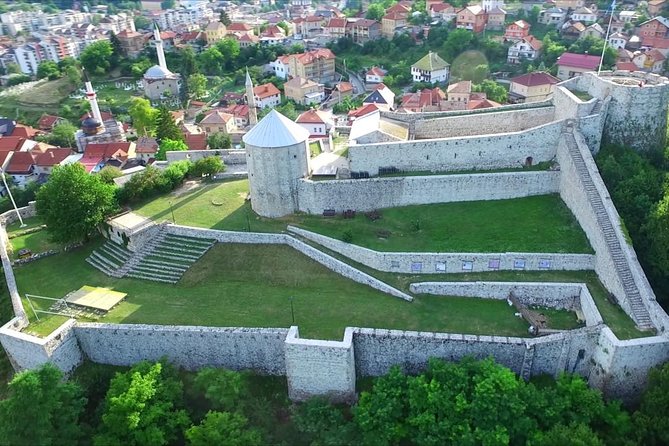
Your first stop is the old town sector of Travnik, at Stari Grad. This isn’t just a scenic walk, it’s tied to the medieval Bosnian Kingdom. The Travnik area was known as the župa Lašva province, and the region shows up in records connected to the medieval kingdom during the 1200s, with an early mention connected to Bela IV of Hungary in 1244.
Travnik’s identity as a fortified town matters here. The fortress called Kaštel is what becomes today’s old town sector, so you’re literally walking within the shape of medieval defense. You also get the sense that towns in Bosnia weren’t isolated. In this area, Ottoman campaigns and local fortifications overlap in the historical timeline, because Travnik is first mentioned during Ottoman conquest of nearby Jajce.
Timing is short at this stop, about 30 minutes. That’s a benefit if you want momentum, but it also means you’ll want to be ready to look quickly and ask questions if something catches your eye.
Sarena Dzamija: the Multi-Colored Mosque, built in 1757
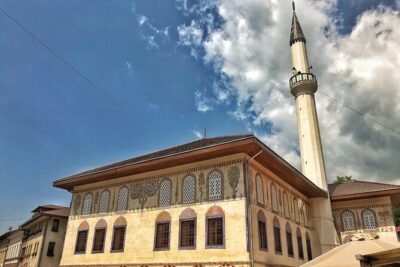
Next comes a stop that feels instantly memorable: Sareni Džamija, the Multi-Colored Mosque, built in 1757. From the outside, it’s bright, detailed, and distinct, with unusual flower motifs painted on the exterior.
What makes this mosque especially interesting is how its layout connects to daily life. In this mosque, the prayer room is positioned on the first floor, while the ground floor is used to conduct business. That is not the typical arrangement most people expect when they think of mosques, so even a brief visit gives you a fresh lens on how buildings served more than one purpose.
You’ll also hear the local belief tied to the mosque, that it stores hairs of the prophet. Even if you treat that as faith and folklore rather than proof, it helps explain why certain places become emotionally important to communities.
This stop is around 15 minutes, which is perfect for soaking in the exterior details and understanding the key story beats without turning it into a long detour.
Tvrdava Stari grad Old Fort: medieval walls, missing answers
After that, you head toward Tvrdava Stari grad, the Old Fort. This is one of the best preserved medieval fortified buildings in Bosnia, but the story comes with uncertainty. Sources don’t clearly record the year, duration, or even the builder. Historians generally agree it was built either in the second half of the 14th century or the first half of the 15th century.
Assumptions point in a couple directions. The original builder is often linked to King Tvrtko II Kotromanić, though King Stjepan Dabiša is also mentioned as a possible builder. The result for you is a sense of layered time, where the architecture carries multiple historical fingerprints.
Here’s your practical heads-up: this stop is listed as admission ticket not included, so you should budget extra if you want to go inside or fully experience the fort viewing areas, depending on how the site is organized that day.
The time is short again, about 15 minutes. If you’re the type who likes to read every plaque, you might feel the schedule is tight. If you enjoy big-picture interpretation with a quick walk and views, it fits nicely.

Jajce Fortress: 470 meters up, and the royal portal
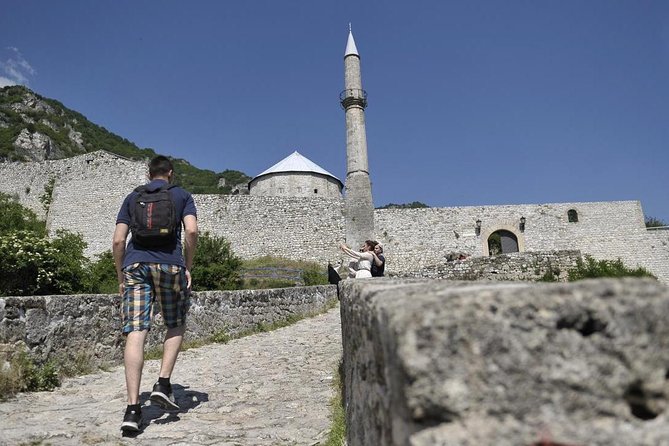
Jajce is where the day turns dramatic. The Fortress of Jajce sits above town at about 470 meters, inside a medieval city complex dating back to the 13th century. The fortress itself was constructed over several centuries, and later periods left visible traces on the architectural remains of a mid-15th century castle.
This is a stop that feels like you’re stepping into the defense logic of the Middle Ages. Fortifications weren’t only about war. They also marked power, administration, and who controlled the views. The complex encircles those mid-15th century remnants, so you’re not just looking at a single building, you’re looking at a whole defensive ring.
One highlight to watch for is the portal with the royal coat of arms on the south-western side of the fortress. That portal dates back to the time of Tvrtko II and King Stjepan Tomasevic, tied to the political shift when the royal court moved to Jajce in 1421.
Like the Old Fort, the Fortress of Jajce is admission ticket not included. It’s also about 30 minutes, which is enough to get the main story and decent views, but not enough for a slow, photo-heavy exploration. If you love fortresses, treat this as a highlight stop, not your only time in the area.
Pliva waterfall: 17 meters, a rare kind of meeting of rivers
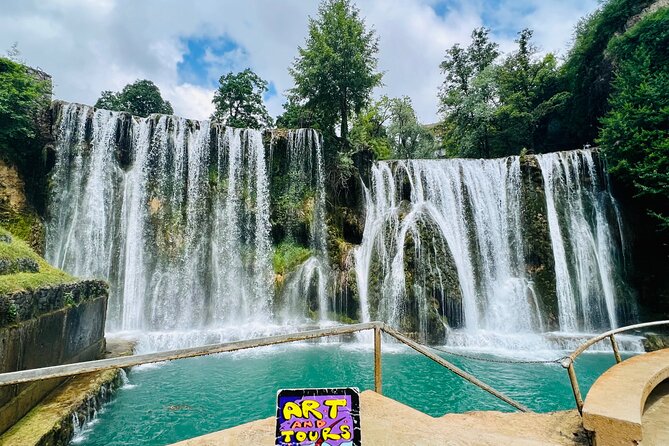
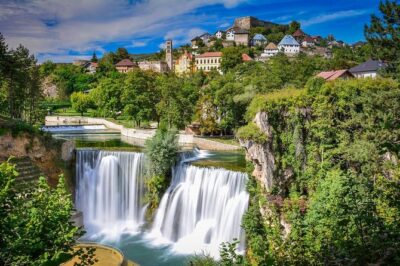
Then you get the payoff many people came for: Pliva Waterfall. It’s about 17 meters high and located in the center of Jajce. The natural monument has been described as one of twelve most beautiful waterfalls in the world, and it has a specific claim to fame that you can’t really miss once you’re there: it’s the only waterfall in the world said to create an estuary where the Pliva River meets the Vrbas River.
Whether you stand near it or look down from above, the waterfall makes a strong visual anchor for the day. It also changes the tempo of your experience. After castles and stone defenses, the sound of flowing water and the open space around it make the whole itinerary feel less exhausting.
This stop is about 30 minutes and has no entry ticket listed. That means you can plan around your schedule without thinking about extra costs here.
Pliva Lakes and Mlincici watermills: time to breathe, eat, and wander
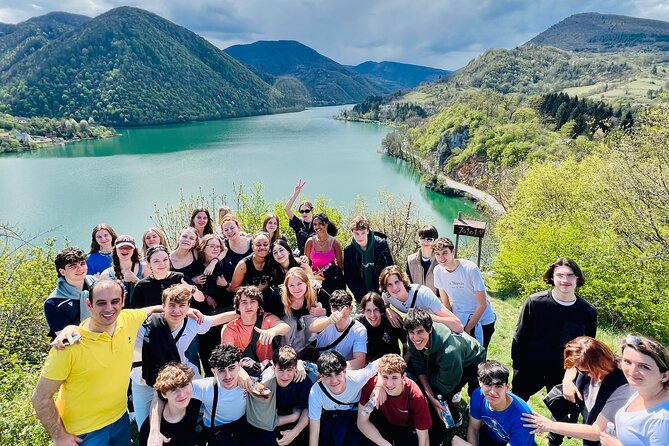
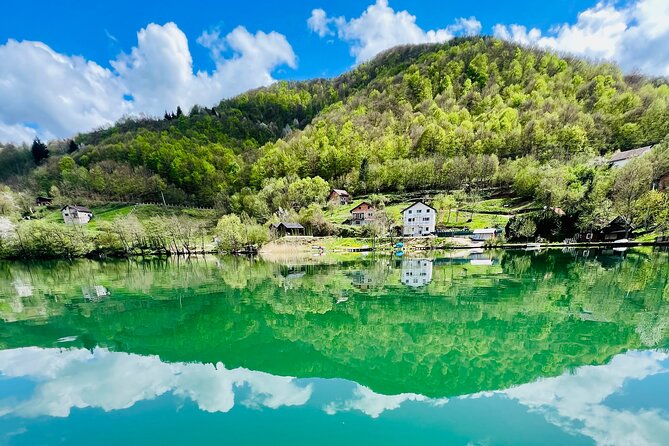
After the waterfall, the tour gives you outdoor time at Pliva Lakes, the Great and Small Pliva Lakes a few kilometers from Jajce. This is where you shift from “look at history” to “do something with the scenery.” The lakes offer recreational options like fishing, kayaking, canoeing, swimming, volleyball, biking, and walking. Even if you don’t do activities, the setting makes a difference. You get breaks between towns that feel like a real pause instead of just another photo stop.
The tour also includes lunch, tied to the highlight of sampling local cuisine. The lakes area is a logical place for that break because it helps you avoid the classic problem of touring where lunch feels rushed and awkward.
You’ll then continue to Mlincici, the shingled watermills along the Pliva River. These watermills no longer serve their original milling purpose, but they still pull you in. They’re visually charming, with a kind of fairytale profile that makes you want to slow down and look closely at the structures.
The stop is about 1 hour and is listed with no entry ticket. It also helps that the day keeps moving. You’re not stuck under a strict “just walk, never linger” rule, so you can take a few extra minutes if you find a nice stretch by the river.
Guide and group size: why the day feels smooth
The tour runs with a maximum of 5 travelers, so you’re not competing with a busload of people for answers or viewpoints. That small group size matters on a day like this because the stops vary in time and mood. A mosque and a waterfall do not need the same energy as a fortress wall.
In the reviews, the guide name Muki shows up as a standout. The praise is consistent: Muki is described as very knowledgeable about the area and an excellent driver. Even if you’re not chasing every historical detail, good driving and clear explanations make the whole route easier to enjoy.
This provider also gives you a clear structure, including bottled water, and uses a mobile ticket format. That means you don’t spend your morning hunting for paperwork while already running on a tight timeline.
Price and value: how $90.31 fits this route
At about $90.31 per person for a roughly 10-hour tour, the price sits in the “worth it if you want one smooth day” category. You’re paying for transport between Sarajevo, Travnik, and Jajce, plus guided interpretation across multiple sites. You also get bottled water and lunch sampling, which helps justify the cost compared to doing the stops solo.
The part to factor in is that not all entries are included. Old Fort (Tvrdava Stari grad) and the Fortress of Jajce list admission tickets as not included, while other stops like Sarena Dzamija, Pliva waterfall, Pliva Lakes, and Mlincici are listed as free. So the total cost can be slightly more than the sticker price once you settle what you want at the two fortress sites.
If you’re the kind of traveler who hates planning, this tour can be a strong deal. If you prefer to wander without any schedule and you love finding transport on your own, then you might compare it against a self-planned day. But for a first-time route that balances history and nature, this is a practical way to get a lot done without feeling like a sprint.
Who this tour suits best, and who should skip it
This works best if you want:
- A focused medieval Bosnia day with stops in both Travnik and Jajce
- A mix of architecture, faith sites, and outdoor time at Pliva
- English guidance and a small group pace
- Lunch sampling without having to figure it out yourself
It may not be ideal if:
- You’re allergic to paying extra for entries at the Old Fort and Fortress of Jajce
- You need lots of unstructured time, because several stops are around 15 to 30 minutes each
The tour also states it requires good weather, so if conditions are rough on the day you’re booked, the operator will adjust by offering a different date or a full refund.
Should you book Central Bosnia: Jajce + Travnik + Pliva Lakes?
I’d book it if you want one organized day that covers the main medieval beats without turning into a stress-fest. The itinerary has a nice logic: fortified towns in the morning, Jajce’s fortress and royal story in the middle, then water and green space at Pliva.
I’d think twice only if you strongly prefer fully included tickets, because two key sites are not covered. Otherwise, the small group setup, the mix of history plus nature, and the repeated praise for the guide and driving make it a solid choice for a first visit to this part of Bosnia.
FAQ
Where does the tour start and end?
The tour meets at Đulagina 2, Sarajevo 71000, Bosnia and Herzegovina. It ends back at the same meeting point.
What time does the tour begin?
The start time is 8:00 am.
How long is the tour?
The duration is about 10 hours.
What is included in the price?
Bottled water is included. Lunch sampling is part of the experience highlights.
Are entrance fees included?
Entry tickets are not included. Some stops are listed as admission free, but Tvrdava Stari grad Old Fort and the Fortress of Jajce are listed as not included.
What language is the tour offered in?
The tour is offered in English.
How big is the group?
The tour has a maximum of 5 travelers.
Is the tour dependent on weather?
Yes. The experience requires good weather.
What is the cancellation window?
Free cancellation is available up to 24 hours in advance for a full refund. If you cancel less than 24 hours before the start time, you won’t get a refund.
More Tours Across Bosnia
The Full Bosnia Review Shelf
Central Bosnia, Beyond Travnik and Jajce
Recently added to the Bosnia and Herzegovina shelf
- Walking Tour in Sarajevo★ 5.0 · 3 reviews
- Travnik, Jajce, Pliva Lakes & Mills –Medieval & Ottoman Bosnia Full Day Tour★ 5.0 · 3 reviews
- Tour of Herzegovina – From Sarajevo★ 5.0 · 3 reviews
- The Siege of Sarajevo Tour★ 5.0 · 3 reviews
- Srebrenica Genocide Tour from Sarajevo★ 4.5 · 3 reviews
- Sarajevo to Zagreb: One-Way Tour via Jajce, Travnik, Pliva Lake and Watermills★ 5.0 · 3 reviews
Travnik, Jajce & Central Bosnia, compared.
 ★ 5.0Jajce, Travnik and Pliva watermills – Day Tour from SarajevoFrom $95295 reviews
 ★ 5.0From Sarajevo: Travnik, Jajce, Pliva Lakes & Watermills TourFrom $84213 reviews
 ★ 5.0Jajce, Travnik, Pliva lake and Watermills TourFrom $84104 reviews
 ★ 5.0Travnik, Jajce & Pliva Lakes Day Tour From Sarajevo (fees Incl.)From $9650 reviews
 ★ 5.0Sarajevo: Day Trip to Bosnian Castles Vranduk, Tešanj & SrebrenikFrom $14921 reviews
 ★ 5.0From Sarajevo: Visoko And Bosnian Pyramid MisteryFrom $5818 reviews
 ★ 5.0BOSNIAN PYRAMIDS TOUR (nature, history & archeology)From $7017 reviews
 ★ 5.0Mysterious Visoko Pyramids Driving and Walking TourFrom $607 reviews
Browse the lists this tour appears in