
REVIEW · TOURS
Sarajevo: Islamic Traditions and Daily Life Tour
Sarajevo’s Islam lesson starts with a park. In about two hours, you connect sacred places to everyday Ottoman-era life, with stops built around Ottoman daily life and the lunar clock. I love how the walk turns history into a story you can follow street by street, and I also like that guides make time for questions and even point you toward places to eat. The main tradeoff: expect some uphill walking, so wear comfortable shoes.
You’ll start in central Sarajevo at 10:00 am and move mostly on foot, with many quick stops that have no admission cost, plus a couple interiors that do cost extra. The group stays small, with a maximum of 25 people, so it doesn’t feel like you’re being processed like a museum ticket.
This is an English-language tour with a certified guide and a city map included. And it’s built for real city life, not just photo ops, so you’re constantly switching between spiritual sites, classrooms, and places where people shopped, ate, traded, and rested.
In This Review
- Key things to know before you go
- A 2-hour walking route that makes Islamic Sarajevo feel understandable
- Mejdan Park, where Sarajevo’s start becomes visible
- Jedileri Sanctuary (Seven Brothers): spiritual meaning you can hear, not just see
- Emperor’s Mosque: the oldest mosque in Sarajevo and a name-story connection
- Gazi Husrev-beg Mosque, the heart of the community, and the entrance fee to budget
- Clock Tower with a lunar-time twist: seeing how time can be religious
- Gazi Husrev Begova Medresa: a 1537 Islamic high school in action
- Svrzo’s House Museum and Morica Han: Ottoman daily life, not just architecture
- The Faculty of Islamic Studies: Neo-Moorish inspiration meeting modern form
- Baščaršija, Sebilj Fountain, and Bravadžiluk: the bazaar side of faith
- Alifakovac Cemetery, an optional pause for reflection
- Price and value for a $30.04, 2-hour Islamic Sarajevo walk
- Who this tour is best for, and what to bring
- Final verdict: should you book this Sarajevo Islamic traditions tour?
- FAQ
- How long is the Sarajevo Islamic Traditions and Daily Life Tour?
- What language is the tour offered in?
- How much does it cost and what is included in the price?
- Are there entrance fees for the stops?
- Where is the meeting point and when does it start?
- What is the group size limit?
- Can I cancel for free, and what about bad weather?
Key things to know before you go
- A tight 2-hour loop: you cover a lot of Sarajevo in a short walk, with lots of brief stops.
- Jedileri Sanctuary connects faith to memory: the Seven Brothers site shows how spiritual stories stay part of everyday Muslim life in Bosnia.
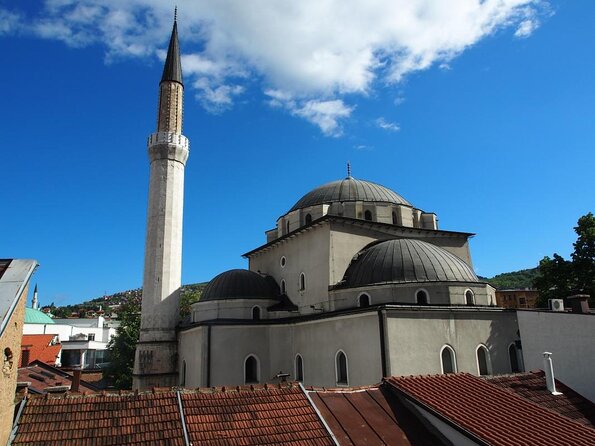
- Mosques anchor the route: you visit Sarajevo’s oldest mosque and the central mosque of Sarajevo’s Islamic community.
- A clock tied to the lunar calendar: you’ll see Sarajevo’s rare lunar clock at the Clock Tower.
- Two paid interiors are optional but worth planning for: Svrzo’s House Museum and the Gazi Husrev Bey mosque and museum have extra entrance fees.
- Small group can feel very personal: guides like Suad and Fuad are known for being friendly, welcoming, and happy to answer questions, with extra time when possible.
Still weighing it up? Here are other Bosnia and Herzegovina tours we have written up.
- Sarajevo: Mostar, Konjic, Blagaj Tekke, Pocitelj & Waterfall
★ 4.9 · 1,335 reviews - Fall of Yugoslavia, Sarajevo War Tour with Tunnel of Hope Museum and Frontlines
★ 5.0 · 1,314 reviews - Sarajevo: Mostar, Konjic, Sufi House, Pocitelj & Kravice Falls
★ 5.0 · 1,179 reviews - ROSES OF SARAJEVO (Official WAR + CITY tour)- Story of a Survivor
★ 5.0 · 770 reviews
A 2-hour walking route that makes Islamic Sarajevo feel understandable
This tour is designed like a guided walk through cause and effect. First you see the places where people prayed and learned. Then you see the places where people lived their faith in daily routines, through homes, inns, and the bazaar. The best part is that nothing is stuck in theory. You’re always looking at something physical, and your guide ties it back to how Sarajevo’s Muslim community formed and changed over time.
It’s also practical. Most stops are short, and many are outdoors. That keeps the momentum up, especially if you’re short on time in Sarajevo. Still, the walk is real. One review points out there’s a good amount of uphill, so sneakers or supportive walking shoes are not a luxury.
Language is English, and you also get a city map in the bundle. That matters because Sarajevo’s streets can feel like a maze at first. Even if the guide is holding the story for you, the map helps you keep your bearings once the tour ends.
Finally, the group size is limited. With a maximum of 25 people, you’re more likely to actually ask questions instead of shouting to be heard.
Mejdan Park, where Sarajevo’s start becomes visible
The route begins at Mejdan Park, at a historic site where Sarajevo was officially established. This is one of those places where the scale is not dramatic, but the meaning is. You’re looking at a spot tied to the city’s official founding, and you also hear how people used it for social gathering. In other words, you’re not starting with a mosque. You’re starting with public life.
This matters for understanding Sarajevo. If you only focus on religious buildings, you miss the point that faith and community life were braided together long before modern borders and institutions. A founding area with social momentum sets the tone: this city grew through people meeting, talking, trading, and building relationships.
The stop is brief, but it works like a primer. Your guide frames what comes next, so you’re ready when the tour moves into specifically Islamic sites a few minutes later. Admission here is free, so you can focus on questions instead of checking ticket windows.
Jedileri Sanctuary (Seven Brothers): spiritual meaning you can hear, not just see
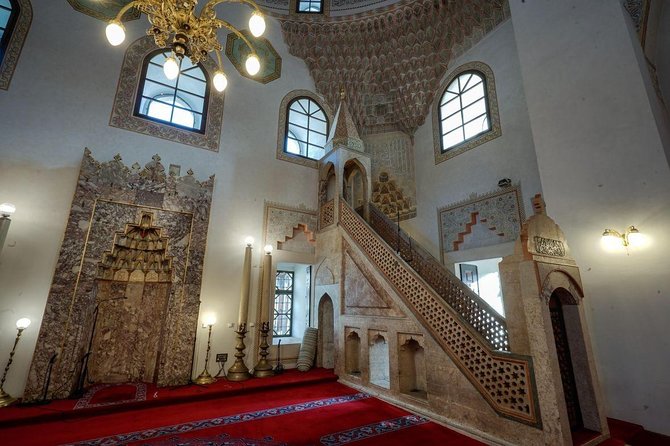
Next comes Jedileri, also known as the Turbe sedam braće, the Sanctuary of Seven Brothers. This is a sacred Islamic site tied to spiritual significance within Muslim life in Bosnia. It’s one of the stops where the guide’s storytelling matters most, because the site’s meaning isn’t only architectural. It’s about memory, devotion, and the way stories are carried across generations.
You get a short time here, but it’s the kind of stop that tends to stick. People come for reflection as much as for sightseeing. If you like learning about how religious tradition functions in daily belief, this is a strong moment on the walk.
The admission cost for this stop is listed as free, which is nice. It keeps you from feeling like every meaningful site is behind a gate. It also means you can treat this as a pause, not a transaction.
Emperor’s Mosque: the oldest mosque in Sarajevo and a name-story connection
Then you’ll visit the Emperor’s Mosque, described as the oldest mosque in Sarajevo. It’s a quick stop, but it’s a useful one because it anchors the city’s Islamic heritage in something very old. Your guide also connects the mosque to how Sarajevo’s Islamic past shaped the city’s name.
That kind of explanation is exactly what you want on this tour. A title like oldest mosque is a fact. The name connection is the context. It turns a building into a clue about how Sarajevo’s identity formed. And it helps you see why this walking route keeps moving between religious sites and everyday spaces.
Admission is free here too, so the cost is not the point. The value is in the explanation and the way it sets up the central mosque you’ll see next.
Gazi Husrev-beg Mosque, the heart of the community, and the entrance fee to budget
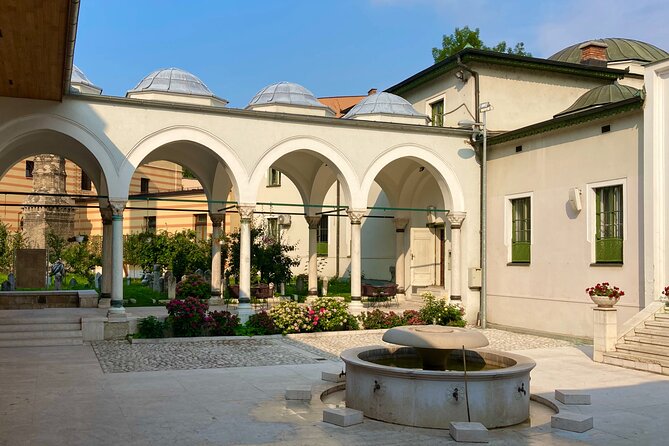
The centerpiece stop is the Gazi Husrev-beg Mosque, described as the spiritual and cultural heart of Sarajevo. This is the iconic central mosque on the route, and the idea is simple: if you want to understand Sarajevo’s Islamic life, you need to stand where the community’s spiritual center is presented.
The itinerary also flags that admission to the mosque and museum is not included. That means you should plan a little extra budget if you want to go beyond the exterior and spend time inside the museum context.
If you’re price-sensitive, here’s how I’d think about it. Your ticket covers the certified guide and many free stops. The paid entry is concentrated into a couple key interiors. That’s often a good structure: you’re not paying repeatedly just to see the outside of buildings. You’re paying to go deeper when it counts.
If you’re hoping for a moment that feels like Sarajevo at its most “here and now,” this is where it happens. It’s not only about architecture. It’s about understanding the role of a central mosque in daily community rhythms.
Clock Tower with a lunar-time twist: seeing how time can be religious
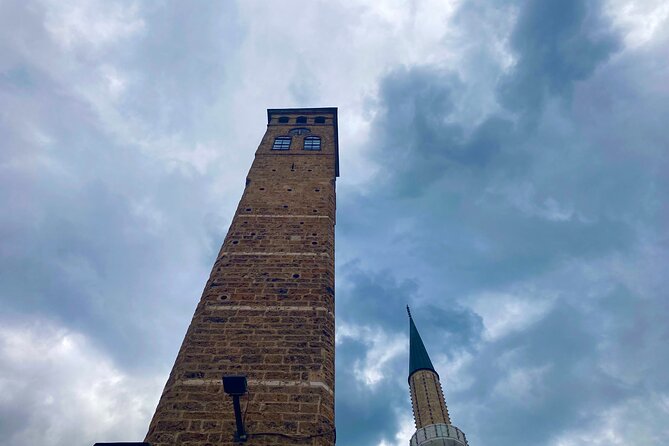
After the earlier mosque stop, the tour continues to the Clock Tower. This is where Sarajevo shows a different kind of tradition: timekeeping tied to the Islamic lunar calendar. The itinerary notes this is a rare lunar clock, and that detail is worth paying attention to because it changes how you think about everyday routines.
It’s easy to treat clocks as neutral tools. But here, the story is that measurement of time can reflect belief systems and seasonal rhythm. When your guide explains the lunar angle, it stops being a quirky trivia fact and starts to sound like a real part of how people organize life around religious calendars.
This is also a good pause point for photos and street watching. You’re moving through a city where tradition and planning overlap. A lunar clock in the middle of town is a visual reminder that Sarajevo has never been a one-note city.
Gazi Husrev Begova Medresa: a 1537 Islamic high school in action
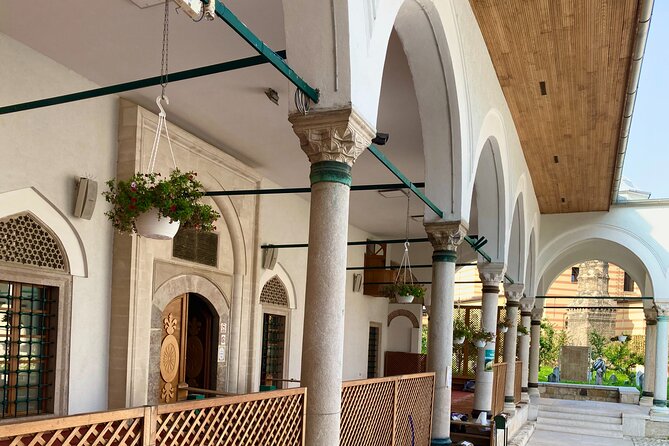
Next is Gazi Husrev Begova Medresa, Sarajevo’s first Islamic high school, with a 1537 legacy tied to one of the city’s greatest benefactors. The word school sounds straightforward, but the impact of this stop is in what it signals. Education is presented here as a cornerstone of community life, not a side activity.
Your guide frames the medresa as part of Sarajevo’s Islamic tradition in daily terms, meaning knowledge transfer, religious study, and the shaping of community leadership. Even if you only have a few minutes inside, the explanation makes it feel like a living institution, not just an old building.
It’s also a good stop for anyone who thinks Islam in Europe is only about mosques. Here you get the “how” of community continuity: training, learning, and institutions that keep knowledge flowing.
Admission is listed as not included for this stop, but the exterior and the explanation still give you a lot. If you want to spend more time inside, plan for any entry cost that’s specified on site.
Svrzo’s House Museum and Morica Han: Ottoman daily life, not just architecture
Two of the most memorable stops on the walk are Svrzo’s House and Morica Han. Together, they help you see Ottoman Sarajevo as lived-in space, not only as ceremonial space.
Svrzo’s House is described as a well-preserved Ottoman home showing daily Muslim life in the 18th century. It’s the kind of place where you can understand daily routines through the structure itself, and where your guide’s narration matters because the meaning is in how people used spaces.
Admission to Svrzo’s House Museum is not included. The entrance fee is listed at 5 BAM per person, with a euro equivalent provided. If you’re going to pay for only one interior on the tour, this is often a good candidate because it’s explicitly tied to daily life.
Morica Han is the other big daily-life anchor. It’s described as the best-preserved Ottoman inn in Sarajevo, a historical hub for Muslim travelers. Inns can sound boring on paper, but on a city tour like this, they become one of the best ways to understand movement, hospitality, and the practical networks that helped communities connect.
Admission is listed as free for Morica Han on the itinerary, which makes it an excellent time-and-cost trade. You get a meaningful historical setting without extra ticket pressure.
If you liked the sound of homes and inns more than just mosques, these two stops are your payoff.
The Faculty of Islamic Studies: Neo-Moorish inspiration meeting modern form
One quick stop you should not rush is the Faculty of Islamic Studies at the University of Sarajevo. The architecture is described as a mix of Neo-Moorish-inspired design with contemporary elements. That blend matters because it shows Sarajevo’s Islamic culture isn’t stuck in the past. It’s being expressed through modern institutions too.
The stop is listed as only about a minute, but even in a minute you can notice the design language your guide highlights. This is a rare chance to connect religious studies to city identity without the tour feeling like a museum-only experience.
This also helps you understand why Sarajevo is such a compelling city to walk. You can see layers: old mosques, Ottoman homes and inns, and then modern educational architecture in the middle of it all.
Baščaršija, Sebilj Fountain, and Bravadžiluk: the bazaar side of faith
When the tour reaches Baščaršija, the tone shifts from monuments to street life. This is Sarajevo’s old bazaar, and the itinerary frames it as Ottoman-era trade and culture happening on cobblestones with crafts and everyday energy. If you’re the type who learns by watching people shop and talk, this is where you get that sensorium.
Right near this area is the Sebilj Brunnen (fountain). The tour calls it an iconic symbol of Sarajevo, and it suggests you sip the water as part of Muslim tradition. That’s one of those moments where you do something simple, but you’re also doing it in a meaningful setting. Your guide’s explanation helps turn the action into part of a cultural practice.
Then there’s Bravadžiluk Street, with a focus on flavors of Muslim culinary traditions and artisanal crafts. The idea is to show how religious community life also expresses itself in food habits and everyday craftsmanship. You’re not only touring religious buildings anymore. You’re seeing how culture tastes and feels.
These stops are listed as free, which is great because they help keep the tour budget-friendly even if you choose to skip one of the paid interiors.
Alifakovac Cemetery, an optional pause for reflection
The Alifakovac Cemetery is labeled optional, and that’s important. This stop is short, and it’s built for reflection on Sarajevo’s Islamic history and notable Muslims in Bosnia.
If you prefer a lighter pace and you’re not in a reflective mood, you can treat this as skippable. If you like ending a tour with a quieter perspective, it works as a final emotional punctuation mark.
Also, because the stop is only a couple minutes, you don’t have to dread a long goodbye. It’s more like a chance to shift gears, from street bustle and buildings back to contemplation.
Price and value for a $30.04, 2-hour Islamic Sarajevo walk
At $30.04 per person for about two hours, you’re paying for four things: a certified guide, a city map, guided navigation through Islamic sites, and a route with many included free stops. In practice, that means you’re not spending the whole time figuring things out on your own.
The value gets even clearer when you look at the cost structure. Many stops on the walk are free, but two important interiors are not included: Svrzo’s House Museum (5 BAM, listed as 3.00€) and the Gazi Husrev Bey mosque and museum (8 BAM, listed as 4.50€). If you do both, you should mentally budget around 7.50€ in additional entry fees based on the amounts provided.
Is that fair? For a guided walk that covers multiple major sites, yes, especially if you care about interiors, not only exteriors. If you mainly want the architecture and the street story, you can still get a strong experience even if you skip one paid stop.
One more value point: booking tends to be in demand, with many people booking about two weeks in advance. If you’re traveling in peak season, you’ll save time by reserving earlier rather than hoping a slot appears.
Who this tour is best for, and what to bring
This is best for you if you want Sarajevo to make sense through Islamic traditions and daily life. You’ll enjoy it if you like a guided story that connects mosques, learning institutions, and Ottoman-era spaces like homes and inns. If you’re short on time, the tight route is also helpful because it packs a lot into about two hours.
You should also be prepared for the walking. Shoes with grip matter, because one review notes there’s quite a bit of uphill walking. Plan on moving at a steady pace.
If you’re traveling with family, or if you just want a straightforward way to see the core sights without heavy planning, the tour is marked as suitable for most travelers. It also runs with a maximum of 25 people, so it’s not a huge crowd.
Practical extras that help: it’s near public transportation, you receive a mobile ticket, and the tour is offered in English. The meeting point is Sarajevo Insider at Zelenih beretki 30, and the tour starts at 10:00 am.
Final verdict: should you book this Sarajevo Islamic traditions tour?
Book this tour if you want an ordered, city-scale understanding of Sarajevo’s Islamic heritage. The route does a good job connecting sacred sites to everyday places, like the Ottoman home at Svrzo’s and the travelers’ inn at Morica Han. If you’re the kind of traveler who enjoys learning by walking and asking questions, you’re likely to feel looked after by guides who take time, like Suad and Fuad described in feedback.
Skip or adjust if you strongly dislike uphill walking, or if the two extra interior entrance fees would feel like too much. Even then, the free outdoor stops are still a solid way to see key sites, just plan your expectations around interiors.
Overall, for $30.04 and about two hours, it’s a focused, practical way to see Sarajevo through a lens that many visitors miss: daily Muslim life and the institutions that supported it.
FAQ
How long is the Sarajevo Islamic Traditions and Daily Life Tour?
The tour runs for about 2 hours.
What language is the tour offered in?
The tour is offered in English.
How much does it cost and what is included in the price?
The price is $30.04 per person. It includes a certified guide and a city map. You also receive a mobile ticket.
Are there entrance fees for the stops?
Most stops listed are free. Entrance fees are not included for Svrzo’s House Museum (5 BAM per person) and for Gazi Husrev Bey’s Mosque and Museum (8 BAM per person).
Where is the meeting point and when does it start?
It meets at Sarajevo Insider, Zelenih beretki 30, Sarajevo 71000, and starts at 10:00 am.
What is the group size limit?
The tour has a maximum of 25 travelers.
Can I cancel for free, and what about bad weather?
Yes, you can cancel for free up to 24 hours in advance for a full refund. If the tour is canceled due to poor weather, you’ll be offered a different date or a full refund.
More Tours Across Bosnia
The Full Bosnia Review Shelf
Recently added to the Bosnia and Herzegovina shelf
- Walking Tour in Sarajevo★ 5.0 · 3 reviews
- Travnik, Jajce, Pliva Lakes & Mills –Medieval & Ottoman Bosnia Full Day Tour★ 5.0 · 3 reviews
- Tour of Herzegovina – From Sarajevo★ 5.0 · 3 reviews
- The Siege of Sarajevo Tour★ 5.0 · 3 reviews
- Srebrenica Genocide Tour from Sarajevo★ 4.5 · 3 reviews
- Sarajevo to Zagreb: One-Way Tour via Jajce, Travnik, Pliva Lake and Watermills★ 5.0 · 3 reviews
Tours, compared.
 ★ 5.0Fall of Yugoslavia, Sarajevo War Tour with Tunnel of Hope Museum and FrontlinesFrom $361,314 reviews
 ★ 4.8Dubrovnik: Mostar and Kravice Waterfalls Small-Group TourFrom $1101,194 reviews
 ★ 4.4From Dubrovnik: Mostar and Medjugorje Full-Day TourFrom $100898 reviews
 ★ 5.0ROSES OF SARAJEVO (Official WAR + CITY tour)- Story of a SurvivorFrom $53770 reviews
 ★ 5.0Discover Herzegovina Day Tour from Mostar: Kravice Waterfalls, Blagaj, PočiteljFrom $57742 reviews
 ★ 4.8From Split: Mostar and Kravice Waterfalls TourFrom $82620 reviews
 ★ 5.0Tunnel Museum: Bosnian & Yugoslav Wars Tour with War VeteranFrom $36551 reviews
 ★ 5.0Sarajevo: 2 Hours Old Town Walking Tour With Local GuideFrom $14505 reviews