
REVIEW · SARAJEVO ART, PHOTOGRAPHY & CRAFT WORKSHOPS
SARAJEVO CONCEPTUAL ART TOUR (galleries, art and arhitecture)
Concrete becomes art in Sarajevo. On this small-group Sarajevo conceptual art tour, I love how it pairs indoor gallery time with bold street-level architecture, especially the prison-turned Brodac Gallery and the mortar scar known as the Sarajevo Roses. The only real consideration is that part of the route sticks to the sidewalk, so you will want to dress for the weather and be ready for art with heavy meaning.
I also like the human touch here. The guide, Mak, has shared personal experiences from the war, and he stays helpful with questions, even offering a book he wrote as a gift. With a maximum group size of 15 and an English-speaking format, you should get a real conversation, not a lecture.
Expect a walk that is structured but not stressful. You start at Đulagina 2 around 1:00 pm and finish near Skenderija, with a tour length of about 2 to 3 hours. Tickets are included for some stops, while a couple highlights are free, so you get a good mix of paid art time and public-space storytelling.
In This Review
- Key highlights to look forward to
- Sarajevo’s conceptual art works because it’s about place
- Meeting at Đulagina 2 and the smart, walkable pacing
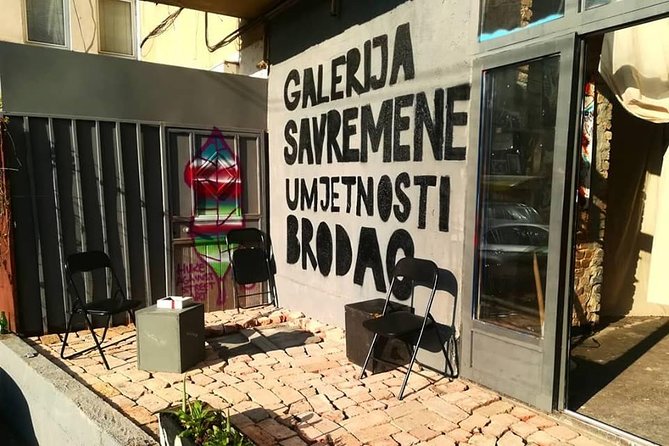
- Brodac Gallery: the old building that used to be a prison
- Ferhadija pedestrian street and the Sarajevo Roses concrete scar
- Galerija Java at Titova 21: the contemporary art center
- Veliki Park and Mensud Kečo’s Nermine, dođi
- Skenderija Bridge area, coffee break at Gallery BORIS SMOJO
- Price and value: why $33.64 feels fair for this format
- Who should book this Sarajevo conceptual art tour
- Should you book this Sarajevo conceptual art tour?
- FAQ
- How long is the Sarajevo Conceptual Art Tour?
- What does the tour cost?
- Is the tour offered in English?
- How many people are in the group?
- Where does the tour meet?
- What time does the tour start?
- Which stops include admission tickets?
- Can I get a full refund if I cancel?
Key highlights to look forward to
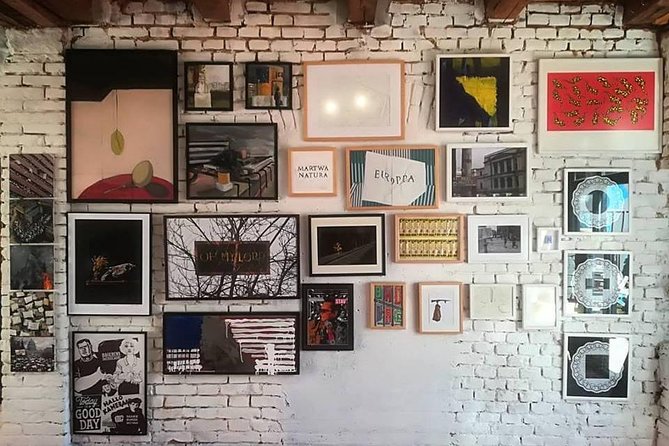
- Brodac Gallery’s prison past, now turned into a cozy contemporary art stop, plus a chance to try local craft beer
- Sarajevo Roses on Ferhadija, a concrete war scar filled with red resin, explained in plain terms
- Galerija Java (Titova 21), a central space that supports both Bosnian and international artists
- Veliki Park and Mensud Kečo’s Nermine, dođi, built from striking materials and focused on Srebrenica
- Caffe break near Gallery BORIS SMOJO and a visit to the FESTINA LENTE bridge area
- Small group size (up to 15) with an English mobile-ticket setup for an easy, guided route
Other Sarajevo studios, galleries and camera walks
- SARAJEVO STREET ART TOUR (art, history & mystery) – sARTajevo!
★ 5.0 · 18 reviews - Bosnian Traditional Handicraft, half-day – do it yourself – Coppersmith Workshop
★ 5.0 · 13 reviews - Sarajevo Private Photography Tour
★ 5.0 · 10 reviews - COPPER HANDICRAFT WORKSHOP (Make your own souvenir from Sarajevo)
★ 5.0 · 10 reviews
Sarajevo’s conceptual art works because it’s about place
Sarajevo conceptual art is not just about what you see. It is about what the city has been forced to hold onto, and how artists turn that weight into something you can look at, talk about, and remember. This tour leans into that idea, moving between galleries and street architecture so the meaning does not stay trapped behind walls.
I especially like that the tour gives you interpretation, not just locations. When you know why something exists, you spend less time guessing and more time noticing details you might otherwise miss. And because the stops connect to real settings, the art starts to feel like part of Sarajevo’s everyday life, not a separate museum experience.
If you want art that is mostly light and decorative, this may not be your best match. One stop centers on genocide in Srebrenica, so even if you are an art lover, you should be ready for emotion. That said, the tour approach helps you meet the subject with care, through a guided path and clear pacing.
Meeting at Đulagina 2 and the smart, walkable pacing
You start at Đulagina 2 in Sarajevo, with a start time of 1:00 pm. The day’s flow is designed for an easy walking route across central neighborhoods, and the operator notes that the meeting point is near public transportation.
The tour runs about 2 to 3 hours, and group size is capped at 15. That matters more than it sounds. In a small group, questions are easier to answer, and the guide can slow down when a stop needs extra attention, especially at places where the story is the point.
You also get a mobile ticket, which helps you avoid paper hunts. And because the tour is offered in English, you are not relying on translations to understand the connections between art, architecture, and Sarajevo’s modern urban life.
Quick practical tip from an old-school travel mindset: if you are the type who likes to read plaques slowly, build a little extra time into the middle of the tour. This route includes both outdoor and indoor moments, so you will likely want to stand still at certain stops instead of trying to rush.
Brodac Gallery: the old building that used to be a prison
Stop 1 is Brodac Gallery, set in an old building with history in its walls. The big idea here is transformation. During the Austro-Hungarian occupation, it served as a prison, and now it is turned into a cozy place for contemporary Bosnian art exhibitions.
What you gain from this setting is perspective. Contemporary art can feel abstract if you only see it on clean white walls. In Brodac, the architecture adds context. Even before you hit the specific exhibit, you understand that Sarajevo knows how to reuse space, and how memory can be folded into new functions.
Brodac is also a gallery-bar combo in spirit. The tour includes a local craft beer called Gelender, and that small add-on matters for comfort. A guided experience can sometimes feel too formal, but a casual beer stop helps you stay relaxed while the guide explains what you are seeing.
The admission ticket is included at this stop, and you get about 45 minutes here. That time feels right for a first gallery stop, especially because it also sets the tone for the rest of the tour: conceptual ideas, urban space, and lived history.
A small consideration: because the building has an old feel, if you are sensitive to tight or older interiors, keep that in mind. But the tone described here is cozy, so the vibe sounds welcoming rather than intimidating.
Ferhadija pedestrian street and the Sarajevo Roses concrete scar
Stop 2 is Ferhadija Pedestrian Street, where the tour shifts from indoor art to city architecture as artwork. The guide points you along the street’s major connections from Vječna Vatra and the Titova St intersection toward Gazi Husrev-Begova St, and then the route continues into Sarači St.
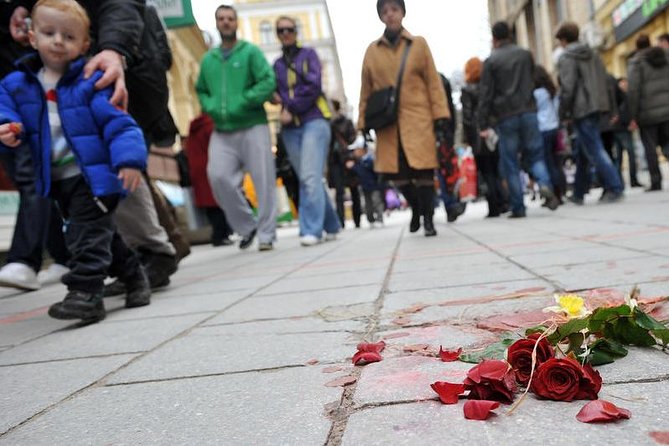
Then comes the real highlight: Sarajevo Roses. These are not flowers. They are a concrete scar caused by a mortar shell explosion, later filled with red resin. The tour explains the mechanism in a simple way, how mortar rounds landing on concrete create fragmentation patterns that can look almost floral in arrangement.
This is conceptual art in the most literal form possible. It is a visible record of urban warfare, and it stays in the city’s fabric. During the Siege of Sarajevo, the city suffered thousands of shell explosions, and these marked concrete patterns are one of the most distinctive ways Sarajevo carries that history into the present.
The stop is around 30 minutes and admission is free here. That makes it a great breather, especially since you just came from an indoor art stop. You can stand, look, and absorb without thinking about ticket timing or changing rooms.
What I like most about this part of the route is that you do not have to guess the meaning. The tour provides the why, and that turns a visual curiosity into something you actually understand.
Other Bosnian museums worth the ticket


Galerija Java at Titova 21: the contemporary art center
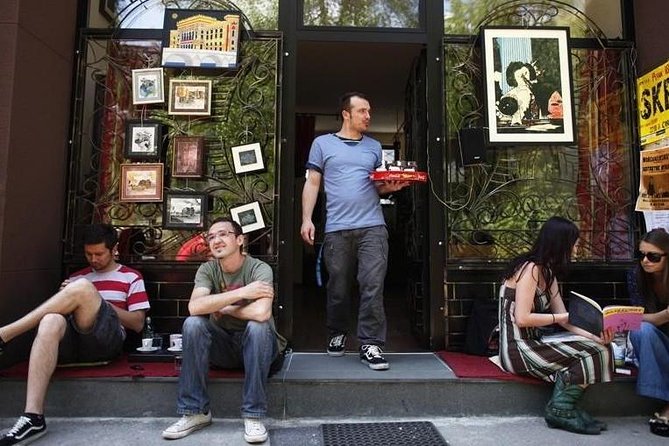
Stop 3 is Galerija Java, located centrally at Titova 21. This is where the tour leans fully into the modern art scene, not just the city’s war-era scars. The focus here is support and presence, how the gallery has helped build Sarajevo’s contemporary art by giving artists attractive exhibition space to work in and show their ideas.
The tour also frames the gallery’s role as a bridge. It supports and promotes artists from Bosnia and Herzegovina as well as international artists, and it works closely with artists across different mediums. Translation for your planning brain: you are likely to see more than one kind of artistic approach within the broader conceptual theme, even if the exact medium changes with the exhibition.
The time at this stop is about 1 hour, and admission ticket is included. That hour is important. It gives you time to take in the exhibition, then listen to the guide connect it to the wider Sarajevo story you started hearing at Brodac.
If you like contemporary art but sometimes feel shut out because you do not know the art-world context, this stop is a strong reason to book. A guide can help you see how the gallery operates and why it matters to the local creative ecosystem.
One note for your expectations: this is not a checklist gallery tour where you just look and move on. It is a guided viewing with discussion time, which usually means you will understand more by the end than if you explored alone.
Veliki Park and Mensud Kečo’s Nermine, dođi
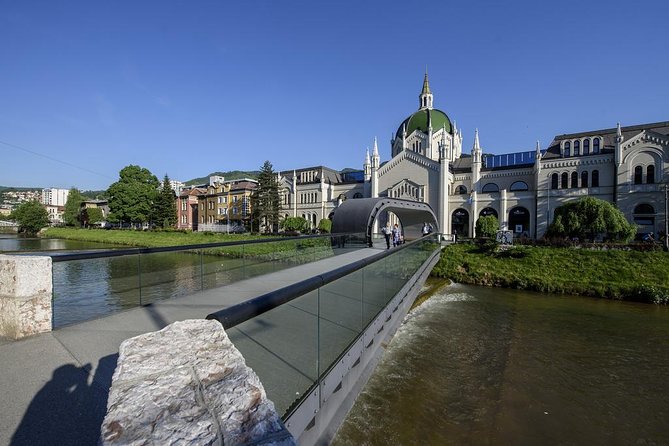
Stop 4 brings you to Veliki Park, one of Sarajevo’s famous parks. Here, the tour points out a sculpture by Bosnian artist and sculptor Mensud Kečo. The sculpture is dedicated to the genocide in Srebrenica, and the tour specifically highlights the piece called Nermine, dođi.
The materials and concept are described in a clear, concrete way. Nermine, dođi is made of concrete, reinforcement bars, plastic, and silicon. The tour also explains what it represents, tied to the most distressing documented photograph from Srebrenica that the artist used as a foundation for the work.
This stop is free and lasts about 30 minutes. That shorter timing matters because the subject has emotional weight. You need time to process, but you also do not want your whole day forced into heaviness without a chance to regroup.
What makes this sculpture work for a conceptual art tour is that it connects two things at once: the physical materials you can see and touch visually, and the human reality it points to. When you understand the materials are intentional, the piece stops being just a landmark and becomes an argument for remembrance.
If you prefer art that is political or memorial focused, you will likely appreciate this part the most. If you are trying to avoid heavy themes on vacation, you should still know it is coming so you can mentally prepare.
Skenderija Bridge area, coffee break at Gallery BORIS SMOJO
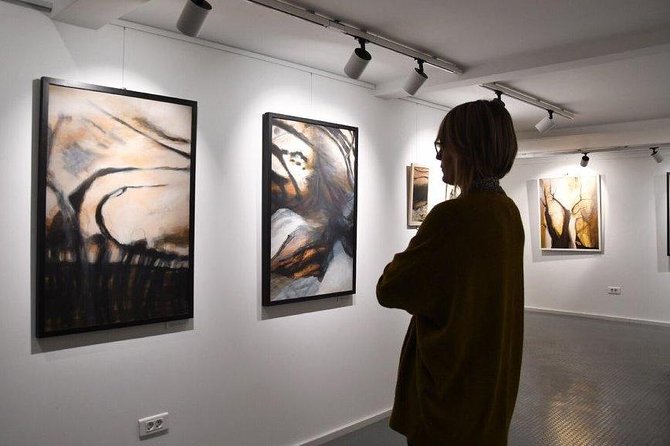
Stop 5 is a transition moment. After the earlier stops, you get a caffe break at Gallery BORIS SMOJO, then you head to see the bridge called FESTINA LENTE.
This is a nice structure because it keeps the tour from feeling like nonstop intensity. A coffee pause gives you a chance to reset, compare notes mentally, and ask follow-up questions while you still have your guide nearby.
The stop includes about 30 minutes, and admission ticket is included as part of the overall experience for this segment. That implies the tour is designed to cover both the café viewing time and the bridge spot, so you do not have to worry about timing gaps.
What I like about adding the bridge is how it ties into Sarajevo’s urban identity. You are not only dealing with galleries or isolated memorials. You are watching how contemporary city life and design sit next to the older and more painful layers of Sarajevo’s past.
Also, since the tour ends in the Skenderija area, you should find it easy to continue your day on your own right after. That ending location is practical for moving onward.
Price and value: why $33.64 feels fair for this format
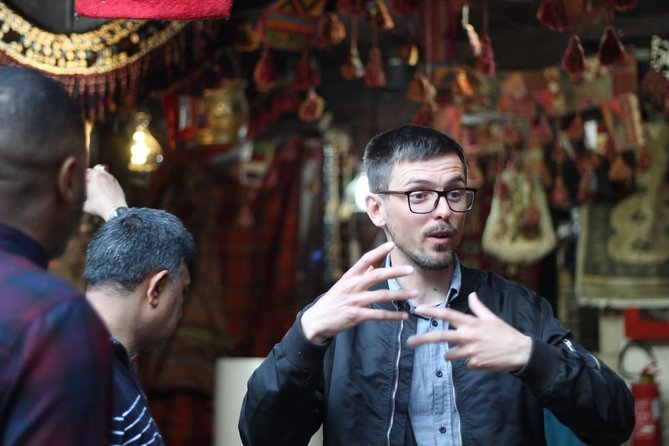
The price is $33.64 per person. For a 2 to 3 hour guided tour, that is not just paying for walking. You are paying for interpretation, route guidance, and included admissions at several stops.
Admission tickets are included for Brodac Gallery, Galerija Java, and the Gallery BORIS SMOJO plus FESTINA LENTE bridge segment. Meanwhile, two of the major conceptual highlights, Sarajevo Roses and the Veliki Park sculpture, are free to visit. That mix is smart. It keeps the tour value high while still letting you experience public space without extra cost pressure.
The small group size, maximum 15 travelers, also adds real value. You are not getting lost in a crowd, and the guide has room for questions. In a tour about conceptual meaning, that question time matters.
Language support is another value factor. The tour is offered in English, and the content is not vague. You get specific explanations about what you see, down to how the mortar scar patterns were created and how the sculpture materials connect to its theme.
If you are comparing options, look for this combination: guided storytelling plus multiple stops where admissions are included. Pure self-guided walking tours can be cheaper, but you lose the connecting tissue that makes the art click.
Who should book this Sarajevo conceptual art tour
This tour is best for you if you like modern and conceptual art, especially when it is tied to real places. You will likely enjoy the mix of galleries and public sites, and you will get more out of it if you like hearing how art connects to architecture and conflict.
It also suits travelers who want an organized route without doing planning math. The meeting point is clear, the start time is set, and you are guided to each stop so you can focus on noticing what is in front of you.
You should consider skipping it only if you want art that stays light and purely decorative. This experience includes memorial-focused content about Srebrenica, and that emotional tone is part of the point.
If you are traveling with a friend who likes art and you want something shared that feels meaningful, this is a strong choice. And if you are the solo type, a small group with an English guide is an easy way to meet the city through conversation rather than just photos.
Should you book this Sarajevo conceptual art tour?
Yes, I think you should book it if your idea of a great trip includes asking why something looks the way it does. This tour gives you the context you need to see Sarajevo’s conceptual art and architecture as one story, not as separate sights.
It is also good value for the money because multiple stops include admission and the small-group format helps you get real answers. And the most praised part is clearly the guide, Mak, who shares not only historical context but also his own war experience, plus a personal touch like the book gift.
If you want a carefree afternoon with only upbeat sightseeing, skip this and choose something lighter. But if you are okay with art that carries weight, and you want a guide-led path that makes Sarajevo’s modern creative scene make sense, this is a smart pick.
FAQ
How long is the Sarajevo Conceptual Art Tour?
The tour lasts about 2 to 3 hours.
What does the tour cost?
The price is $33.64 per person.
Is the tour offered in English?
Yes, it is offered in English.
How many people are in the group?
The maximum group size is 15 travelers.
Where does the tour meet?
The meeting point is Đulagina 2, Sarajevo 71000, Bosnia and Herzegovina.
What time does the tour start?
The start time is 1:00 pm.
Which stops include admission tickets?
Admission tickets are included for Brodac Gallery, Galerija Java, and the stop that includes Gallery BORIS SMOJO and the FESTINA LENTE bridge. Sarajevo Roses and the sculpture in Veliki Park are free.
Can I get a full refund if I cancel?
Yes, you can cancel for free up to 24 hours in advance of the experience’s start time for a full refund.
More Tours Across Bosnia
The Full Bosnia Review Shelf
Sarajevo Studios, Galleries and Camera Walks
Recently added to the Bosnia and Herzegovina shelf
- Walking Tour in Sarajevo★ 5.0 · 3 reviews
- Travnik, Jajce, Pliva Lakes & Mills –Medieval & Ottoman Bosnia Full Day Tour★ 5.0 · 3 reviews
- Tour of Herzegovina – From Sarajevo★ 5.0 · 3 reviews
- The Siege of Sarajevo Tour★ 5.0 · 3 reviews
- Srebrenica Genocide Tour from Sarajevo★ 4.5 · 3 reviews
- Sarajevo to Zagreb: One-Way Tour via Jajce, Travnik, Pliva Lake and Watermills★ 5.0 · 3 reviews
Sarajevo Art, Photography & Craft Workshops, compared.
 ★ 5.0Sarajevo: 4-Hour Food And Craft TourFrom $6070 reviews
 ★ 5.0SARAJEVO STREET ART TOUR (art, history & mystery) – sARTajevo!From $3018 reviews
 ★ 5.0Bosnian Traditional Handicraft, half-day – do it yourself – Coppersmith WorkshopFrom $7213 reviews
 ★ 5.0COPPER HANDICRAFT WORKSHOP (Make your own souvenir from Sarajevo)From $6610 reviews
 ★ 5.0Sarajevo Private Photography TourFrom $9310 reviews
 ★ 5.0InstaSarajevo – Photography Walking Tour of SarajevoFrom $348 reviews
Browse the lists this tour appears in