
REVIEW · MOSTAR OLD TOWN & OLD BRIDGE TOURS
Mostar War Heritage Walking Tour
War and art share a single walk. The Mostar War Heritage Walking Tour turns the city’s landmarks into a story you can follow on foot, with personal war memories and a short film to frame it all. The only real drawback is that some parts are emotionally heavy, so bring your sensitivity and good shoes.
I like that you are not just shown sights. You walk past places tied to the siege and aftermath, including a former burial park and squares named for soldiers who died during UNPROFOR. I also like the structure and pacing, with a guide who can explain context without turning it into a lecture. One more consideration: this tour is mainly for people who want history and human stories, not a quick photo loop.
You start at Španski trg (Spanish Square) skate plaza around 9:00 am, and the tour ends back at the meeting point. It is offered in English, and it is set up as a private experience for your group, so you should get more time for questions.
In This Review
- Key highlights to look for on this walk
- Why This Walk Works in Mostar
- Old Bridge Engineering, Ottoman Era, and Hajrudin’s Design
- Walking Near Mezarje/Groblje Liska Park
- Spanish Square and Stara Gimnazija: A Name With Weight
- Kujundziluk (Bazar Kujundziluk): Crafts That Survive the Story
- Carinski Bridge and Kriva Ćuprija for a Bigger Map
- The Short Film That Puts It All in Context
- Timing, Pace, and What to Bring
- Price and Value: What $47.66 Buys You Here
- Who Should Book This Tour (and Who Might Skip It)
- Should You Book the Mostar War Heritage Walking Tour?
- FAQ
- Where does the Mostar War Heritage Walking Tour start?
- What time does the tour begin?
- How long is the tour?
- What language is the tour offered in?
- How much does it cost?
- What is included in the price?
- What is not included?
- Is this a private tour?
- Are entry tickets included for the stops?
Key highlights to look for on this walk
- Old Bridge engineering details that explain why this monument matters, not just why it looks pretty
- Personal stories of the war, shared by the guide in a human, first-person way
- Mezarje/Groblje Liska park, a sensitive burial ground tied to 1992 to 1995
- Spanish Square naming, including the 21 Spanish troops reference and Stara Gimnazija’s role
- Kujundziluk crafts, especially coppersmiths and leatherwork traditions
- A couple of less-famous bridges like Carinski Bridge and Kriva Ćuprija for a fuller map of Mostar
Other guided walks around the Old Bridge
- Mostar city Tour
★ 5.0 · 34 reviews - Charming Mostar: Private Mostar Walking Tour
★ 5.0 · 23 reviews - Best of Mostar – Private Walking Tour
★ 5.0 · 21 reviews - Mostar Private Walking Tour – where East meets West
★ 5.0 · 15 reviews
Why This Walk Works in Mostar
Mostar can feel like two cities at once. You have the famous postcard view of the Old Bridge, and you have the reality that the city’s recent history still shapes daily life. This tour threads those two worlds together in a way that makes the place feel understandable, not overwhelming.
What I like most is that the guide uses the walk itself as the lesson plan. You are not stuck inside a museum. You are out in Mostar, looking at the bridge widths, the river crossings, the old-town fabric, and the memorial spaces, while the guide connects them to what happened and what came after.
Price matters here, because $47.66 is not a “skip it” amount. The tour earns its keep by including the key stuff you cannot easily piece together on your own: war context, personal testimony, and the city’s layered architecture. It is also short enough to fit into a busy day.
The emotional weight is real. One guide story includes having lived through the war as a teenager, so expect moments that go beyond dates and facts. If you handle that well, you will leave with more than photos.
Old Bridge Engineering, Ottoman Era, and Hajrudin’s Design
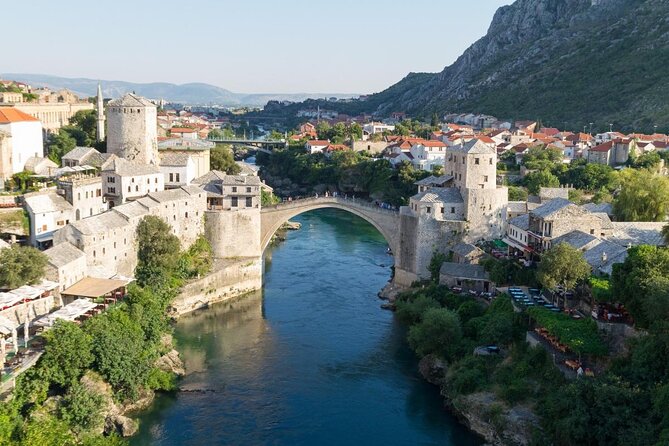
The tour’s anchor is the Old Bridge (Stari Most). Even if you have seen it before, I think this is the right way to look at it: not as a single pretty bridge, but as a piece of Ottoman-era problem solving.
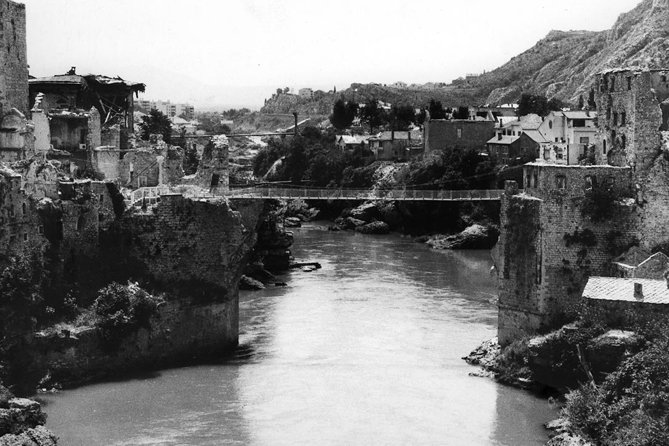
You start with the founding detail that changes how you picture the site. When Turks invaded Mostar, there was a wooden bridge at roughly the Old Bridge location. It hung on chains, and people had to cross carefully. Later, that bridge wore out in the mid-16th century, and the city asked authorities in Istanbul to commission a new one using quality materials.
The guide then brings in a key name: Hajrudin, described as a pupil of Sinan, the famous Turkish architect of the 16th century. The Old Bridge was completed and put into service around July or August 1566. That timeline matters because it makes the bridge feel like a finished project with a real schedule, not a vague historic symbol.
Then come the measurement details, the kind you only get when someone cares about what you are looking at. The span is 28.70 meters, it has one big stone arch, and it is 4.49 meters wide. From the summer water level, the height is about 21 meters. The construction method is described too: square stones connected with iron hooks, and the whole thing cast in lead.
If you love architecture, you will enjoy how the guide explains why the bridge is more than a crossing. Mostar’s central old town grew around it, with forts, towers, and gates forming a unified architectural whole. It is also a rare moment where you can stand in the place and feel why everyone stops there to admire the view.
A practical note: the Old Bridge area gets busy. That does not ruin the tour, but it can affect how long you have to linger for photos. If you want one perfect shot, plan on doing it during the natural stop time, then listen while the group is moving.
Walking Near Mezarje/Groblje Liska Park
Next, you shift from the architectural icon to a far more sensitive site: Mezarje/Groblje Liska park. The park is described as a historic green space in Mostar, originally established in 1954. That matters, because it reminds you this place was not created as a memorial at the beginning.
During the 1992 to 1995 war, the park became a burial site for civilians and soldiers of different nationalities due to the lack of available cemeteries. It is the kind of stop that changes the tone of the walk. The city is beautiful, but this part insists you look at the human cost.
What I appreciate is the way this stop adds balance. The tour does not only show triumphal landmarks. It also shows where life went fragile. Even if you do not know what to say to yourself during a memorial stop, the context is there, and the guide helps you understand why it is still significant.
The drawback is emotional, not logistical. Some people find it hard to move on right after a burial-ground stop. If that is you, take a breath, slow down your pace for a minute, and let the tour’s next stop feel like a return to the city’s surface details.
Spanish Square and Stara Gimnazija: A Name With Weight
From the park, you walk to Spanish square, one of Mostar’s main spots. The naming story here is direct and specific. The name was given in 1995, in honor of 21 killed Spanish troops at UNPROFOR in the last war.
That detail might seem like a small line in a guidebook, but in the square it lands differently. It helps you see how international peacekeeping left a local trace, and how memory gets placed into everyday movement.
Dominating Spanish square is Stara Gimnazija (Old Gymnasium). The construction finished in 1902, and it was among the oldest schools in ex Yugoslavia. The guide also notes that for a long time the building carried a name linked to poet Aleksa Šantić.
Architecturally, the building is described as Moorish Revival, also called Neo-Moorish style. Today, it is listed as a national monument. Even if you are not obsessed with architecture, this stop gives you a satisfying mix: education, symbolism, and a very clear visual style choice that adds character to the city center.
One thing to watch: this is also a lively public area. The tour stop is short, so if you want a closer look at the façade details, do that quickly. Keep one ear on the guide’s explanation so you do not miss the connections to the square’s war memory.
Other walks we have put boots to
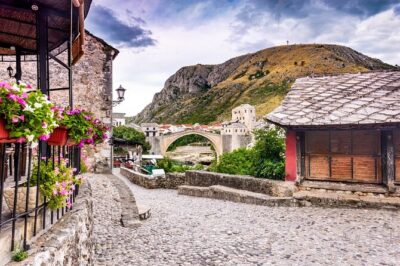
Kujundziluk (Bazar Kujundziluk): Crafts That Survive the Story
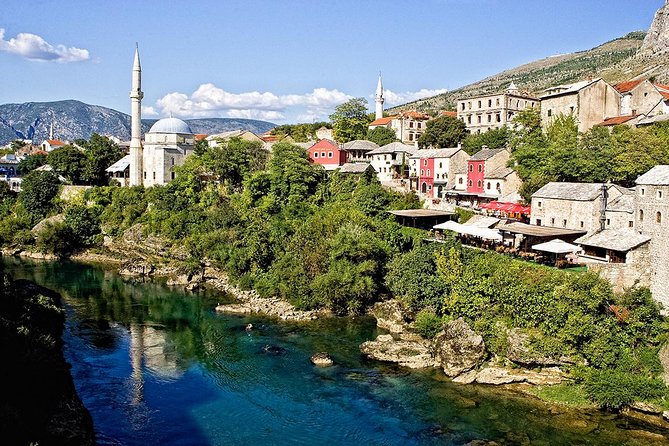
Then the tour shifts into something lighter but still meaningful: Bazar Kujundziluk on the left bank of the Neretva. The old name Kujundžiluk comes from the coppersmiths, referred to as Kujundžije. There were also tailors, and the guide highlights leatherwork too, especially tanners as major masters for processing leather.
I like this stop because it turns your brain from “what happened” to “what kept working.” It is easy to treat Mostar as only a conflict narrative. Kujundziluk reminds you that people still build, trade, and make things with their hands.
You will likely see small artisan workshops and handicrafts that reflect the area’s craft legacy. Even if you do not buy anything, you get a feel for how the old-town economy fits into the same geography as the big monuments. It is also a good moment to stretch, recover from the memorial tone, and look around at shop signs and storefront details.
If you are the type who dislikes shopping zones, keep expectations realistic. You are going through a craft quarter, so there may be stalls and sales talk. But your focus can stay on watching workmanship and letting your guide explain what each craft tradition once fed in the city.
Carinski Bridge and Kriva Ćuprija for a Bigger Map
Mostar’s famous Old Bridge can dominate your mental map. This tour helps you zoom out with two additional crossings that fill in the “how the city moves” story.
One stop is the Carinski Bridge (Customs Bridge), described as lesser-known but historically significant. It spans the Neretva River just north of the Old Bridge. The guide connects it to the Austro-Hungarian period, emphasizing its role as a crossing point connecting different parts of the city.
This is the kind of stop I appreciate because it changes how you think about the Old Bridge. The famous bridge was not the only river connection. The city had other ways to link neighborhoods, and those links matter when you think about trade, daily life, and how people adapted through periods of rule change.
Then comes Crooked Bridge (Kriva Ćuprija), tucked into the old quarter and described as a hidden beauty. It is believed to be a miniature prototype of the Old Bridge. The guide places it back in the 16th century and has you look at its arches over the Radobolja River.
For me, this is where the walk turns into exploration. The Crooked Bridge is less famous, so it lets you see another rhythm of stone and arch logic. It also gives you a mental checklist for Mostar beyond the main highlight.
If you are hoping for nonstop big-picture moments, these bridge stops are shorter. Still, they are valuable because they help you build a real understanding of the city’s geography.
The Short Film That Puts It All in Context
Between the walking stops, the tour includes a short film about Mostar’s history. I like this part because it gives you a second angle when the streets start to feel like too many facts at once. Even without deep historical background, a film can reset your timeline and connect the bridges and memorial sites into one coherent story.
I would treat it like a tool, not a performance. While it plays, note names and dates. Then when you are back outside, you will catch what the guide is aiming for when you look at the buildings and crossings.
Film breaks also help you pace the walk. A tour lasting 2 to 3 hours needs micro-resets, and this one is built in.
Timing, Pace, and What to Bring
This experience runs about 2 to 3 hours. That is an ideal length for Mostar because you can see meaningful places without burning the whole day. It starts at 9:00 am and returns to the meeting point at Španski trg.
Because the tour is a walking tour, wear shoes you trust. Some surfaces can be uneven, and the bridge areas can involve steps or changes in ground level. Since this is a history-focused walk, you will likely be standing to listen at stops, so comfortable footwear matters more than you might expect.
You get a mobile ticket, which is convenient. The operator also lists that service animals are allowed, and Most travelers can participate. Public transportation is nearby, which is useful if you are mixing this with other sightseeing plans.
Lunch is not included, and tips are not included either. If you are trying to keep your day simple, you can treat this as a morning or early afternoon history block, then eat after while your head is still full of bridges and stories.
Price and Value: What $47.66 Buys You Here
At $47.66 per person, this is not an ultra-cheap group walk. So I ask a simple question: what makes it worth paying for?
Here’s what you get that is hard to DIY:
- A professional authorized guide who connects specific sites to the war story and the reconstruction era
- Personal stories from the guide, including accounts shaped by their own youth during the conflict
- A walk along the former front line route, paired with tangible places like memorial grounds and named squares
- A short film that ties the stop-by-stop details into one timeline
Many cheap tours give you surface facts. This one is priced for context and for the ability to ask follow-up questions, especially because it is set up as a private experience for your group.
Also, you do not have to budget entry fees. The itinerary lists admission ticket free for the key stops, including the Old Bridge area stop, the park stop, Spanish square stop, and the bridge stops like Crooked Bridge and the market quarter. So your money goes into the guide and the learning, not into ticketing.
If you want history with empathy, guided and organized, it is good value. If you only want quick photos, it might feel like too much thinking for the time you spend outside.
Who Should Book This Tour (and Who Might Skip It)
This tour fits you if you:
- want the story behind the Old Bridge, not just the view
- appreciate guided explanation and the chance to ask questions
- can handle war-related topics with care
- prefer a structured walk that still leaves time to look around
It might not fit you as well if:
- you are only in Mostar for a short sightseeing sprint and need a lighter theme
- you dislike hearing personal war accounts or spending time at memorial sites
- you need purely entertainment-focused sightseeing
The strongest feedback pattern in the experience is about the guide. People highlight friendliness, flexibility, and real understanding of what you are seeing. I would take that seriously when booking. A war heritage walk lives or dies by how it is told, and this format aims for humanity, not dryness.
Should You Book the Mostar War Heritage Walking Tour?
If your travel style is to understand what you are looking at, I recommend you book. This walk gives you a grounded way to see Mostar’s most famous landmark and then connect it to memory, loss, and the everyday craft life that survived.
Book it if you want a human guided story, a timeline you can hold in your head, and bridges and squares that mean something. Consider skipping if you are in Mostar mainly for postcard time and you do not want emotionally heavy stops in the middle of your sightseeing.
Either way, plan to slow down. The Old Bridge will be there for photos whenever you return. The harder part is letting the city’s recent past change how you see the stones.
FAQ
Where does the Mostar War Heritage Walking Tour start?
It starts at Spanish square skate plaza (Španski trg, Mostar 88000, Bosnia and Herzegovina).
What time does the tour begin?
The start time is 9:00 am.
How long is the tour?
The tour lasts about 2 to 3 hours.
What language is the tour offered in?
It is offered in English.
How much does it cost?
The price is $47.66 per person.
What is included in the price?
The tour includes a professional authorized guide.
What is not included?
The tour does not include lunch (optional) or tips.
Is this a private tour?
Yes. It is listed as a private tour/activity, meaning only your group participates.
Are entry tickets included for the stops?
The itinerary lists admission ticket free for the stops shown, so you should not need separate entry fees for those specific stops.
More Tours Across Bosnia
The Full Bosnia Review Shelf
Mostar and the Old Bridge, More Walks
Recently added to the Bosnia and Herzegovina shelf
- Pocitelj City Tour★ 4.5 · 3 reviews
- Mystical Sutjeska National Park★ 5.0 · 3 reviews
- Mostar Guided Tour & Sweet Delights★ 5.0 · 3 reviews
- All Inclusive Neretva Rafting, Day Tour from Mostar★ 5.0 · 4 reviews
- Authentic Medjugorje Tour★ 4.0 · 4 reviews
- From Split: Private Guided Mostar & Kravica Waterfall Tour★ 5.0 · 4 reviews
Mostar Old Town & Old Bridge Tours, compared.
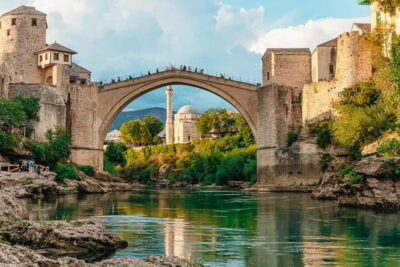 ★ 4.7From Cavtat: Bosnia, Herzegovina, and the Old Bridge TourFrom $85188 reviews
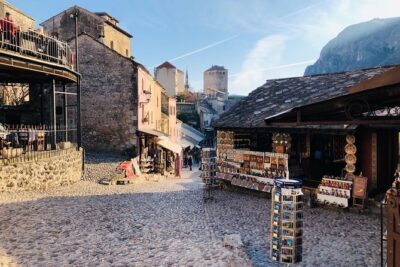 ★ 5.0Mostar Private Walking TourFrom $4593 reviews
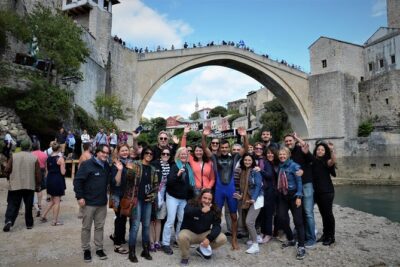 ★ 5.0Mostar city TourFrom $2334 reviews
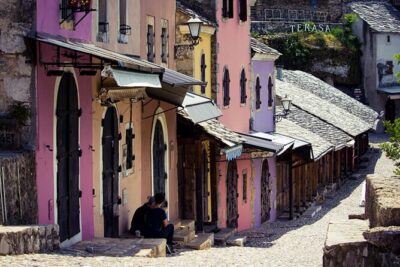 ★ 5.0Charming Mostar: Private Mostar Walking TourFrom $4723 reviews
 ★ 5.0Best of Mostar – Private Walking TourFrom $3621 reviews
 ★ 5.0Mostar Private Walking Tour – where East meets West15 reviews
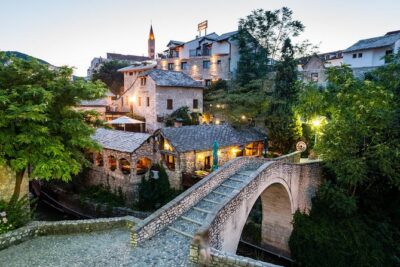 ★ 5.0Mostar Ancient TownFrom $3013 reviews
 ★ 5.0Mostar Shelters tour in MostarFrom $419 reviews
Browse the lists this tour appears in