
REVIEW · MOSTAR OLD TOWN & OLD BRIDGE TOURS
Mostar Private Walking Tour – where East meets West
Two cultures, one bridge, and a lot of meaning. This private walk through Mostar’s Old Town feels designed for real understanding, not just photos, with hotel pickup and drop-off that keeps the day easy. I especially love the way the guide connects monuments to everyday life, including what happened during the conflict, and how that shaped what you see today. One thing to plan for, though, is that the mosque and the Peace Bell Tower have separate paid entry.
You’ll cover the best-known landmarks at a pace that doesn’t rush your eyes or your questions. The tour runs about 2 hours in English, and you use a mobile ticket. It’s private, so it’s quieter than the usual big-group shuffle.
If you like cities that come with context, Mostar is for you. Just wear good walking shoes and expect a steady stroll through classic stone streets, viewpoints, and river edges.
In This Review
- Key highlights you will actually care about
- Entering Mostar with a private guide and hotel pickup
- Mostar Old Bridge and the jumper club tradition
- Crooked Bridge (Kriva Cuprija) and the Radobolja River romance
- Bazar Kujundziluk, old crafts, and real hospitality
- Koski-Mehmed Pasha Mosque, dome views, and the minaret climb
- An Austro-Hungarian bridge stop to shift the mood
- Spanish Square and the wartime geography you can’t ignore
- Park Zrinjevac, Stefania promenade, and where cemeteries lived
- Mostar Peace Bell Tower, multicultural Mostar, and a thoughtful finish
- Money and value: what is free and what you might pay for
- How the pace and focus suit different travelers
- Practical travel tips for a smooth Mostar walk
- Should you book this Mostar private walking tour?
Key highlights you will actually care about
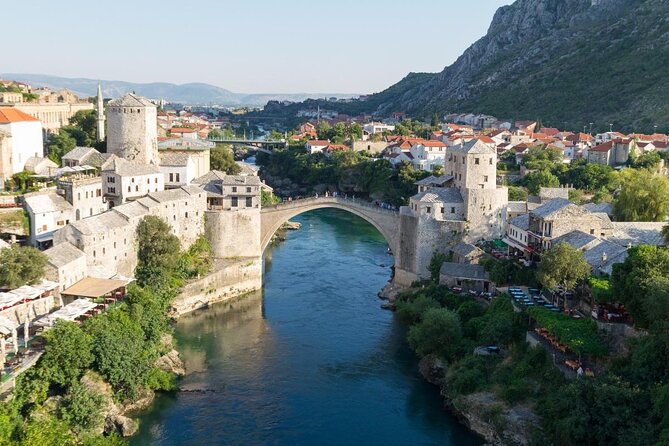
- Mostar Old Bridge plus a real jumper-club visit that brings UNESCO tradition to life
- Crooked Bridge (Kriva Cuprija), the postcard spot over the Radobolja River and the love-story backdrop
- Kujundziluk Bazaar time with old crafts families, where hospitality is part of the experience
- Koski-Mehmed Pasha Mosque with permission to enter and even climb the minaret for bridge views
- Spanish Square and Stefaniya promenade area that connect the city’s layers, from monarchy to wartime scars
- Park Zrinjevac and the Peace Bell Tower to end with multicultural Mostar and how memory lives in public space
Other guided walks around the Old Bridge
- Mostar city Tour
★ 5.0 · 34 reviews - Charming Mostar: Private Mostar Walking Tour
★ 5.0 · 23 reviews - Best of Mostar – Private Walking Tour
★ 5.0 · 21 reviews - Mostar Private Walking Tour – where East meets West
★ 5.0 · 15 reviews
Entering Mostar with a private guide and hotel pickup
The best version of this tour starts before you even leave your hotel. With round-trip pickup and drop-off, you avoid the extra stress of lining up taxis or guessing the best meeting point. Your guide meets you at Franjevačka Crkva u Mostaru (Franjevačka 1, Mostar), then brings you back there when you’re done.
This matters because Mostar is easiest to enjoy when you spend your energy on walking and looking, not logistics. The pace is also built for a private setup. You can ask follow-ups when a stop turns from pretty to complicated, which is a big part of Mostar’s story.
The tour is offered in English, uses a mobile ticket, and runs roughly two hours. Most people can join, and children must be with an adult. It also requires at least two people per booking, so if you’re traveling solo, you’ll want to check how your operator handles that.
One small planning point: many stops include a free admission ticket, but not all do. The mosque and the Peace Bell Tower have fees not included, so your time is easier if you budget for that ahead.
Mostar Old Bridge and the jumper club tradition
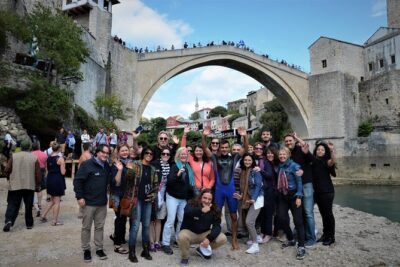
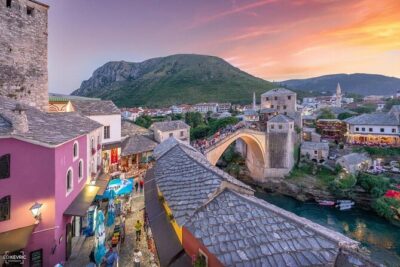
You start at the Mostar Old Bridge, the city’s signature UNESCO monument. This is where your guide does the heavy lifting, explaining the history and the stories people attach to this span. The bridge isn’t just architecture here. It’s a cultural ritual and a living symbol.
What makes this tour feel more personal is the access you get around the jump tradition. Because of the guide’s connections and the kindness of the jumpers from the club, you get the chance to visit their premises and learn about the centuries-old practice of jumping from the bridge. It’s not just a quick look from the street. You see the side of Mostar where the monument is part of daily identity.
The time at this first stop is around 20 minutes, and the admission ticket is free for the club visit. That free time matters because the Old Bridge area is also where you’ll want to linger for photos once the story clicks. If you’re the type who likes to understand what you’re photographing, you’re going to enjoy this segment a lot.
One caution: bridge-view lighting changes quickly, and the area can get busy. If you want your best shots, keep an eye on the timing and don’t rely on one angle. Your guide will help you aim your time at the viewpoint points that make sense.
Crooked Bridge (Kriva Cuprija) and the Radobolja River romance
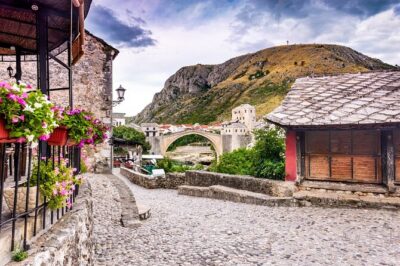
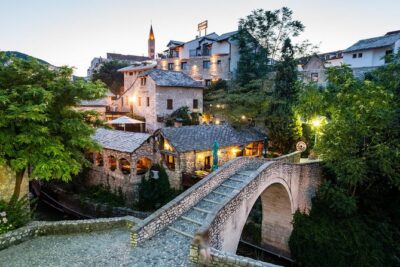
Next comes Kriva Cuprija, known as the Crooked Bridge or the Bridge of Love. Even if you’ve seen it in photos, it works better in person because it sits right over the Radobolja River, a tributary of the Neretva.
This stop is short, about 5 minutes, but it’s the kind of short that adds value. Your guide connects the bridge’s curves and the river setting to the local storytelling around romance and folklore. It’s the lighter, more poetic side of Mostar, a break from the heavier history you’ll hear soon.
Admission here is free, so you’re paying only in footsteps. If you’re trying to decide whether to slow down for photos at every bridge, this one is worth it, but don’t lose the thread of the walking route. Mostar’s best moments stack up when you keep moving.
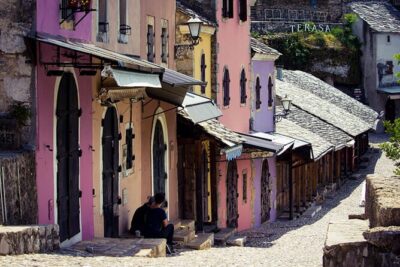
Bazar Kujundziluk, old crafts, and real hospitality
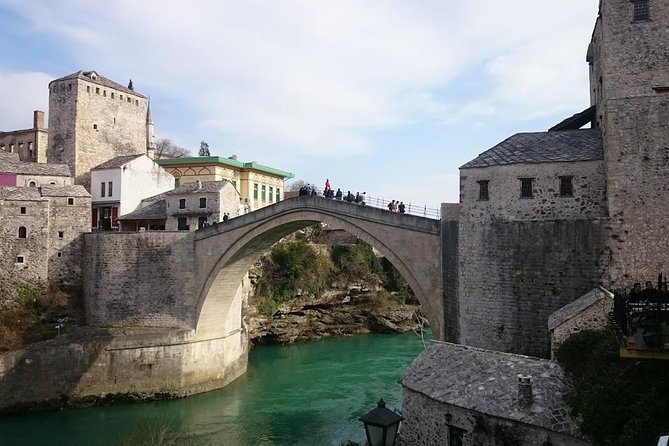
Then you step into Bazar Kujundziluk, widely known as a core old bazaar in the Herzegovina region. This stop is about 20 minutes, and it’s another moment where the guide’s approach matters.
You’re not just walking through shops. You’ll learn about old crafts and talk with members of families who have been making authentic handicrafts for centuries. The point isn’t buying everything. It’s understanding why the items exist, how skills get passed down, and why craftwork is tied to identity here.
The admission ticket for this segment is listed as free, which is great value. Even if you buy nothing, you’re paying for the context and conversation, not just access.
Practical tip: if you’re interested in specific craft items, be ready to ask questions about materials and traditional techniques. You’ll get far more out of your visit that way than by browsing silently. And since your guide is present, you can ask for translations or explanations quickly.
Other walks we have put boots to
Koski-Mehmed Pasha Mosque, dome views, and the minaret climb
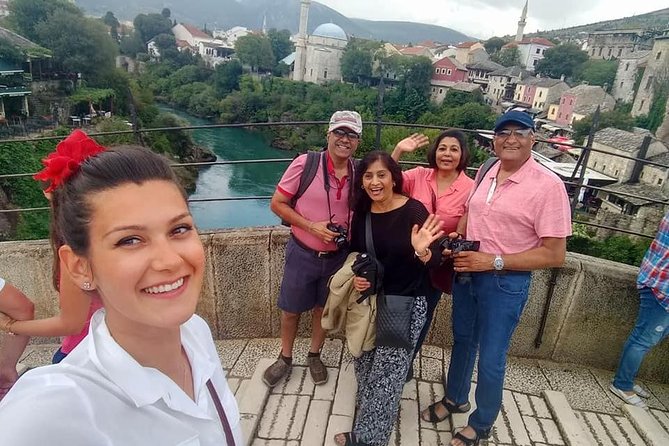
After the market, you go from trade to worship at Koski-Mehmed Pasha Mosque. This is one of the strongest stops on the tour for people who like architecture and viewpoints.
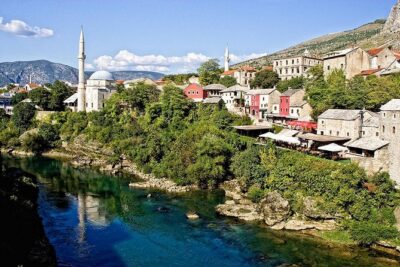
The mosque sits on a high rock above the Neretva, and it’s famous for its dome. Your guide will explain what makes it notable in the region. The standout detail is that tourists are allowed to enter, and in this case, you can even climb the high minaret for some of the best Old Bridge photo angles.
This is 15 minutes, and the admission ticket is not included. That fee is the main “pay extra” moment on the tour, but it’s a fair trade if minaret views are on your must-do list. You’re not paying for a quick exterior look. You’re paying for time inside the monument and for a viewpoint you usually can’t reach in most cities.
Wear something comfortable for climbing. Even if the steps are manageable, you’ll want stable shoes. Also, mosque entry can come with etiquette expectations, so go in with a calm, respectful mindset. Your guide will set the tone.
An Austro-Hungarian bridge stop to shift the mood
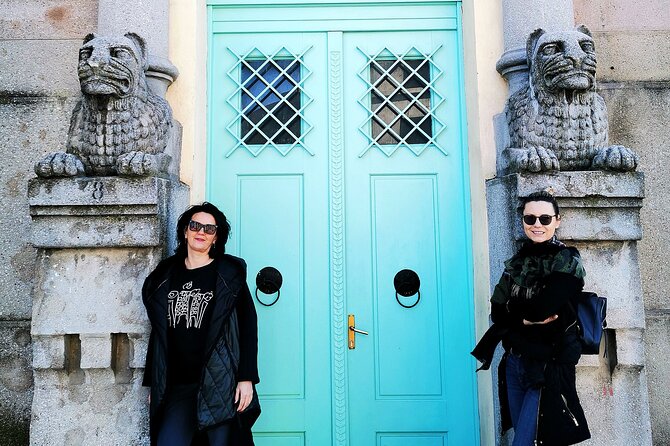
Along the route, the walk includes a bridge from the Austro-Hungarian period, leading you into a more romantic part of Mostar, with parks and attractive buildings. This segment may feel like a transition stop, but it’s important.
Mostar’s story is built from layers: Ottoman-era symbolism in one direction, Austro-Hungarian urban planning in another. These in-between stretches help you see the city as a timeline rather than a set of disconnected postcards.
Because you’re moving through different styles and neighborhoods, this is also where you’ll likely start thinking in maps. The park areas and promenade style spaces start to make sense, and your later stops will land with more clarity.
Spanish Square and the wartime geography you can’t ignore
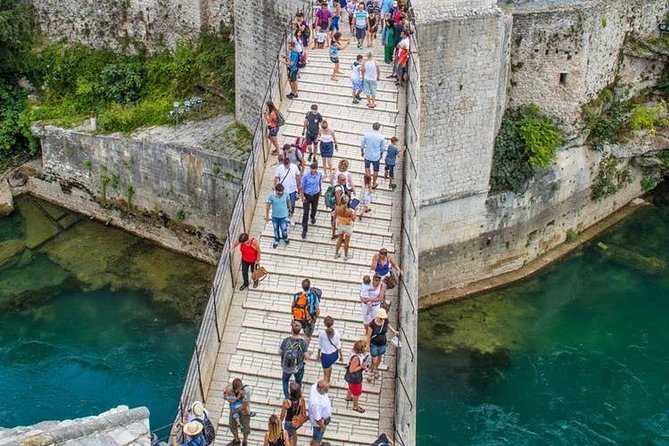
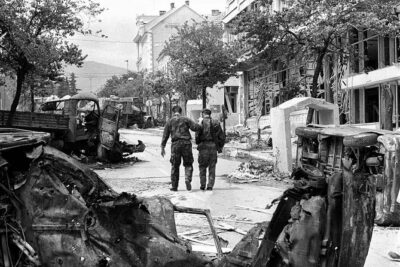
When you cross the Bulevar road, you’ll reach Spanish Square. Your guide will connect it to the last war and explain why this place sits in the city like a scar that refuses to vanish.
The square was opened by King Juan Carlos of Spain to honor the fallen members of the Spanish battalion within the UN peacekeeping forces. That international link matters because it shows how Mostar’s conflict wasn’t only local. It pulled in global attention, and the aftermath became part of the city’s physical landscape.
This stop is about 5 minutes with free admission. It’s short, but it’s emotionally heavy. If you prefer tours that keep things upbeat, you might feel the contrast here.
That said, this stop is one of the reasons the tour feels honest. Mostar isn’t just about beauty, it’s also about survival and memory. You don’t need to agree with every interpretation. You do need to hear it, so the monuments make sense.
Park Zrinjevac, Stefania promenade, and where cemeteries lived
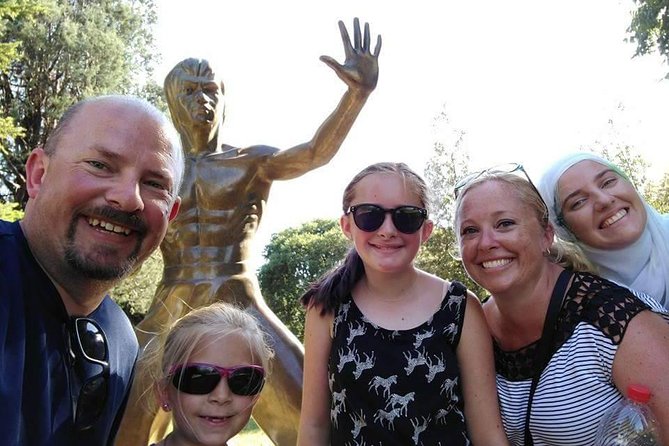
Next is Park Zrinjevac, with time around Stefania’s promenade from the Austro-Hungarian monarchy period. This is a great stop for architecture lovers because you’ll see buildings and villas in pseudo-Moorish style, a clear example of how different cultural influences were mixed into public spaces and residences.
You’ll also walk through the largest and most beautiful park in Mostar, and your guide will explain something difficult but crucial: public parks were used as cemeteries during the last war. That detail changes how you see everything around you, even if you’re just passing benches and paths.
This stop lasts about 15 minutes, and admission is free. It’s a good place to slow down. You can take in the mix of old-world promenade design and the reality of what happened here. If you’re trying to understand how a city holds both beauty and grief, this is where that lesson becomes physical.
Practical note: parks can be windy near river areas. Bring a layer if you’re touring in cooler months, and keep a hand free for photos. Park paths can be uneven.
Mostar Peace Bell Tower, multicultural Mostar, and a thoughtful finish
The tour ends at the Mostar Peace Bell Tower. This stop is about 5 minutes, and admission is not included.
The key theme here is multiculturalism. Your guide frames the tower as a place to reflect on how different communities coexist in Mostar, and how the city’s identity is shaped by both conflict and rebuilding.
This finale works well because you’ve already seen the Old Bridge, the marketplace, the mosque, and the wartime landmarks. The Peace Bell Tower doesn’t feel random. It closes the loop by turning the walk into a story about survival and coexistence.
If you’re the type who wants your tours to end with a calmer mood, this final stop should do that. It’s short, but meaningful.
Money and value: what is free and what you might pay for
Most of what you see on this walk comes with free admission tickets tied to key stops, which is a big value boost. Your tour includes free entry for the Old Bridge jumper club segment, Crooked Bridge area, and Bazar Kujundziluk, plus the Spanish Square and Park Zrinjevac stops.
The two places where you should expect extra costs are:
- Koski-Mehmed Pasha Mosque
- Mostar Peace Bell Tower
Those fees being outside the package makes sense because they are monument-based sites that often require separate tickets. In return, you get more than a quick “look from the street.” You get access to experiences like mosque entry and the minaret climb, plus the jumper club visit.
If you’re comparing this to DIY walking, the private guide is the real value. Mostar is easy to wander through, hard to interpret. A local guide helps you connect the dots quickly, and the private format gives you time to ask why certain places matter.
How the pace and focus suit different travelers
This tour fits best if you:
- want history with context, not just sightseeing
- enjoy walking but don’t want a full-day plan
- like learning about both the Ottoman-era and Austro-Hungarian-era influences
- appreciate a guide who can explain the conflict era without turning it into a lecture
It may be less ideal if you:
- prefer only light, pretty topics and would rather avoid wartime references
- hate stairs or steep viewpoints, since you’ll do a mosque minaret climb and lots of walking on uneven ground
Because the tour is private, you can also set a mental expectation: this is a guided story tour with stops for photos, not a race to hit every landmark.
Practical travel tips for a smooth Mostar walk
A few things will make this tour feel easier from the start.
1) Wear shoes with grip. Stone streets and river-adjacent areas can be slick, especially if the weather turns.
2) Keep your questions ready. The most valuable moments are when the guide explains how one site connects to the next. Ask about the bridge tradition, the bazaar craft legacy, or why parks became cemeteries.
3) Bring a light layer. You’ll be outside most of the time. Even in pleasant months, the river breeze can surprise you.
4) Plan around the two paid stops. If you want the minaret climb, set aside time and energy for that moment rather than treating it like an optional extra.
5) Expect the tour to be reflective. Mostar’s beauty is real, but so is its history. The walking route includes serious places for a reason.
And one small rule to keep in mind: this experience is listed as non-refundable and cannot be changed if you cancel. So only book it when your dates are locked in.
Should you book this Mostar private walking tour?
Book it if you want Mostar with context and you like the idea of mixing bridges, bazaar craft stories, mosque architecture, and wartime memory into one connected walk. The Old Bridge jumper club visit and the Koski-Mehmed Pasha Mosque minaret climb are the kinds of experiences that make the tour feel more than a standard highlights loop.
Skip it only if you strongly prefer a sightseeing-only style and would rather avoid heavier history. Even then, you might still appreciate it for the mosque viewpoint and bazaar atmosphere, but the route includes serious stops like Spanish Square, and the guide will address the conflict directly.
If your goal is to understand why Mostar looks the way it does, and why locals speak about the city as both home and memory, this private tour is a very solid choice. The operator is Herzeg Day Tours, and the focus on easy logistics plus local storytelling is exactly what makes this kind of small-city walking tour worth your time.
More Tours Across Bosnia
The Full Bosnia Review Shelf
Mostar and the Old Bridge, More Walks
Recently added to the Bosnia and Herzegovina shelf
- Pocitelj City Tour★ 4.5 · 3 reviews
- Mystical Sutjeska National Park★ 5.0 · 3 reviews
- Mostar Guided Tour & Sweet Delights★ 5.0 · 3 reviews
- All Inclusive Neretva Rafting, Day Tour from Mostar★ 5.0 · 4 reviews
- Authentic Medjugorje Tour★ 4.0 · 4 reviews
- From Split: Private Guided Mostar & Kravica Waterfall Tour★ 5.0 · 4 reviews
Mostar Old Town & Old Bridge Tours, compared.
 ★ 4.7From Cavtat: Bosnia, Herzegovina, and the Old Bridge TourFrom $85188 reviews
 ★ 5.0Mostar Private Walking TourFrom $4593 reviews
 ★ 5.0Mostar city TourFrom $2334 reviews
 ★ 5.0Charming Mostar: Private Mostar Walking TourFrom $4723 reviews
 ★ 5.0Best of Mostar – Private Walking TourFrom $3621 reviews
 ★ 5.0Mostar Ancient TownFrom $3013 reviews
 ★ 5.0Mostar Shelters tour in MostarFrom $419 reviews
 ★ 5.0Private group city tour of Mostar and the Old BridgeFrom $716 reviews
Browse the lists this tour appears in